Today, I received my Amazon Fire TV Cube right at my doorstep and was able to set it up in about half an hour, including the installation of all my apps — mostly to watch TV shows and movies all over the web.
I would admit that it is fascinating yet cheap -got it at the pre-sale price of $89– device, but only if these factors are present in your setup:
High-speed internet connection – the unit has dual-band WiFi ac built in, but an Ethernet (10/100) adapter is included with the set
A Smart 4K (UHD) TV (recommended) or any TV that uses an HDMI input
And, if you have an AV system, the receiver(s) -the TV provider box and/or the home theater receiver- must be compatible
It was only a few years back – January 2015, to be exact – when Amazon launched its very first salvo in the home automation market with the Amazon Echo.
Amazon’s latest play in the very lucrative “smart home” market
They had since integrated the core Alexa far-field voice control and recognition technology from the Echo into almost all their line-up of devices, including the cheapest Fire TV Stick.
Now with the Fire TV Cube, Amazon has one-upped the competition again by combining the capabilities of an Echo with those of today’s web-connected TVs and audio systems.
While the Echo was such a groundbreaking gadget that led Apple and Google to release their incarnations in the HomePod & Google Home, respectively, the Fire TV Cube targets a market segment dominated by the Lausanne, Switzerland/Newark, California-based Logitech: the intelligent universal remote control.
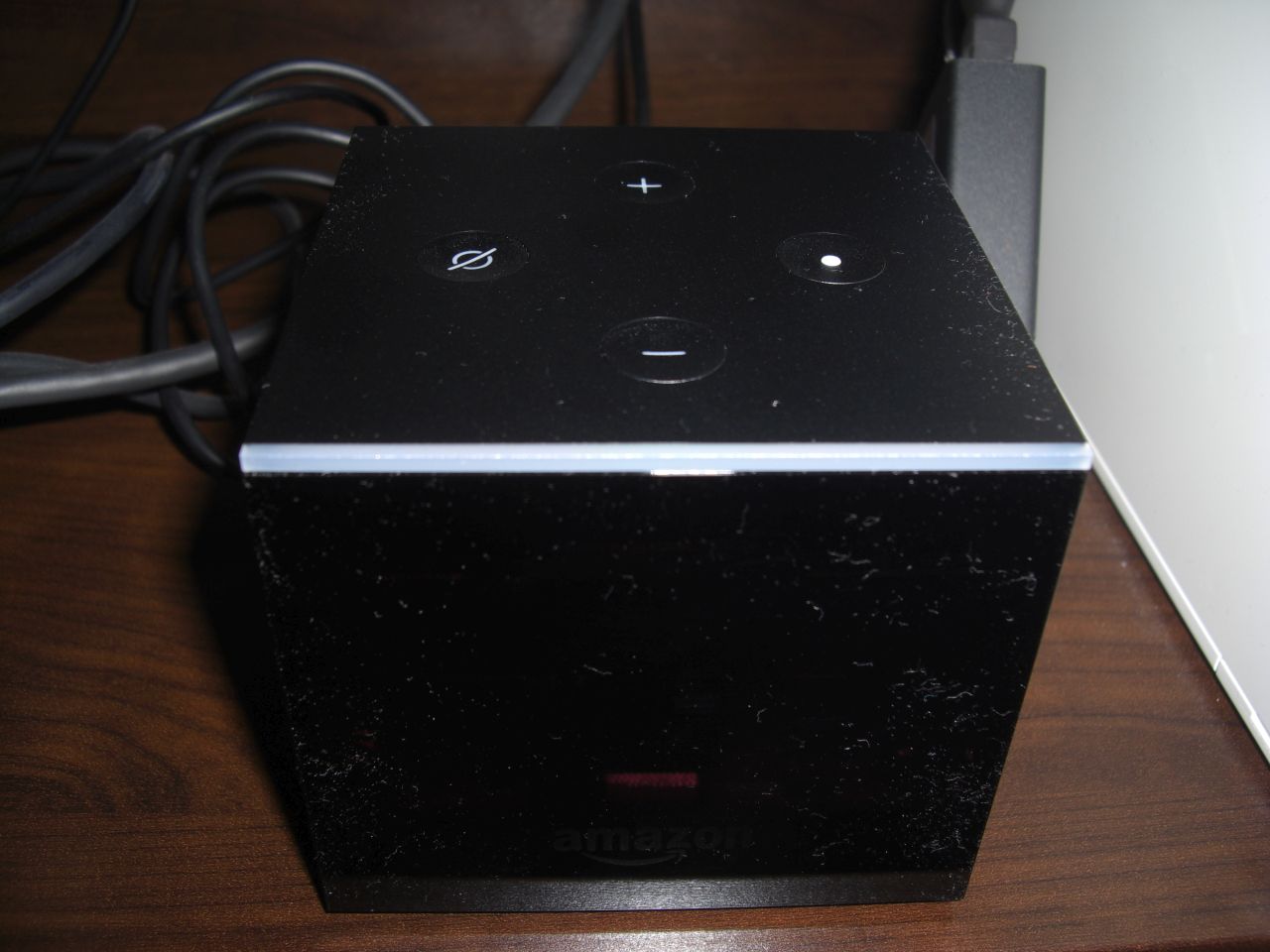
Fire TV Cube has buttons for volume control, microphone muting, and an ‘action’ button
Although the Fire TV Cube set includes the similar remote that comes with any Alexa-built-in Fire TV devices (note: the first two (2) generations of the Fire TV devices didn’t have Alexa), its primary use is for inputting information like usernames & passwords to services like Hulu, Sling, Netflix, YouTube, etc., as well as to install and to operate open-source apps.
Amazon advertises the Fire TV Cube as a device to “control your TV hands-free from across the room,” but the applications and possible uses are so much more than that — all in a very, very small package.
Update: In October 2018, Amazon introduced a new version of the Alexa Voice Remote (2nd generation) with TV control for the Fire TV series, now bundled with the latest Fire TV Stick (4K) and the Fire TV Cube—by itself, the new remote costs $30.
It now has dedicated buttons for power, mute & volume (up/down) – to control some TV functions.
However, the new remote is compatible only with newer versions of the Fire TV Stick, Fire TV Stick (4K), Fire TV (3rd gen – pendant style), and the Fire TV Cube.
Amazon had also discontinued the original, square Fire TV with built-in Ethernet series and the Fire TV (3rd-gen, pendant style).
The 2nd Generation Alexa Voice Remote for Fire TV with TV Control
On the last week of January of this year, I was reunited with my vintage Toshiba Aurex System 10 hi-fi stereo set that I had been using in Manila since 1984.
I purchased the micro hi-fi system back in 1982 in the commercial district of Al-Batha, Saudi Arabia. It was the height of the oil kingdom’s industrial phase, and I actually worked in the district of Al-Hair -about 20 minutes from the capital city of Riyadh- for a business conglomerate owned by a sheik.
Life was not only lonely but also very boring in a country whose religion is Sunni Islam and where Sharia laws are strictly enforced. Moreover, I was there to make a living and not as a tourist on a short visit to explore and enjoy the desert kingdom.
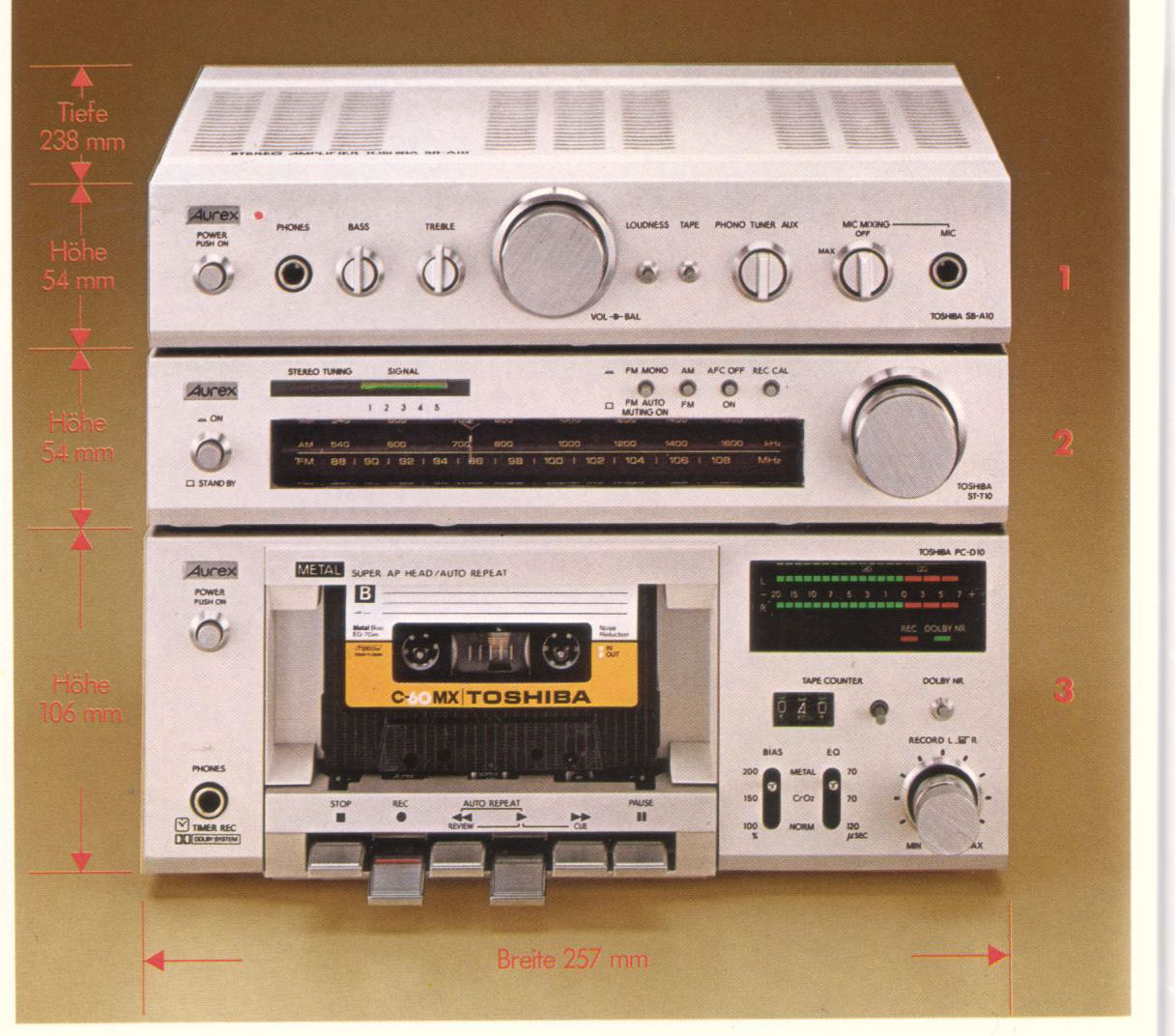
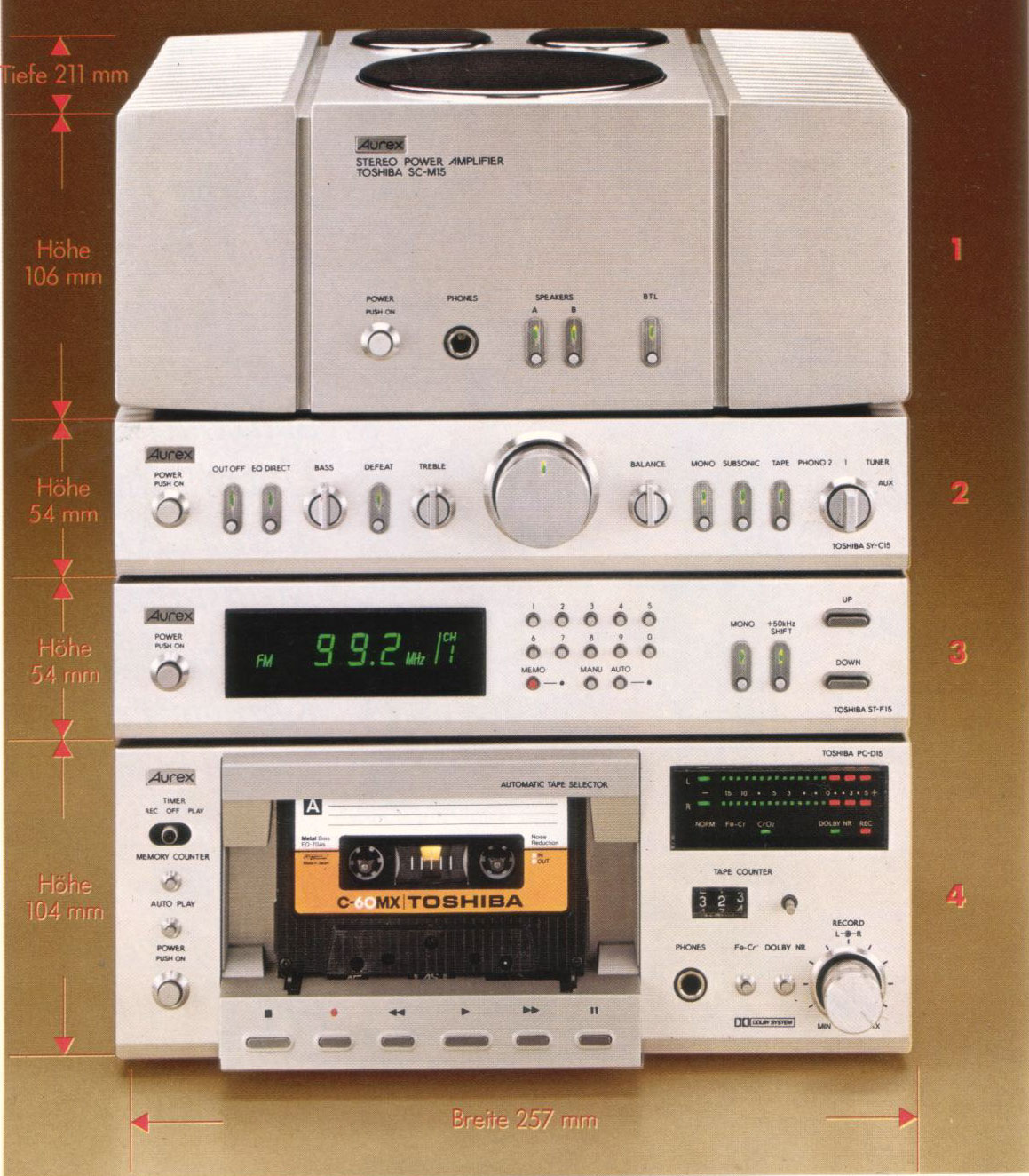
The Toshiba Aurex System 10 as it appeared in a German hi-fi catalog layout in 1979, with dimensions shown. Top to bottom: SB-A10 amplifier, ST-T10 hi-fi AM/FM tuner, and PC-D10 dual-head, stereo cassette tape deck.
During our day-offs -Friday and Saturday- we usually go to the big city to window shop, meet friends or relatives of friends, hang around in a park where most ex-pats congregate, or just about anything to keep our sanity until we finish the terms of our work contracts.
Typically, after our working hours, listening to music on our stereo systems provided us with some of our great joys while we watched the sun transition from a fiery ball of yellow to a magnificent mélange of orange hues as it hides behind the sand dunes.
The late 70s up to the mid-80s was the peak of hi-fi’s golden years as digital music began its slow-but-sure march to take over the entire musical landscape. I could still recall those early models of CD players were priced as high as US$ 1,000 plus in the few electronics & audio shops that showcased them.
Back then, Sony had been dominating the music scene after the huge success of the Walkman. Because of its portability & affordability, it also made the compact cassette tape the de-facto standard.
At music shops in Riyadh in the 80s, the average price of an original music cassette was about 10 riyals (about US$ 3) while the bootleg version was about 3 riyals (US$ 0.90). Like any marketing ploy, the so-called ‘metal tapes‘ (type 4), of course, provided the best sound if you have the appropriate cassette tape deck/player.
I bought the Toshiba Aurex System 10 after I had saved enough money and had grown tired of listening to my growing collection of music cassette tapes on my portable cassette player.
I emphasized music cassette tapes since plain audio cassettes were also the very popular media ex-pats used to record and send messages to their loved ones back home as the Internet was still reserved for a few people in the academe and government back then.
Via the AUX (auxiliary) jack, this vintage Toshiba Aurex System 10 can still play today’s digital devices –iPods, CDs, and, yes, MiniDiscs as well as DAT (digital audio tape) players.
Prior to my purchase, I had just watched with envy as my coworkers -especially the senior ones with much fatter paychecks- unloaded and unboxed their expensive, high-end stereo systems with huge speaker sets inside their villas.
Sansui, Denon, NAD, McIntosh, Nakamichi, Tannoy, Pioneer, Marantz, Bang & Olufsen, JBL, Teac, Grundig, Kenwood, and other leading Japanese, American, and European hi-fi brands were the buzzwords those days. And those systems were really manufactured in Japan, the U.S., and Europe.
I had visited several audio shops in downtown Riyadh before I decided on the micro-sized Toshiba Aurex System 10 because of its uniqueness, design, and almost magical impression on me.
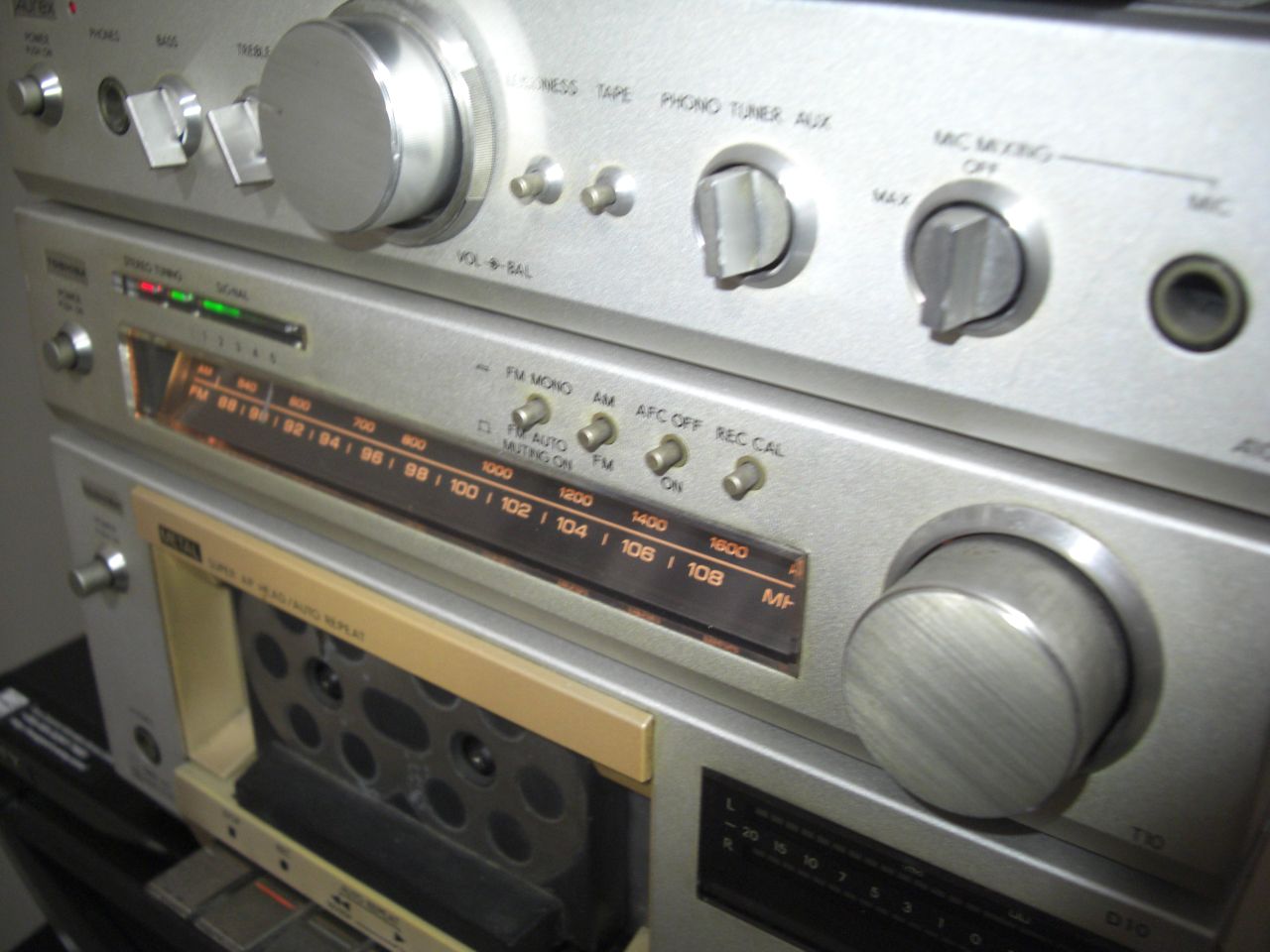
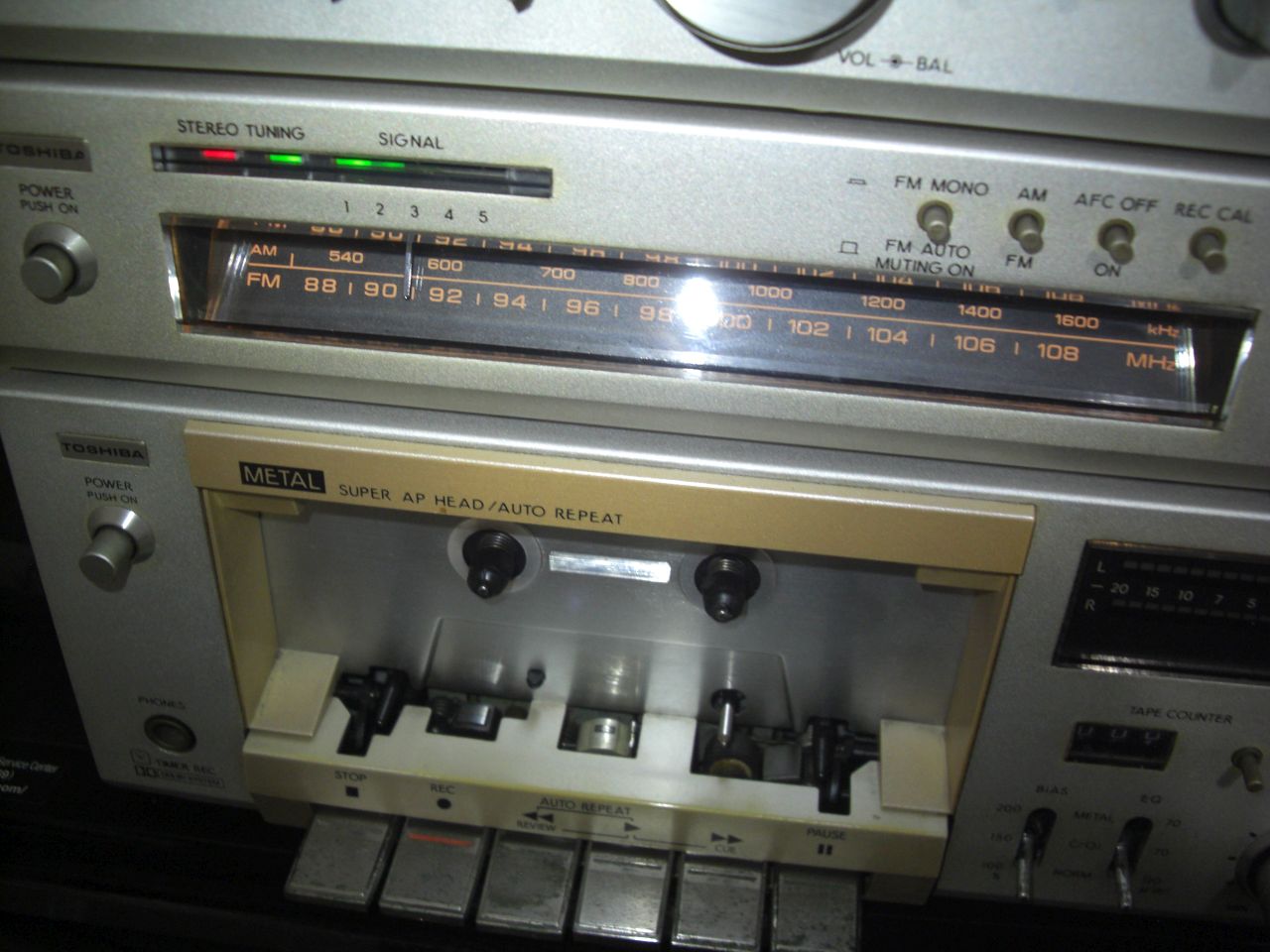
The PC-D10 cassette tape deck simply needs the replacement of a few rubber belts inside. The DC motor & tape heads still function well. This unit has manual tape controls.
Both models were spectacularly designed and housed in high-grade aluminum chassis that made them withstand the elements as well as high-quality internal electronic components.
And, as a bonus, the Aurex models that were sold in the Middle East had power supply voltage selector switches so that AC power input can be set to either 115V or 230V -depending on where you are or what country you’ll plug them in.
So what are the differences?
The System 15 has a beautiful main amplifier (SC-M15) housed in a one-piece diecast aluminum with an all-DC toroidal transformer that drives 40 watts per channel into 8 ohms (or, 100 watts in ‘BTL’ mode). The back of the amp has professional-grade connectors (screw-on and ‘banana’ plug) for 2 sets of speakers.
The separate pre-amp (SY-C15) came with 2 phono inputs, a variety of switches typically found in bigger high-end stereo systems plus gold-plated contacts for all the RCA jacks at the back.
The FM-only tuner (ST-F15) has a VFD (vacuum fluorescent) digital display with a 10-button direct/up-down push-button tuning with memory presets capability.
And, finally, a better metal-capable tape deck (PC-D15) that utilized two (2) separate DC motors to drive the reels. A touch-key tape operation control pad perfectly complemented the elegant unit.
The very elegant Toshiba Aurex System 15. Including a pair of speakers, it would have cost me a month of my salary back in 1982! Top to bottom: SC-M15 main power amplifier, SY-C15 pre-amp, ST-F15 FM-only digital tuner, and the PC-D15 stereo cassette deck with 2-motors plus IC-logic control.
System 10 was a much simpler set with just 3 pieces. An integrated amplifier (SB-A10) that’s also encased in extruded aluminum with a much smaller DC toroidal power transformer that drives 20 watts per channel into 8 ohms, an FM/AM tuner (ST-T10) with an old-school, knob & scale tuning, and a tape deck (PC-D10) with a single servo motor to drive the flywheel & reels plus manual tape operation controls.
You could actually mix and match decks or components from either system and even use two (2) SC-M15 amplifiers in monaural mode via the BTL (bridge tied load/ bridged transformerless) feature to drive a massive 100 watts per channel.
There were cheaper mid-sized/micro components options during those days like Sony’s FH-7 or Technics’ Concise series but most of them used either plastic or sheet metal housing and did not look as elegant as Toshiba’s Aurex System 15 and 10.
After 36 years, I am still amazed how this vintage hi-fi system can remain to look so beautiful and elegant as some of today’s latest digital audio decks and sound so impressively– after I hooked up either my FiiO(X2 and X3 Mark III) high-resolution audio players, the iPod Classic or, yes, a Sony Discman via the amp’s auxiliary input.
While we don’t want our computer hardware to fail at all, or even during its warranty period, it’s a fact of life that some of them do.
In my case, I thought solid-state drives (SSDs) would be more reliable than conventional ones because the former have no mechanical or moving components.
I was dead wrong.
In a week, two (2) of my SSD drives failed: one (a 120 GB PNY CS1311) as a backup on a Mac, and the other (a 480 GB OCZ-Toshiba ARC100) as the primary drive in a custom-made PC. It led me scrambling to find their invoices in our attic.
Luckily, I had saved those receipts, and both SSDs are still within their warranty periods. Most SSD manufacturers nowadays offer a 3-year warranty for their entry-level to mid-range models. Some high-end units (usually the ‘enterprise’ models) come with warranty periods ranging from 5 to 10 years.
So this was my RMA (Return Merchandise Authorization) experience for the two products:
For the 480 GB ARC100 by OCZ-Toshiba, my expense waszero, and I had my replacement SSD in hand after four (4) days of filing the RMA. They offer the best warranty program in the industry with their “Advanced Warranty Program” for most of their SSDs, including some “legacy” (i.e., obsolete) models.
After they received a copy of the receipt (proof of purchase, as well as confirmation that it’s still under warranty) via email, a UPS Ground return label was included with the RMA number.
The next day, they promptly shipped a replacement SSD via UPS 2-Day service.
OCZ-Toshiba’s customer support was very professional, straightforward, and excellent. No nagging and unnecessary questions. Moreover, you are constantly notified via email of the entire RMA process. This is what customer service/support is all about.
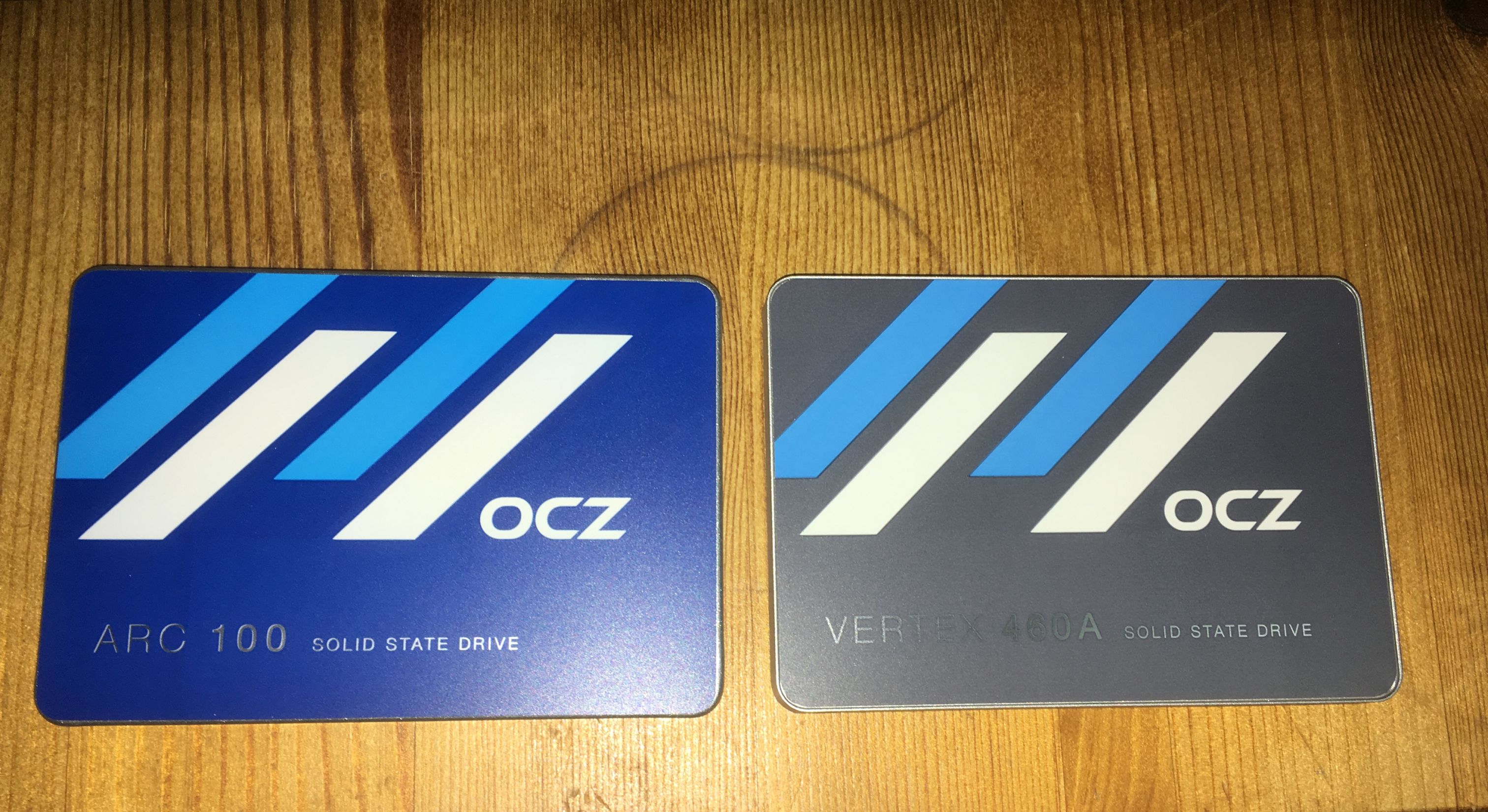
The defective 480 GB OCZ ARC100 (left) and the replacement 480 GB OCZ Vertex 460A. The replacement SSD was received just 4 days after I requested an RMA number from OCZ-Toshiba. Thanks to their “Advanced Warranty Program”.
For the 120 GB CS1311 made by PNY, my expense came toabout $10 –shipping back the defective unit via USPS Priority Mail to their support center in Parsippany, New Jersey- and I had the replacement SSD in hand eleven (11) days after I filed for an RMA number.
It could have taken more time had I not sent the defective unit back via USPS Priority Mail, which usually takes just two (2) business days. PNY shipped the replacement only after they had received the defective SSD and utilized the cheaper but slower UPS Ground service.
To its credit, PNY’s customer support was also prompt and straightforward, but it lacked the same attention to detail as OCZ-Toshiba. And, they didn’t send follow-up emails to inform them how the entire RMA process had evolved. You had to constantly visit a link they provided after the RMA number was issued to check on its status.
VERDICT: Hands down, OCZ-Toshiba was the winner with its “no-cost-to-the-consumer ” approach and speedy turnaround.
That’s why a product’s warranty is the only protection consumers have for their hard-earned money.
And, how companies honor their warranties spells the difference between respectability and plain money-grab.
When buying a solid-state drive, be sure to save the receipts and store them in an envelope, as most are printed on thermal paper. Prolonged light exposure will erase all the information and render it useless.
NOTE: OCZ-Toshiba and PNY replaced their defective units with brand-new, retail-box sets.
Sometime in May of this year, my six-year-old (purchased in January 2011) Sony Dash Personal Internet Viewer (HID-C10) received a control panel update informing me that service for the device would end in July.
The last firmware update (from version 1.7.1461 to 1.7.1526) was performed on April 08, 2016, after the device experienced issues “downloading the main control panel,” rendering it useless.
Over the 6+ years that I had owned the unit, there were intermittent issues with Sony’s backend servers that kept it inactive. But Sony was always able to issue firmware updates to keep the service going—until July of this year.
Sony Dash (Photo credit: PC Mag)
The Sony Dash is a small tabletop alarm clock-radio-weather/gadget with a 7″ touchscreen that sold for $199 when initially released in April 2010. Its functionality relied 100% on the Internet; hence, built-in WiFi (a/g) is included.
Aside from its beautiful design, the main attraction of the gadget, like a smartphone, is its ability to load additional “widgets” (or apps) from its built-in memory. It enabled owners to stream videos and music from content providers such as Netflix, YouTube, Amazon, Pandora, Slacker, and Sony Music. There are also thousands of other useful widgets, ranging from the arts to zoology.
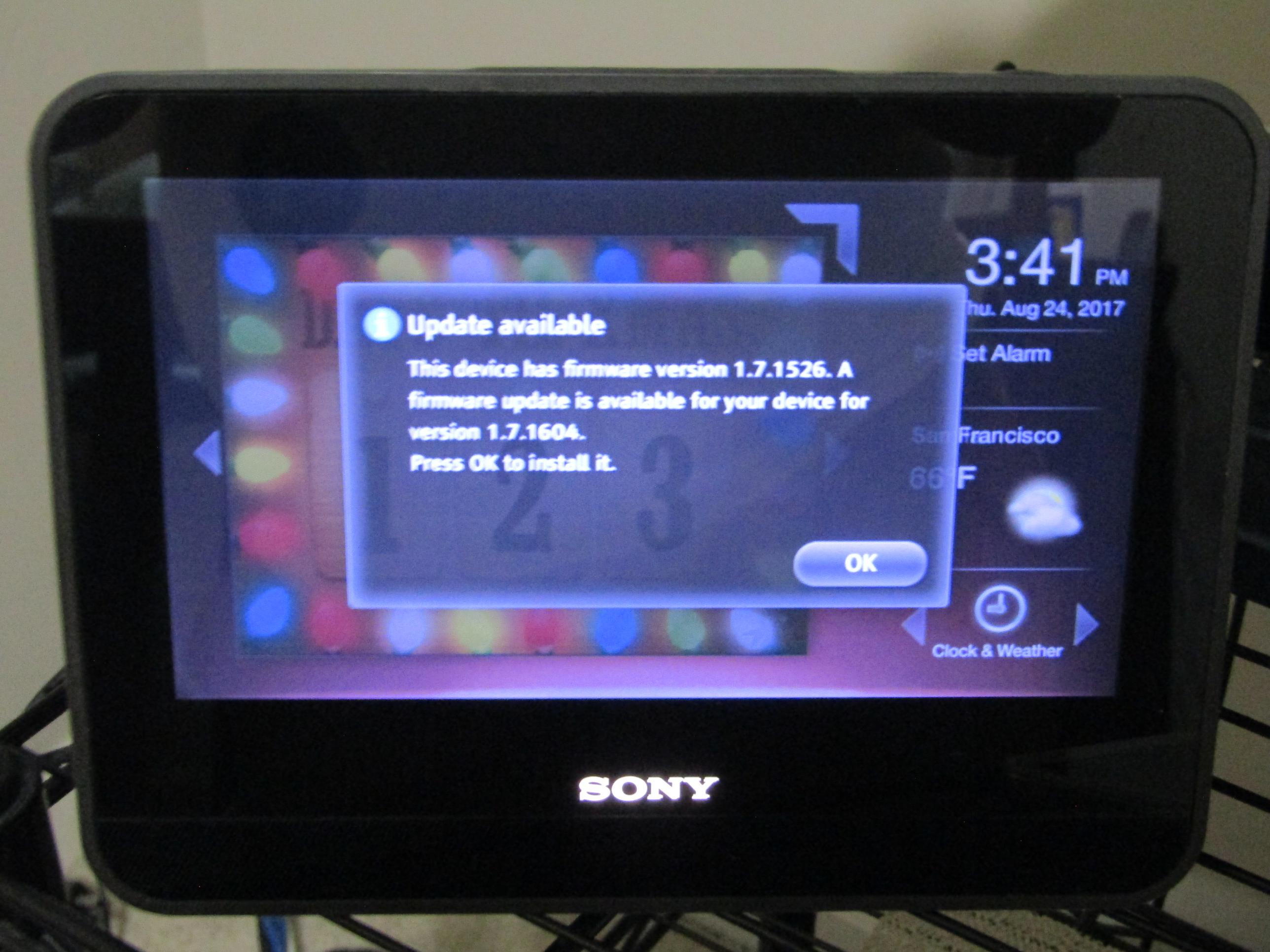
And so, one day in July this year, I saw the dreaded firmware update – 1.7.1604– that would turn an otherwise very useful device into a door stopper.
Don’t hit the OK button!!! The dreaded Dash firmware update -1.7.1604- would stop all functionality of the unit
Of course, I did not do the firmware update, but instead called Sony’s customer service (in the U.S., it’s 1-800-222-7669) to ask them what to do with a useless unit.
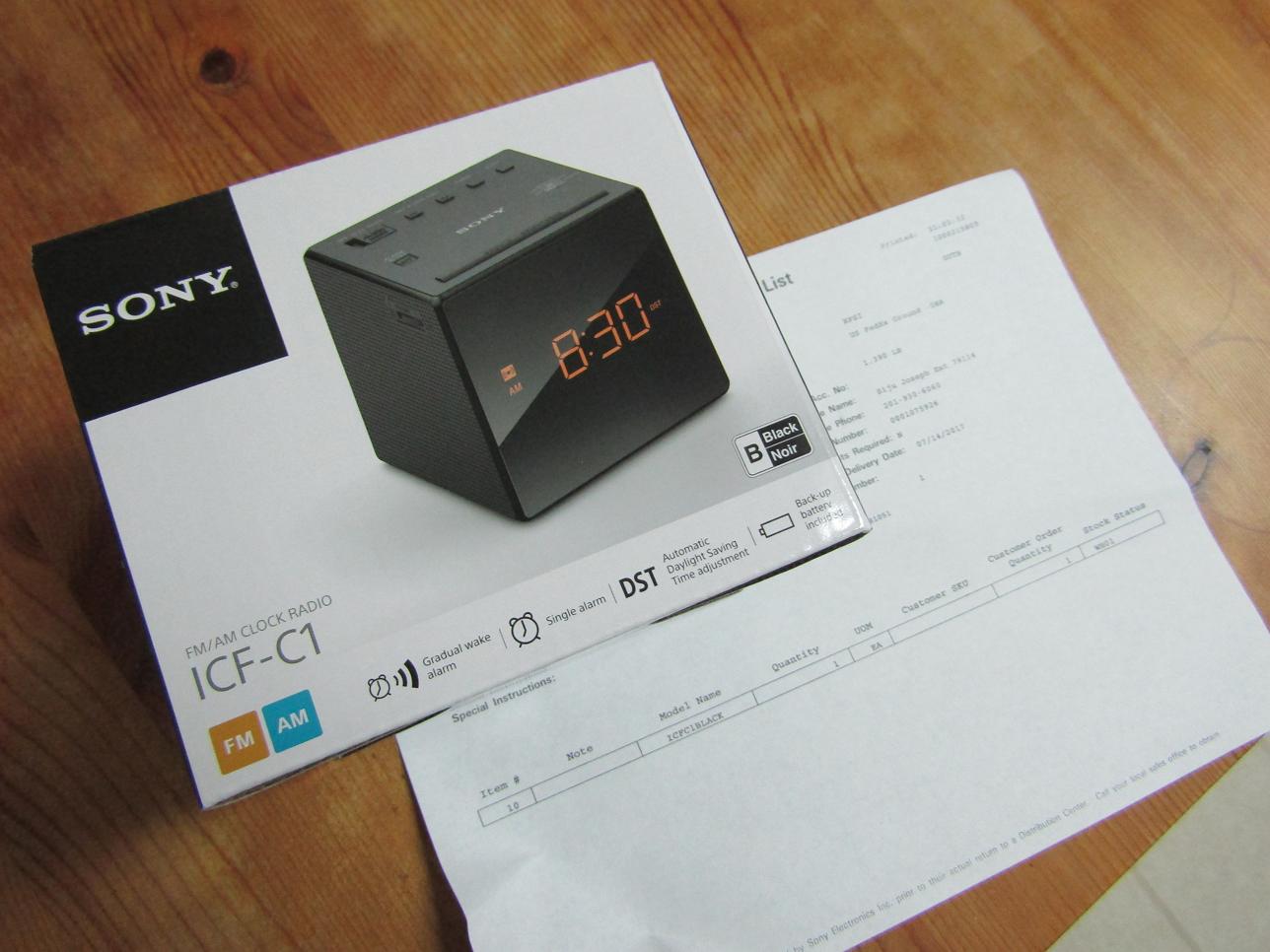
To the company’s credit, it promptly replaced a product that had reached its ‘end-of-life’(aka, planned obsolescence), with a choice of either an alarm clock/AM-FM radio(ICF-C1) or a Bluetooth speaker (XB10) after I e-mailed the image of the unit’s serial number.
When the replacement ICF-C1 clock radio arrived a week later via FedEx (shipping also paid by Sony), I grabbed the Dash that sat atop one of my stereo speakers – still with the ‘Update available’ screen- and yanked out its power supply.
Sony sent this free ICF-C1 clock-AM-FM radio (or the XB-10 Bluetooth speaker) as a way of recompensing owners of bricked Dash units
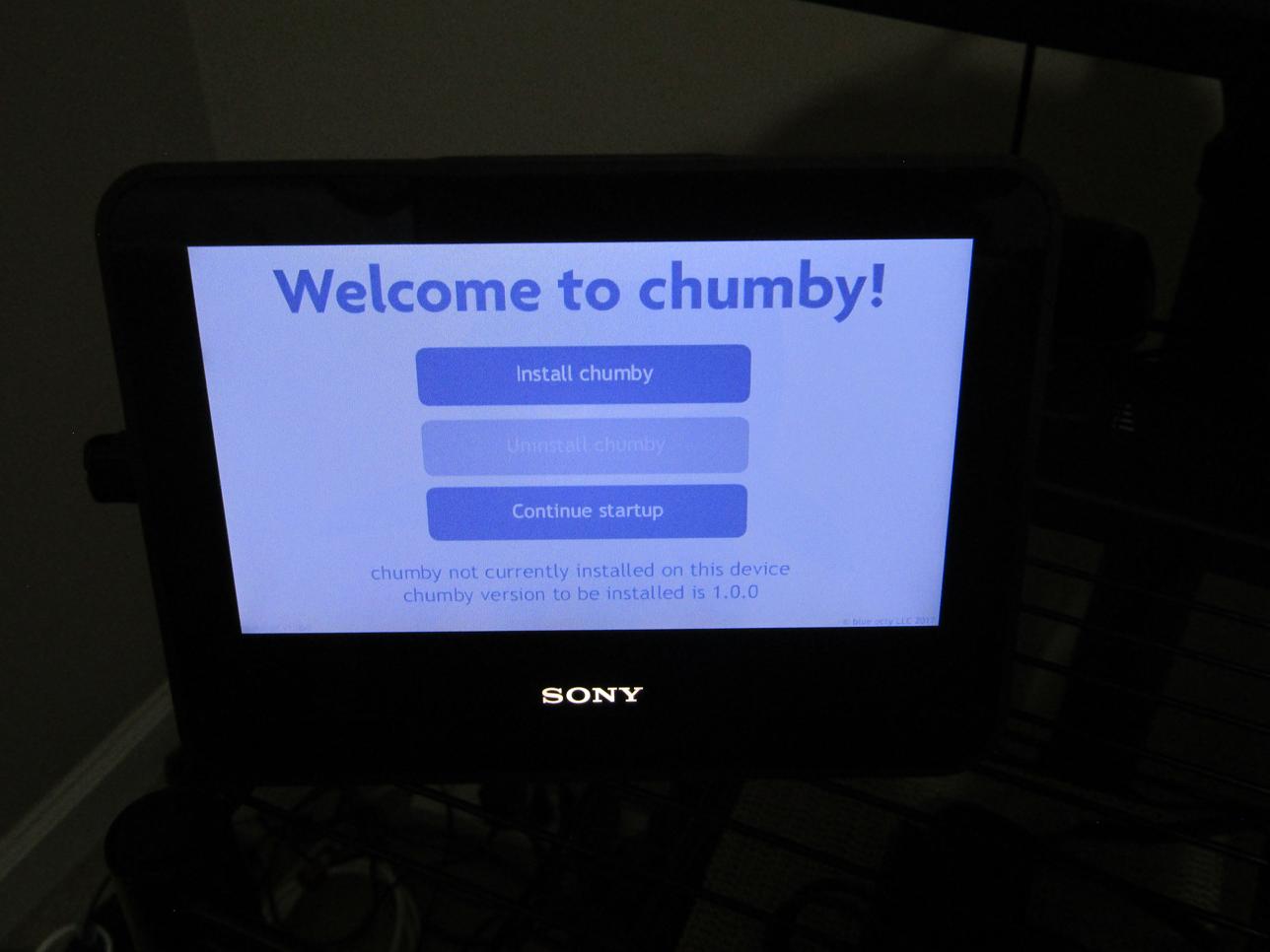
Meanwhile, somewhere in the coastal city of San Diego, California, a guy had been very busy writing code to port the Dash (running firmware 1.7.1526) to make it work with Chumby.com’s server(s) after Sony’s May software update alert.
Chumby (now, operated by Blue Octy, LLC) is a small company behind a line of very affordable “Internet viewers” similar to the Dash. The Dash runs on an OS modified from the Chumby OS.
Finally, in early August, Blue Octy released a software patch (for the Dash HID-C10 model only) that resurrected some Dash units. The patch is Chumby-HIDC10-1.0.0.zip. It could also be downloaded here.
So, if you have an HID-C10 Sony Dash, just ensure that your unit is running firmware 1.7.1526. If you had accidentally installed firmware 1.7.1604 and bricked the unit, simply revert to firmware 1.7.1526 via the instructions here before applying the patch.
All set to install the patch to the Sony Dash (for model HID-C10 only) to enable it to run off Chumby.com’s server
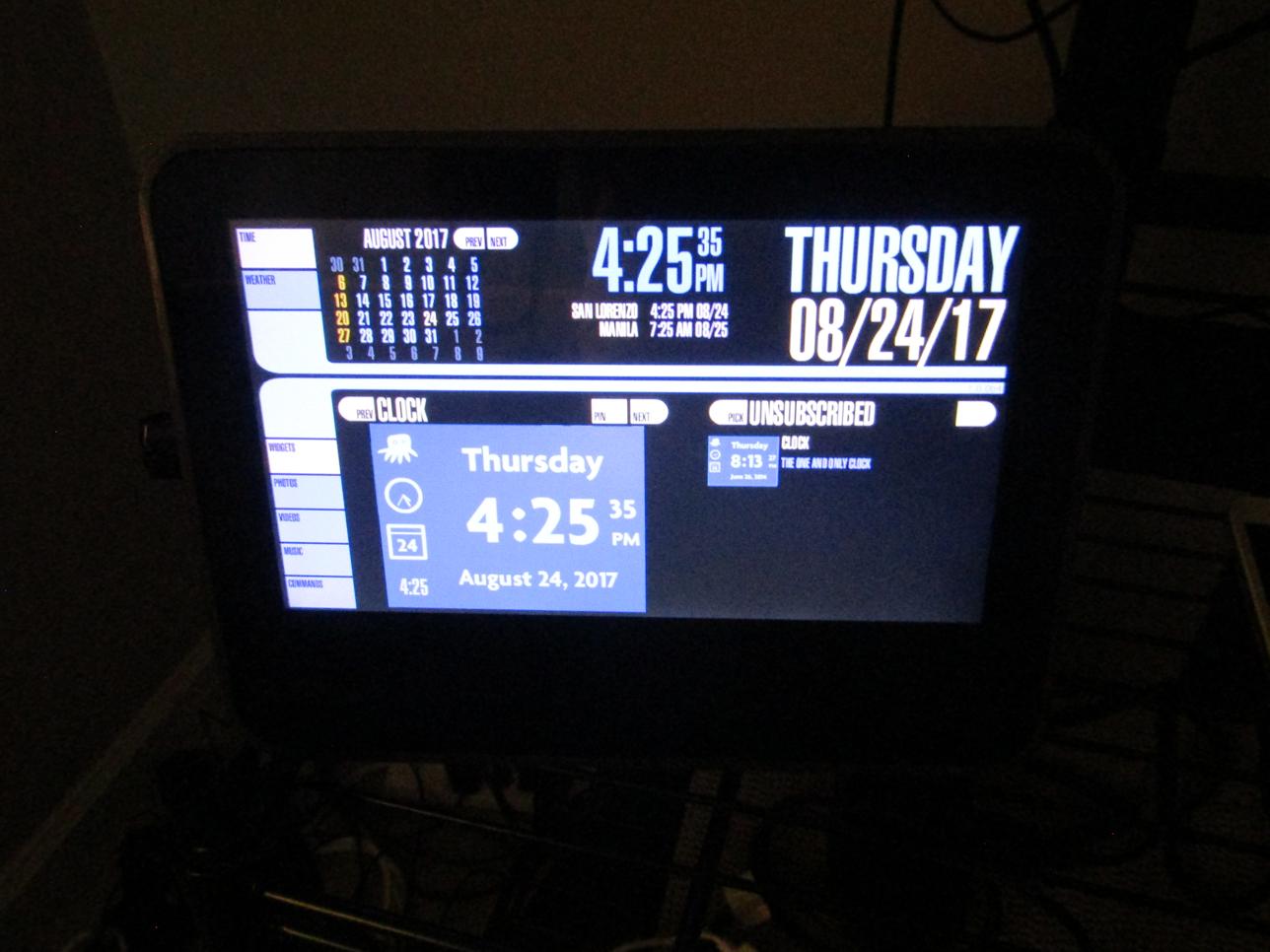
If you applied the patch correctly, you should have restored some functionality to your Dash, including the clock, weather, and a few radio stations.
A $3 monthly subscription fee would allow access to numerous apps and multiple channels on this gadget that… simply refuses to go away.
Sony Dash is back in business with a new Blue Octy channel/control panel interface!!!
Two days ago, I received an e-mail from Microsoft’s Insider Program the availability of Windows 10 Creators Update (OS Build 16179)
But, if you’re a music lover who spends a lot of time listening to your collection using iTunes on your PC, specifically one running the 64-bit flavor of Windows 10, then, here’s a caveat.
Don’t update to the latest version of Windows 10 – Creators Update.
Even if you have the latest version of iTunes (currently, 12.6.0.100) on that PC, the Windows 10 Creators Update will screw up your previously perfectly working iTunes that you will regret why you updated in the first place.
Here are some of the frustrations, as well as observations, that you’ll have with iTunes after the Windows 10 Creators Update:
iTunes will not launch, forcing you to restart your PC.
In the event that iTunes will launch after the restart, it will hang-up in almost every way you use it; forcing you to restart or terminate the program.
Only iTunes seems to be affected by the Windows 10 Creators Update. Is Microsoft forcing you to uninstall iTunes? Bullying you into utter frustration and resignation to use its Groove Music app instead? But you don’t want to mess up with your iTunes library by uninstalling & reinstalling it, especially if you have thousands or even a million songs in your collection.
A reinstallation or a repair of iTunes will not solve the issue. Don’t even bother to uninstall iTunes and deal with all the hassle that comes with re-installing it. It didn’t work in spite of several tries.
What if you had installed Windows 10 Creators Update and rued the day because you can’t listen to your music collection via iTunes anymore?
Make sure that you “Go back to an earlier build” (found under System -> Windows Update -> Update history ->Recovery option). My OS Build prior to the messy Creators Update was 14393.1066.
But, then again, there’s another caveat: You have to do that within 10 days after you had updated to Windows 10 Creators Update.
Day 1 – Feb. 5, 2017 – (Sunday): Puerto Princesa on Two Wheels
“The place is orderly and clean” was our initial impression of Puerto Princesa as our driver made his way around the city towards Socrates Road after he picked us up in an old, white van at the small airport in this capital city of Palawan.
Subli Guest Cabins would be our overnight shelter in the city that day, as Matthew & Johan would be jetting in from Manila the next morning for our northbound, overland trip to the touristy and popular but more remote El Nido.
We arrived in high spirits at the guest cabins, made of concrete and bamboo, despite our red-eye flight from Siem Reap, which included a 6-hour sleep-depriving wait inside Manila’s newer and spacious Terminal 3airport.
After verbally agreeing with the young and bubbly receptionist to rent their only Honda scooter for PHP 600 (USD 12) that day, we promptly showered and got some sleep after checking in.
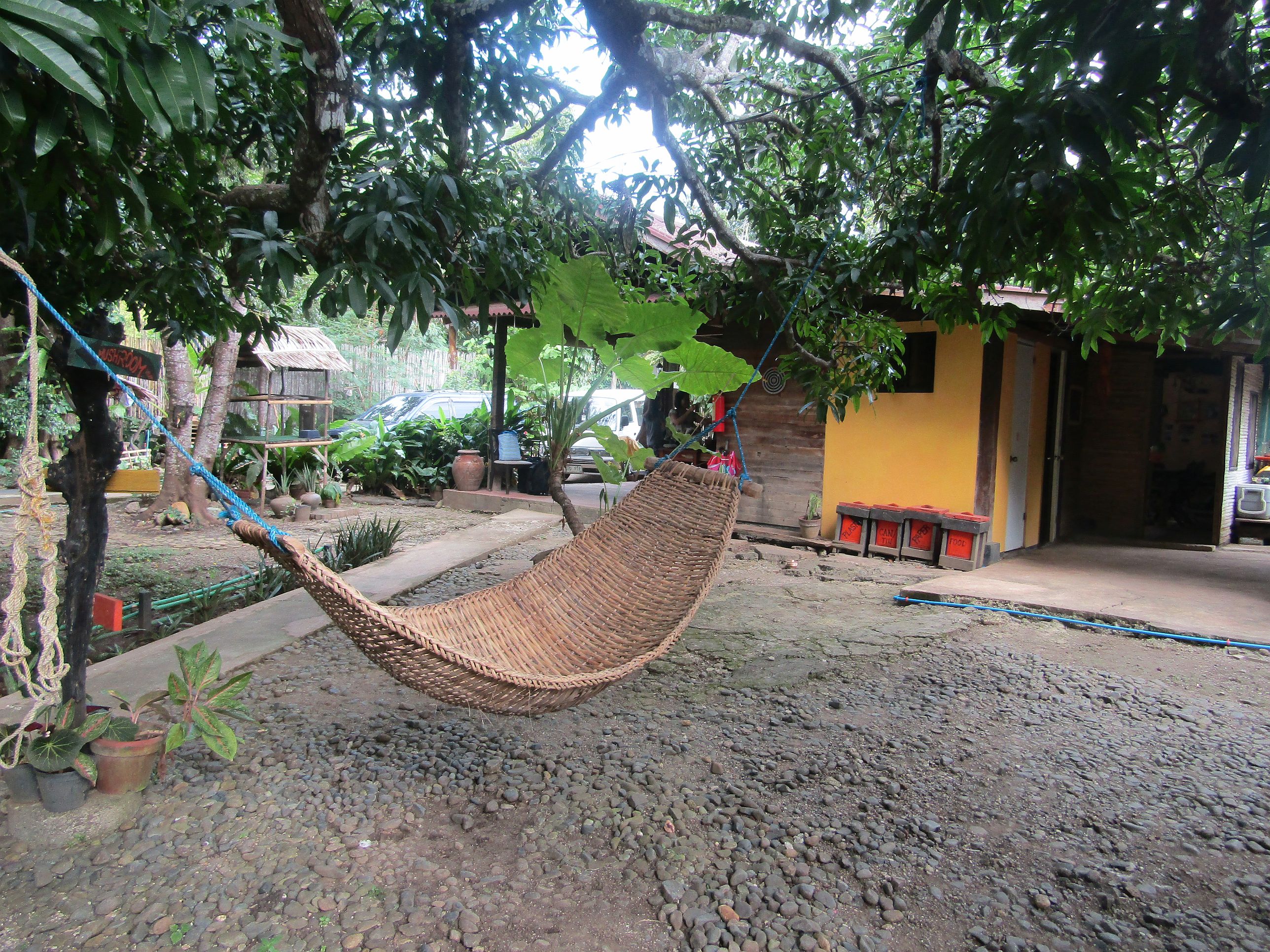
One of the hammocks underneath the giant mango tree that dominates the compound
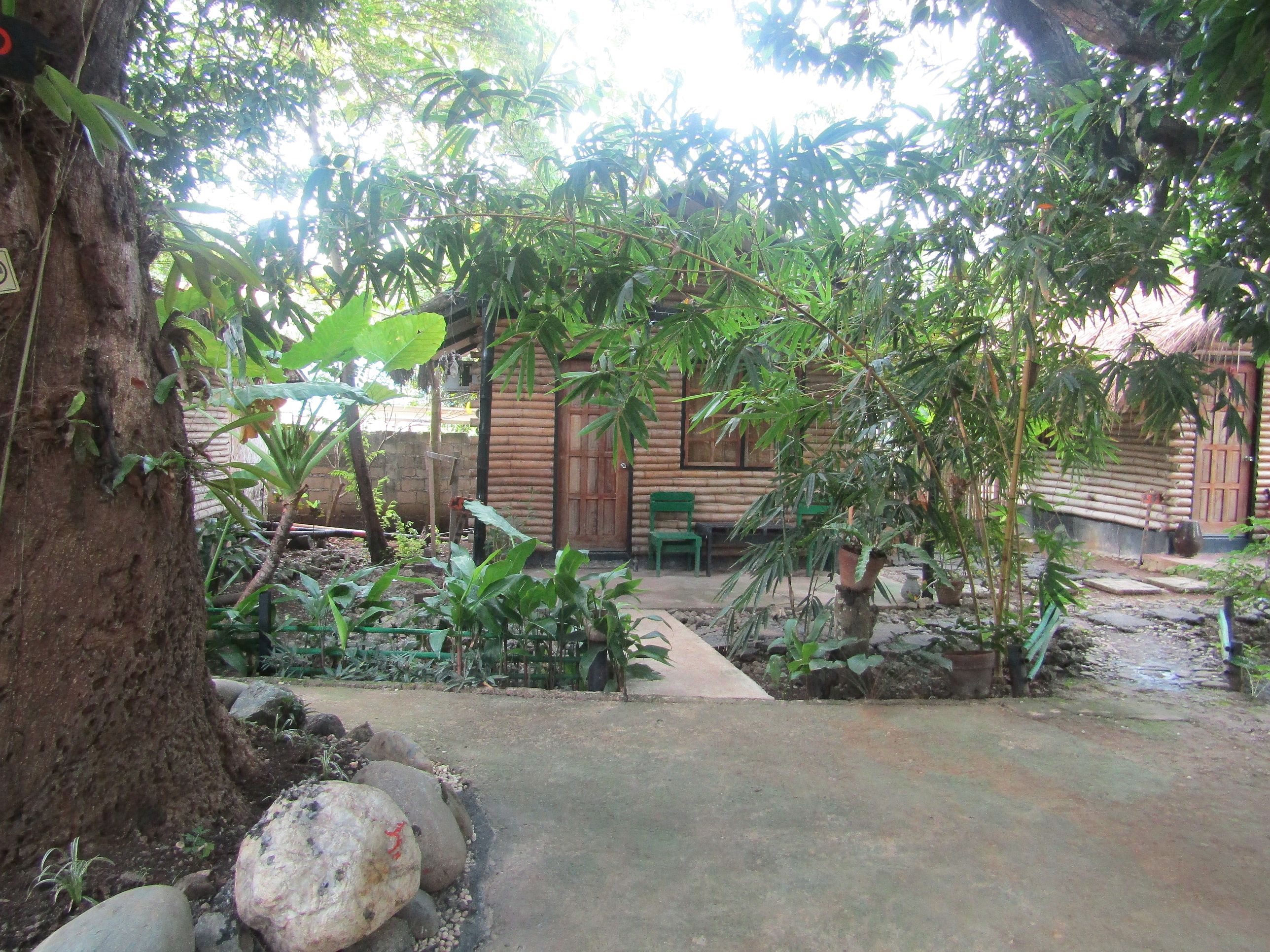
Quiet surroundings provided deep sleep despite the spartan amenities inside these huts
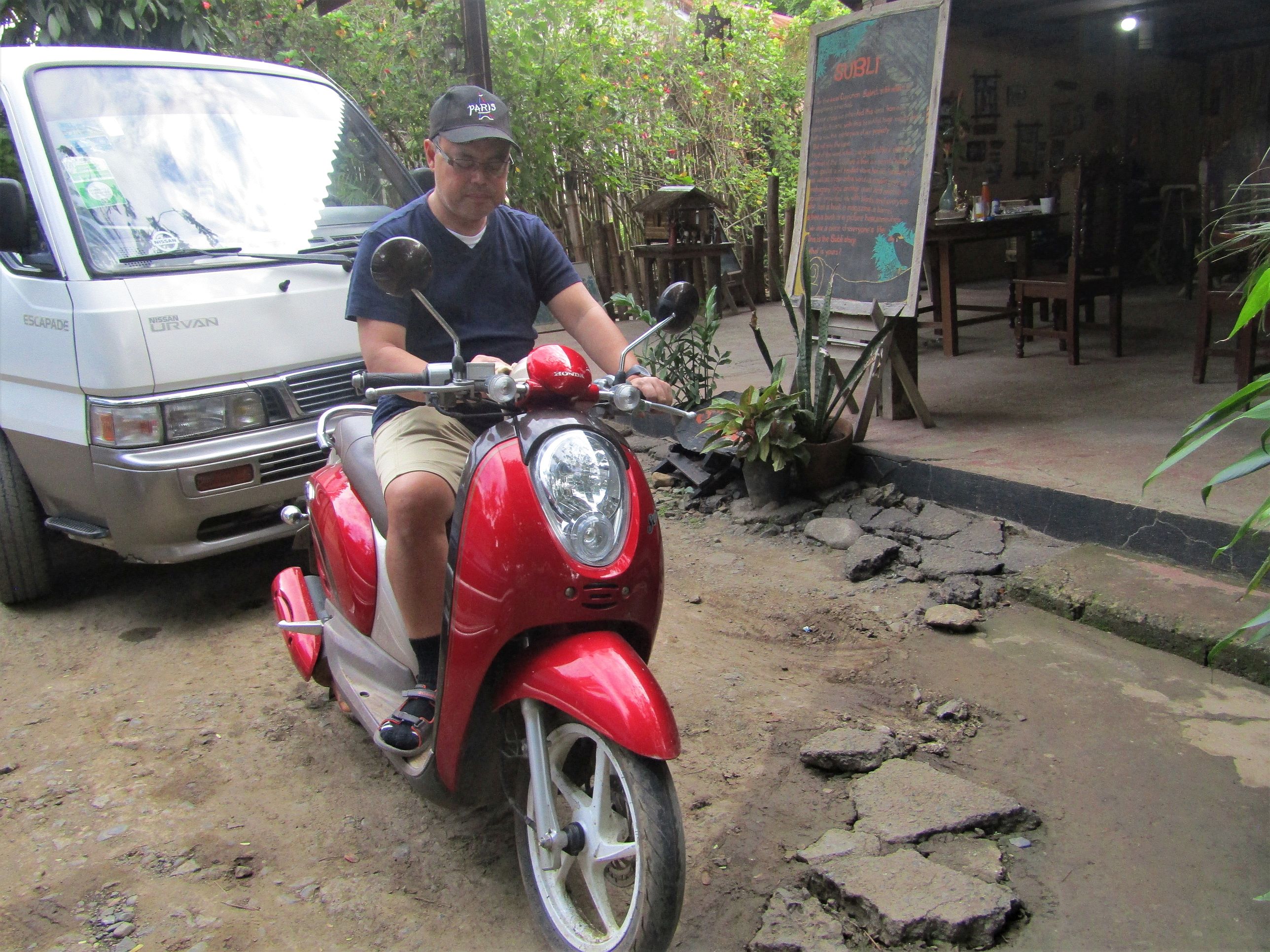
This 125 cc Honda scooter would take us around the city – and beyond!
Refreshed from our 3-plus hours of rest, we strapped our helmets and ventured out at 3 PM along with a bagful of dirty clothes– only to run out of gas just a few meters away from the compound.
Ruby flagged a passing ‘tricycle’ (a common form of paid transport in the country, similar to ‘tuk-tuks’ – a motorcycle with a ‘sidecar’ for extra seating passengers), and they returned with petrol in a 2-liter PET plastic bottle. We filled up the tank with another PHP 90 (USD 1.80) at a nearby Shell gas station along Malvar Road after we finally got going.
Riding a scooter, motorcycle, or even a bicycle is one of the simple joys of life that we, as human beings, tend to overlook. With the wind on your face and the sights and sounds of the surroundings all around you, one’s sense of adventure is elevated by having that constant awareness of the dangers of being on the road, so that you hold on to dear life on that handlebar.
We saw a body of water to our right immediately after passing the public market, so we made a right turn at the next intersection. The road narrowed markedly and led us to a sweeping descent at a small park— the Puerto Princesa Baywalk. Along its stretch were numerous open-air food stalls that overlooked a cove part of the Palawan Sea.
It was just about 4 PM, but 2 or 3 food stalls were already doing some business, so we opted for K’na Boyet sa Baywok- one where a group of tourists occupied a couple of tables.
Once seated, the aroma of that familiar “calamansi” (calamondin) and soy sauce-flavored BBQs that are popular all over the archipelago triggered our ‘hunger reflexes’ higher. We sidled towards the charcoal-fed grill, where several pans filled with assorted sea offerings vied for our attention.
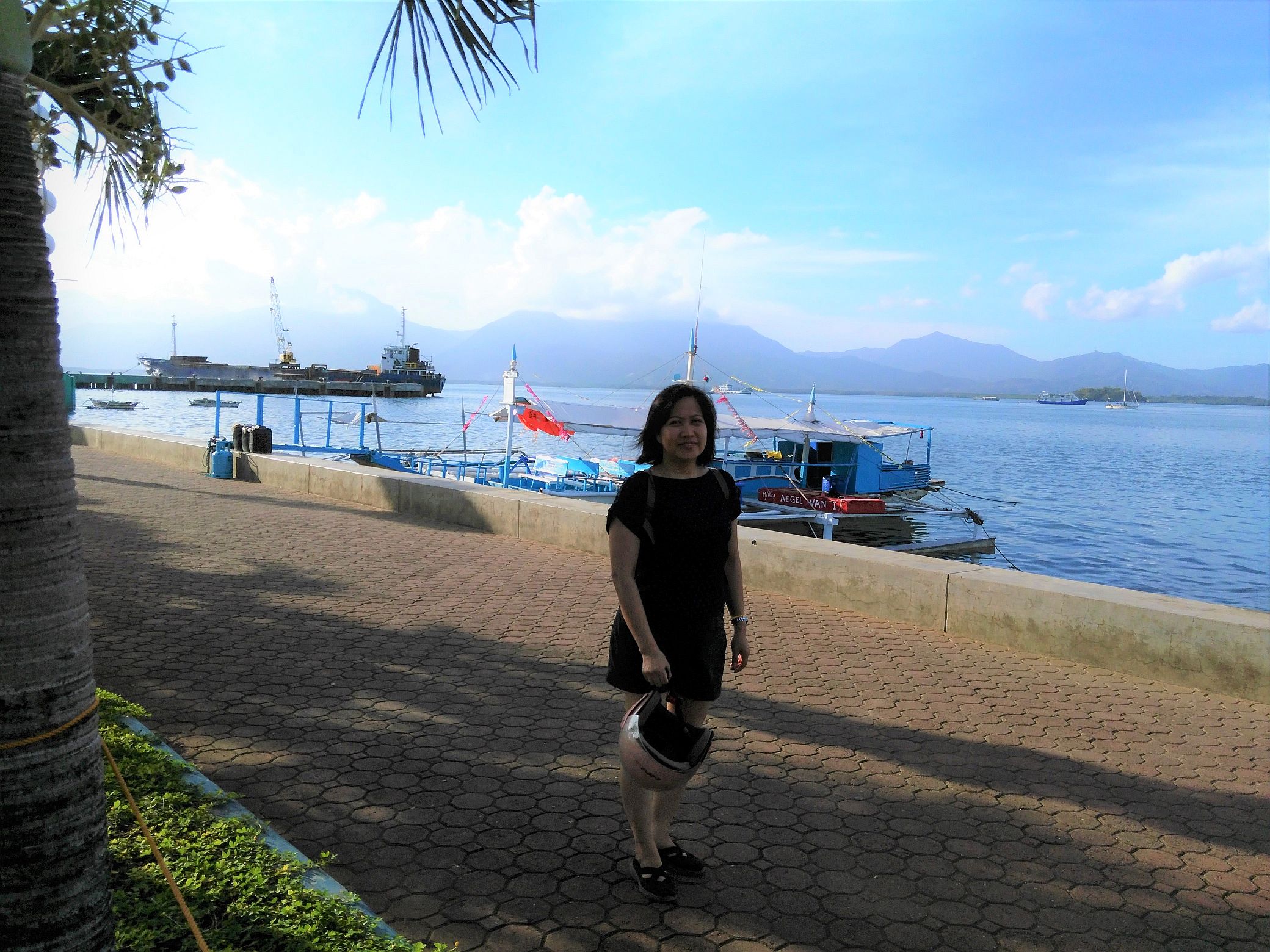
Helmet off, Ruby at the Baywalk in Puerto Princesa
Ruby enjoys her green mango shake while waiting for the food to arrive
An order of grilled “pork liempo” (grilled, marinated pork belly), shrimps sautéed in butter and garlic, rice, a mango shake & two bottles of San Miguel Light beer set us back for about PHP 750 (USD 14.50).
Bellies filled, we then set our sights for Baker’s Hilland asked for directions from the very amiable waitress, who suggested that we might as well visit Mitra Ranch,as both were in the same area.
Amidst moderate traffic, as it was a weekend, we didn’t take long to find our way towards the city’s main highway, Puerto Princesa North Road. However, we had to ask locals for directions twice to reach the junction of PP South Road, which would lead us to our destination. We dropped off our laundry bag at a shop along the cemented two-lane highway while trying to find our way towards Baker’s Hill.
Like most roads in the city outskirts, the narrow road that goes up towards Baker’s Hill was so puzzlingly unmarked that we overshot it by a few miles despite asking directions 2 or 3 more times — the last one from a mechanic working on a wheel of a small truck along the grass-lined fringes of the highway. The tall trees behind the shop gave us glimpses of the rice fields. They would punctuate the highway the farther we got away from the city proper.
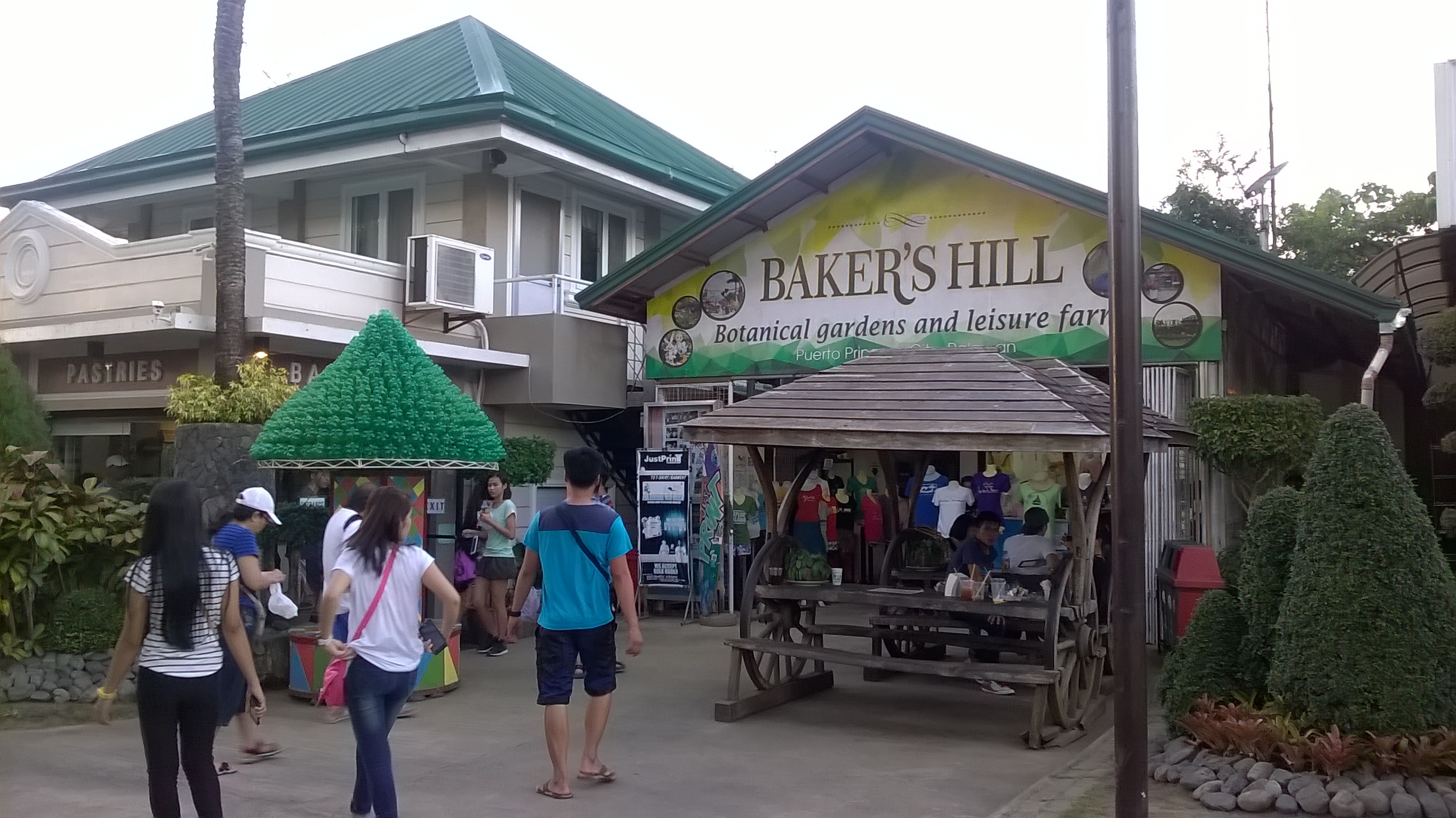
Baker’s Hill was just a family compound with –you guessed it– a bakery, an open-air restaurant, and a souvenir stall. It became a ‘snack-stop’ for visitors going to Mitra Ranch. It strives to become a major tourist attraction in the city, mainly through word of mouth and recommendations from past visitors on travel websites. The bakery primarily sells pastries and snacks, notably the various ‘hopia‘ (thin, flaky pastries filled with mung bean paste).
Locals and tourists mill around the entrance to the bakery at Baker’s Hill, Puerto Princesa, Palawan.
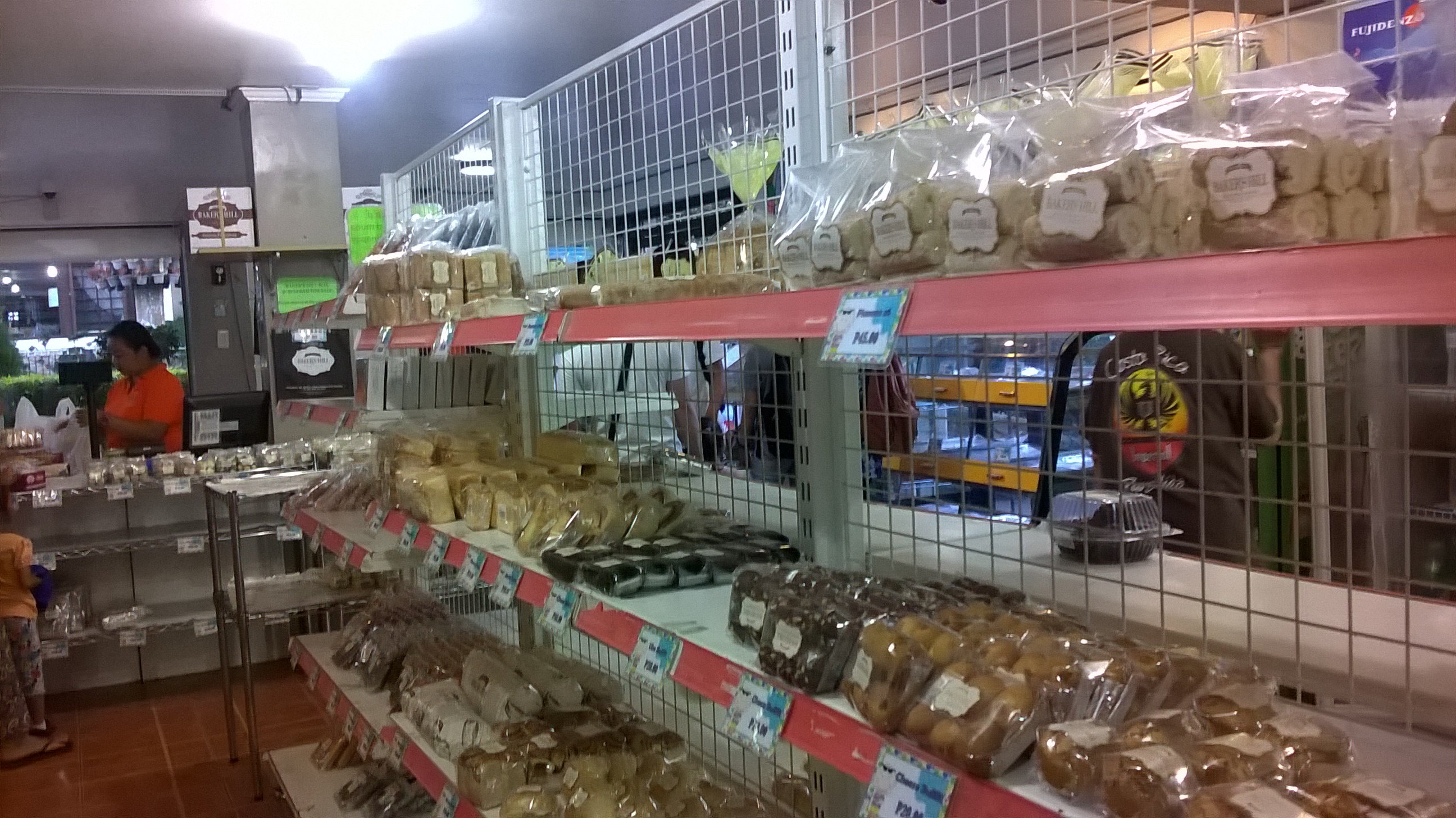
Inside the bakery – all the good stuff for the sweet tooth.
Just a few meters uphill, Mitra Ranch offered a better view of the city, horseback riding, and zip-lining. The place was opened to the public after the death of the family patriarch, Ramon ‘Monching’ Mitra, Jr., who was an esteemed senator. Unfortunately, he lost the 1992 Philippine presidential election despite being considered the early favorite to win.
Dusk was upon us after we picked up our laundry and headed back to the city. We had decided to have an early bedtime since we needed to be up early to meet the couple at the airport for our morning trip to El Nido. Moreover, with our weather-beaten faces and aboard two small wheels that offered minimal comforts, tiredness had crept in on our bodies once again.
It was already dark once we reached the city proper and got lost once more, only to find ourselves buying some delicious ‘lechon‘ (roasted suckling pig) for dinner from a makeshift stall in front of a shop that sold various solar-powered devices.
After handing us the take-out goodie in a plastic bag, the middle-aged vendor summoned us to the edge of the sidewalk and pointed to an intersection where we would make a right towards Malvar Road. His instructions sounded like music to our ears.
It was about 8:30 PM when we made the final turn back to the comforts of Subli’s compound aboard our trusty scooter.
Day 2 – Feb. 6, 2017 – (Monday): The Road to El Nido
It was about 8:45 in the morning, and the air was crisp with a light gust from the east. It made the flowers, protected by a low, concrete encasement, sway to its rhythm. I spotted the driver holding a sign with Matthew’s name on it while he waited just a few yards away from the exit gates of the Puerto Princesa airport and chatted with him.
Just an hour ago, we checked out of Subli and took a tricycle to meet Matthew and Johan for our van ride to El Nido.
Matthew had arranged for the rides as well as our accommodations in that popular destination north of Puerto Princesa. We would be out of the airport by 9:15 aboard a van that badly needed a new set of shock absorbers.
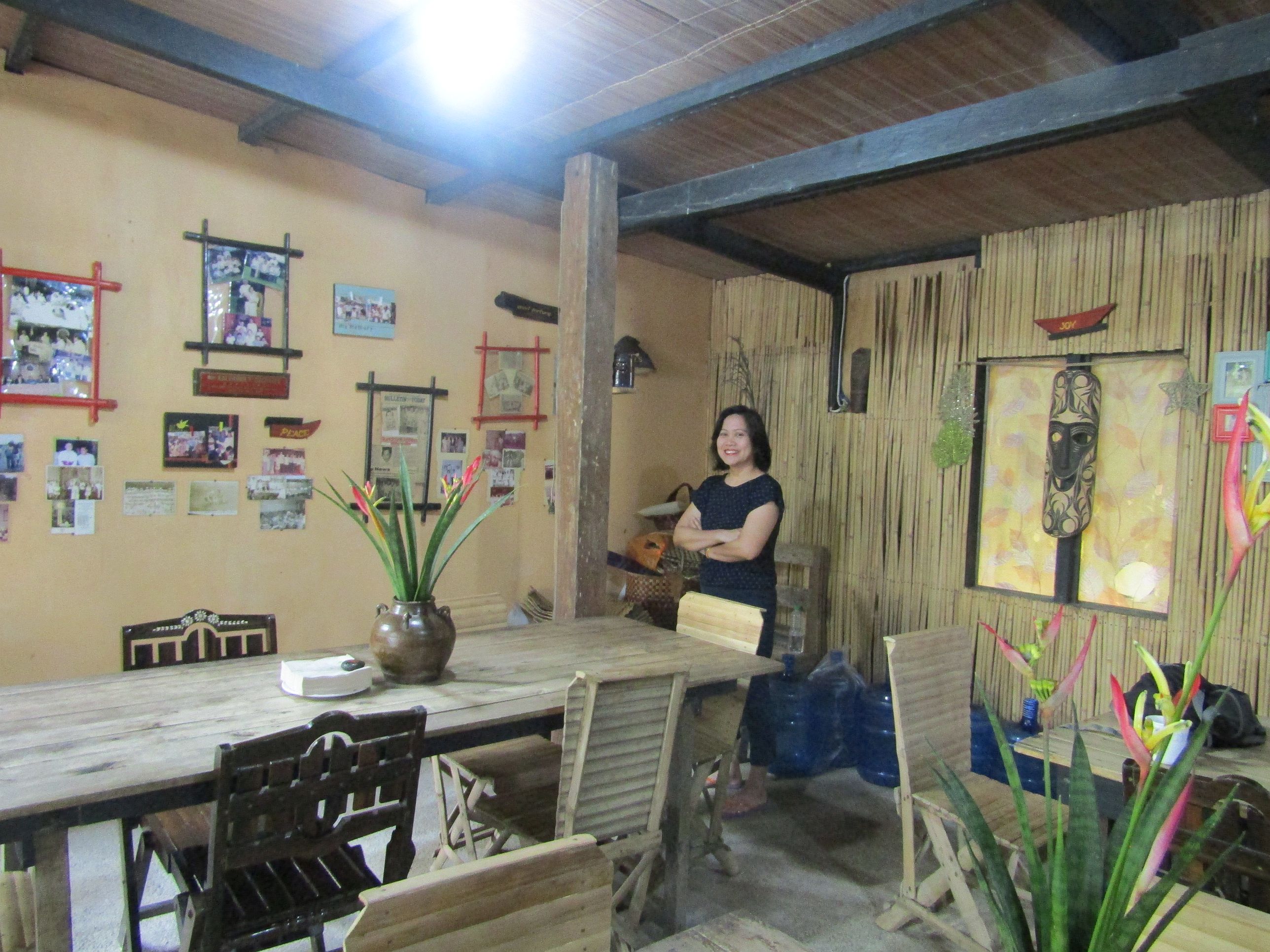
Ruby at Subli’s dining area the morning we checked out to meet Mat & Johan
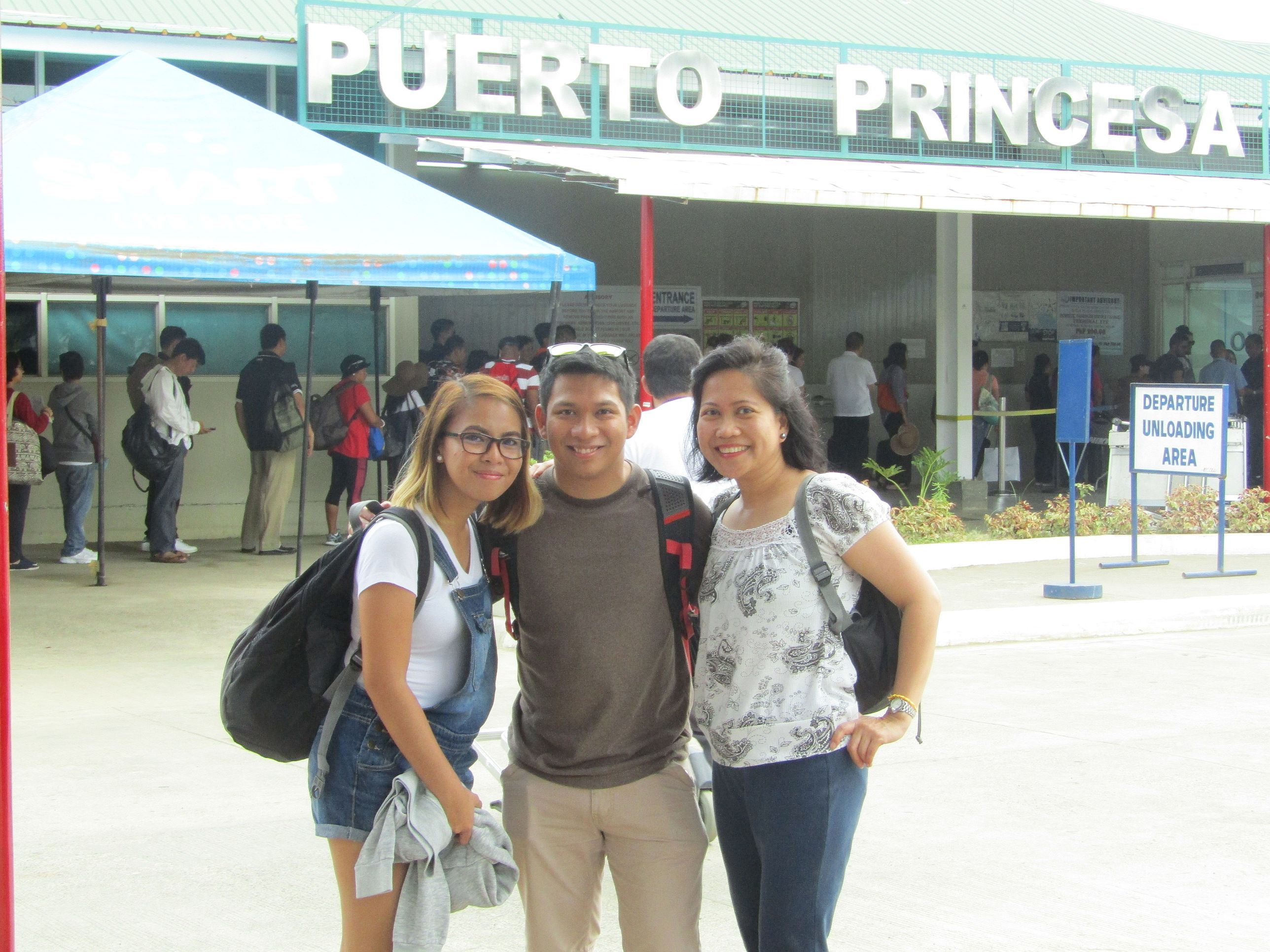
Johan, Mat & Ruby at Palawan’s Puerto Princesa airport
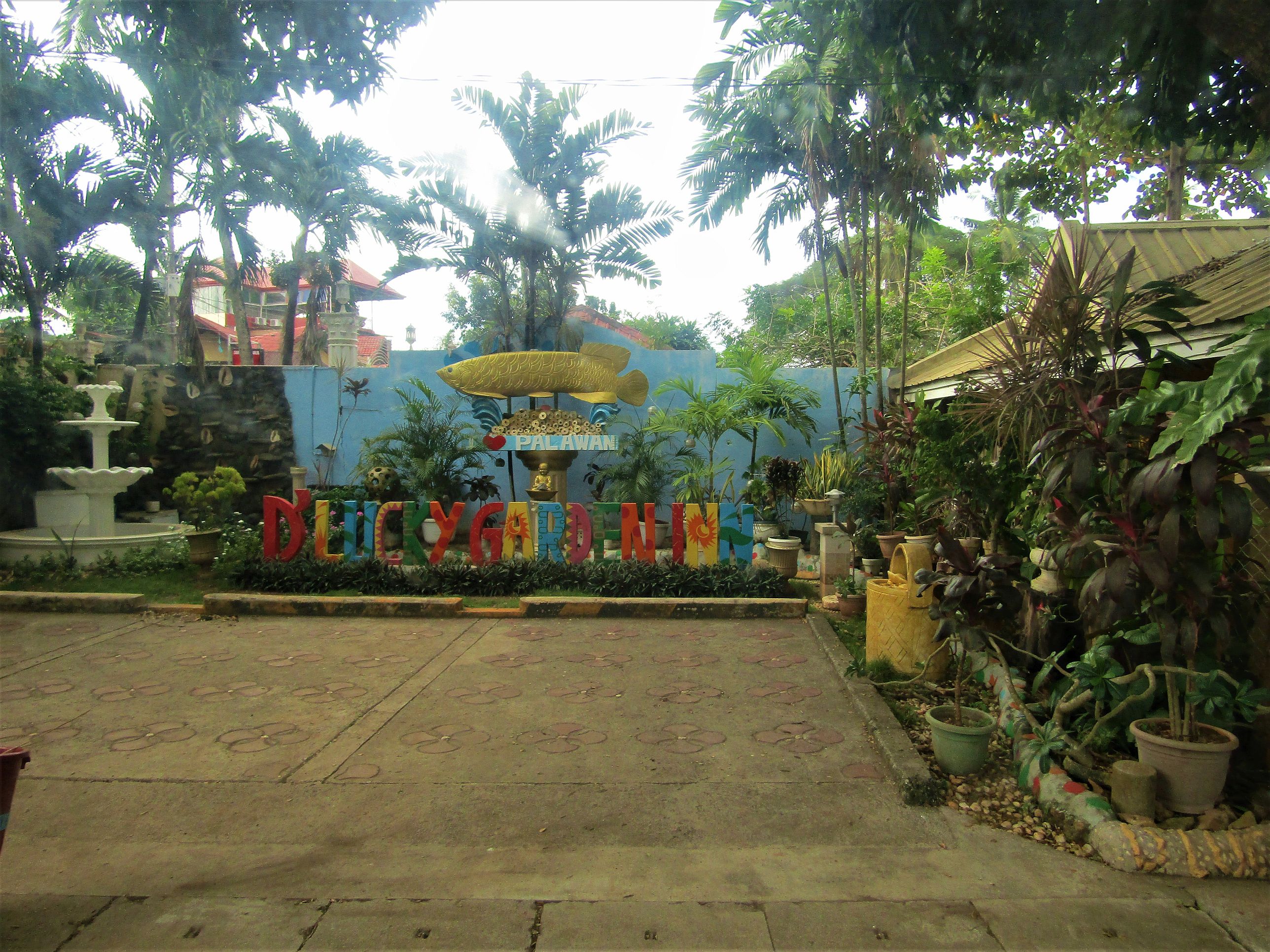
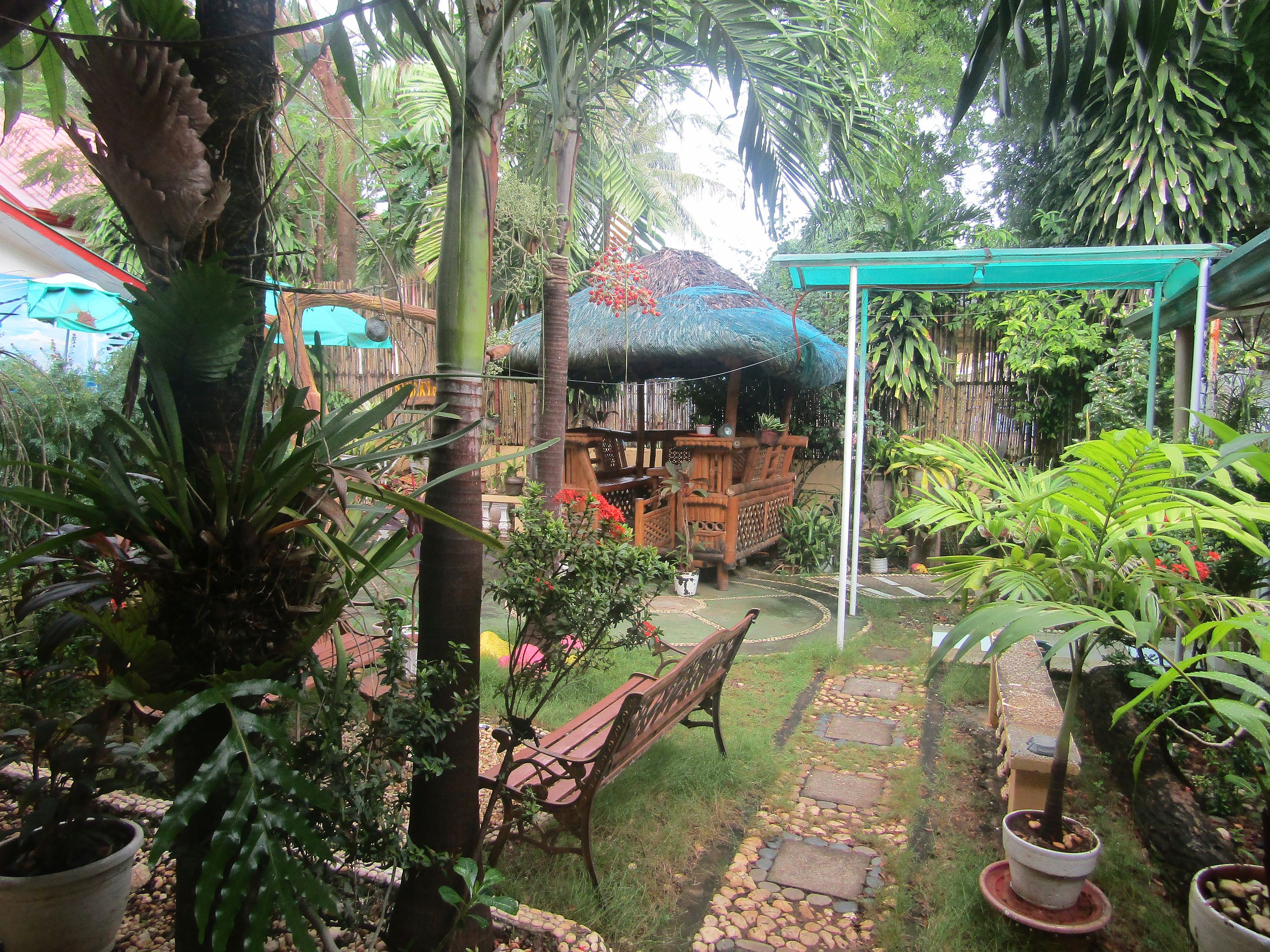
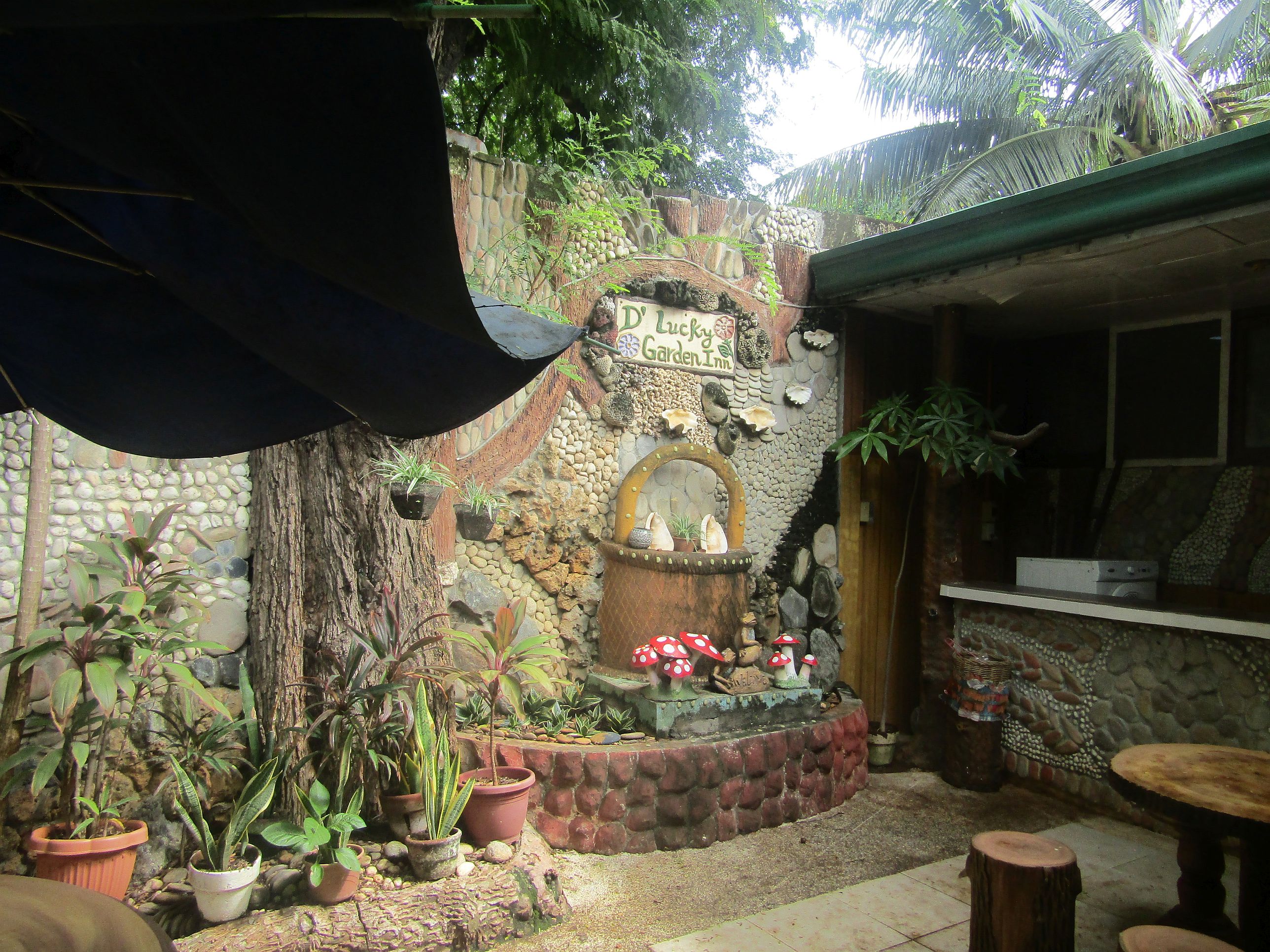
The driver briefly stopped by a hotel with a cheesy name-D’ Lucky Garden Inn– and picked up a young couple from the U.K. who joined us for the trip. The four of us would stay for a night in Puerto Princesa at this hotel after our El Nido escapade.
D’ Lucky Garden Inn’s very eclectic landscaping left an impression on us.
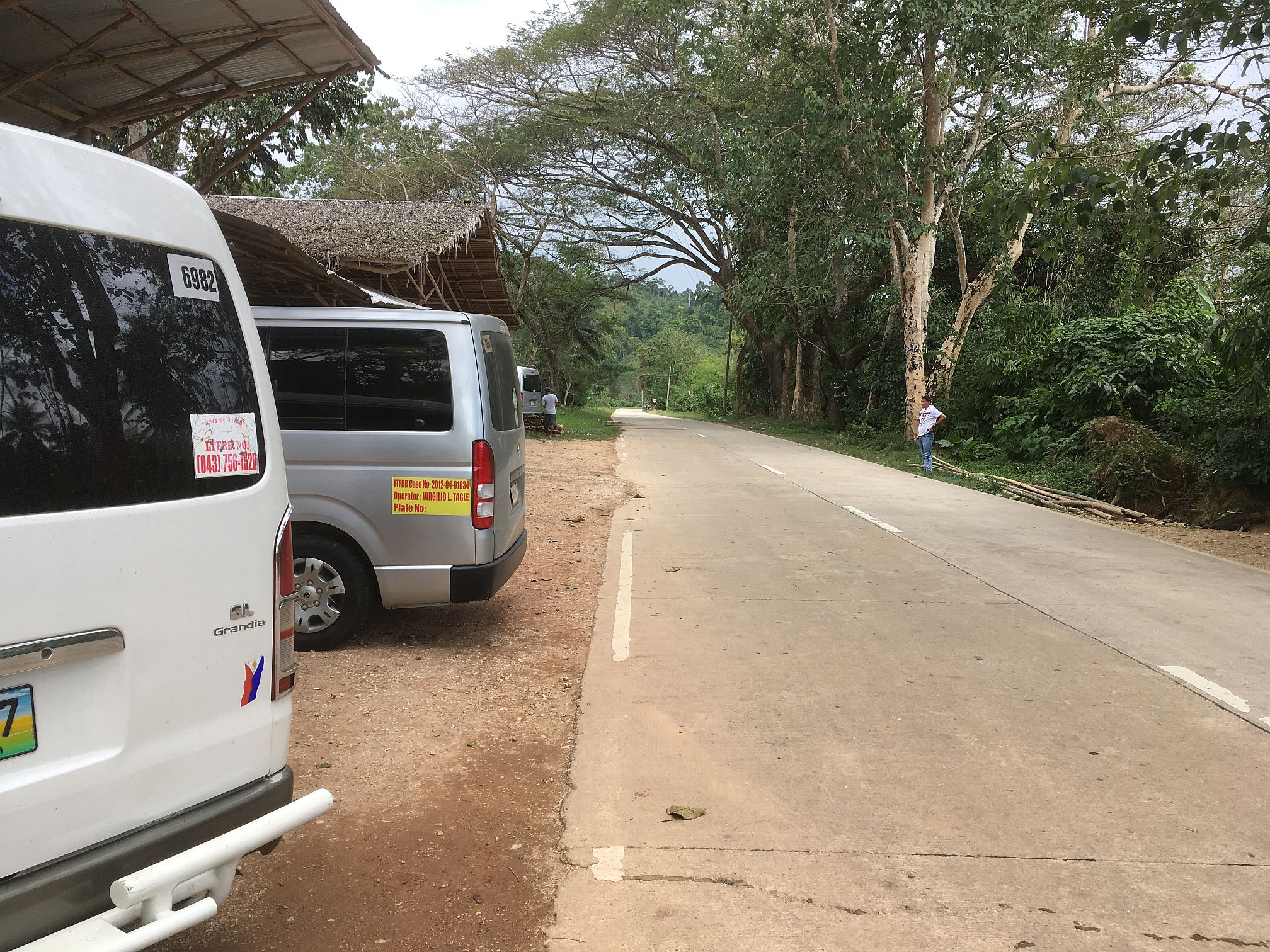
The very long (almost five hours) and tiring ride, mainly along the two-lane but cemented Puerto Princesa North Road, was uneventful except for a few stops where the driver loaded up on a few more passengers along the way to augment his earnings. There was a mandatory stop at an ‘agricultural checkpoint‘ where we bought some drinks from a nearby store.
At kilometer 131, just along the highway, we had our lunch break at Elfredo’s Manokan & Seafood Restaurant in the sleepy municipality of Roxas.
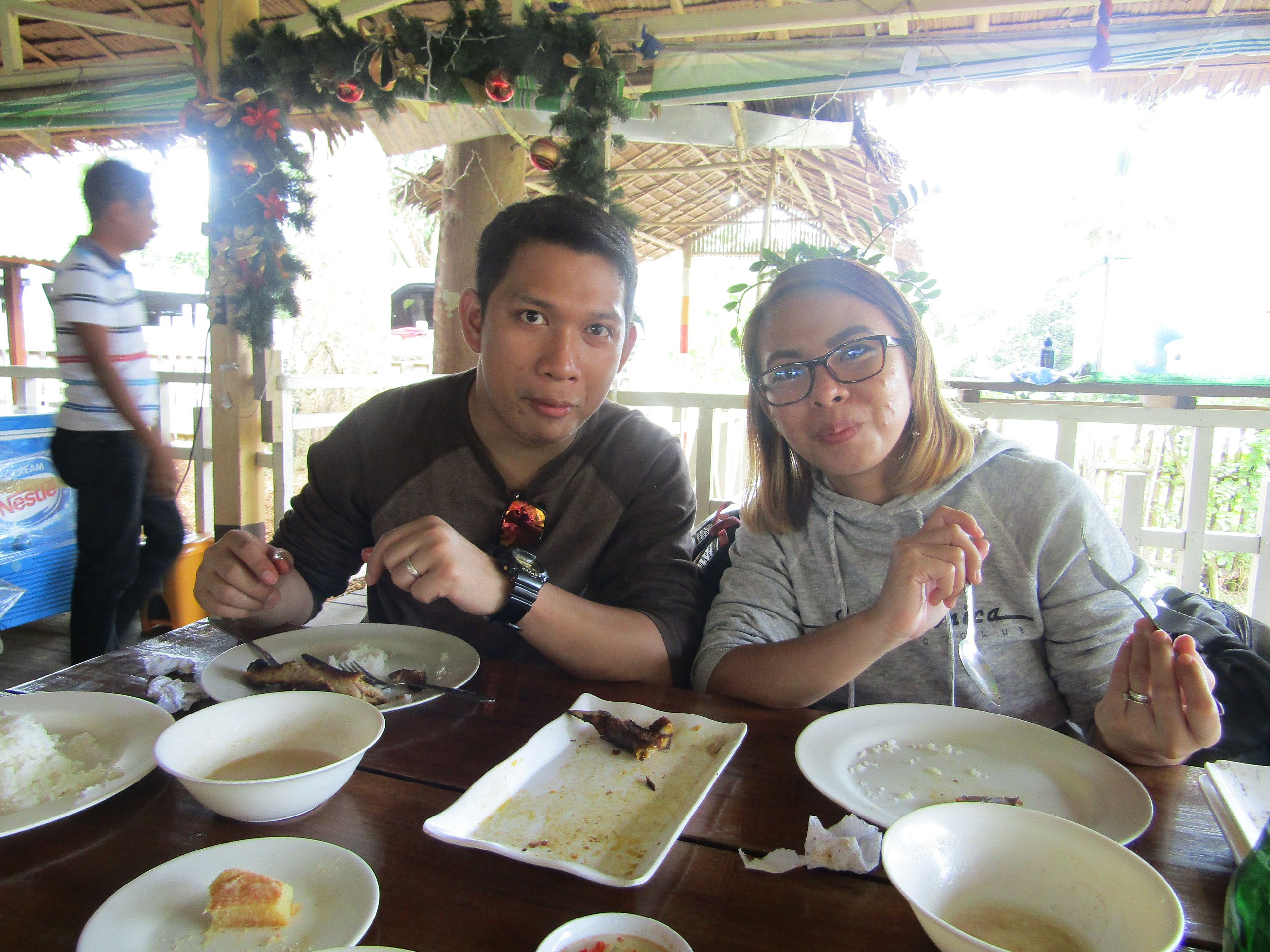
Mat & Johan about to clean up their plates at Elfredo’s restaurant
Along the Puerto Princesa North Highway towards El Nido
We would pass through undulating roads along the fringes of the municipalities of San Vicente and Taytay (the first capital of Palawan, dating back to the Spanish colonial period and where the small Fort Santa Isabel – constructed in 1667- still stands until, on a small rotunda, we bade goodbye to the PPNR and veered west towards the Taytay-El Nido National Highway.
Previews of what to expect in El Nido would manifest along the T-EN National Highway as the road grew steeper, following the Malampaya River. Majestic views of a few islands would behold our eyes as soon as the van crested a steep hill.
We finally arrived at the terminal in El Nido at about 3 PM, and a short tricycle ride (PHP 50 or USD) whisked us to our hotel’s downtown office along Calle Hama.
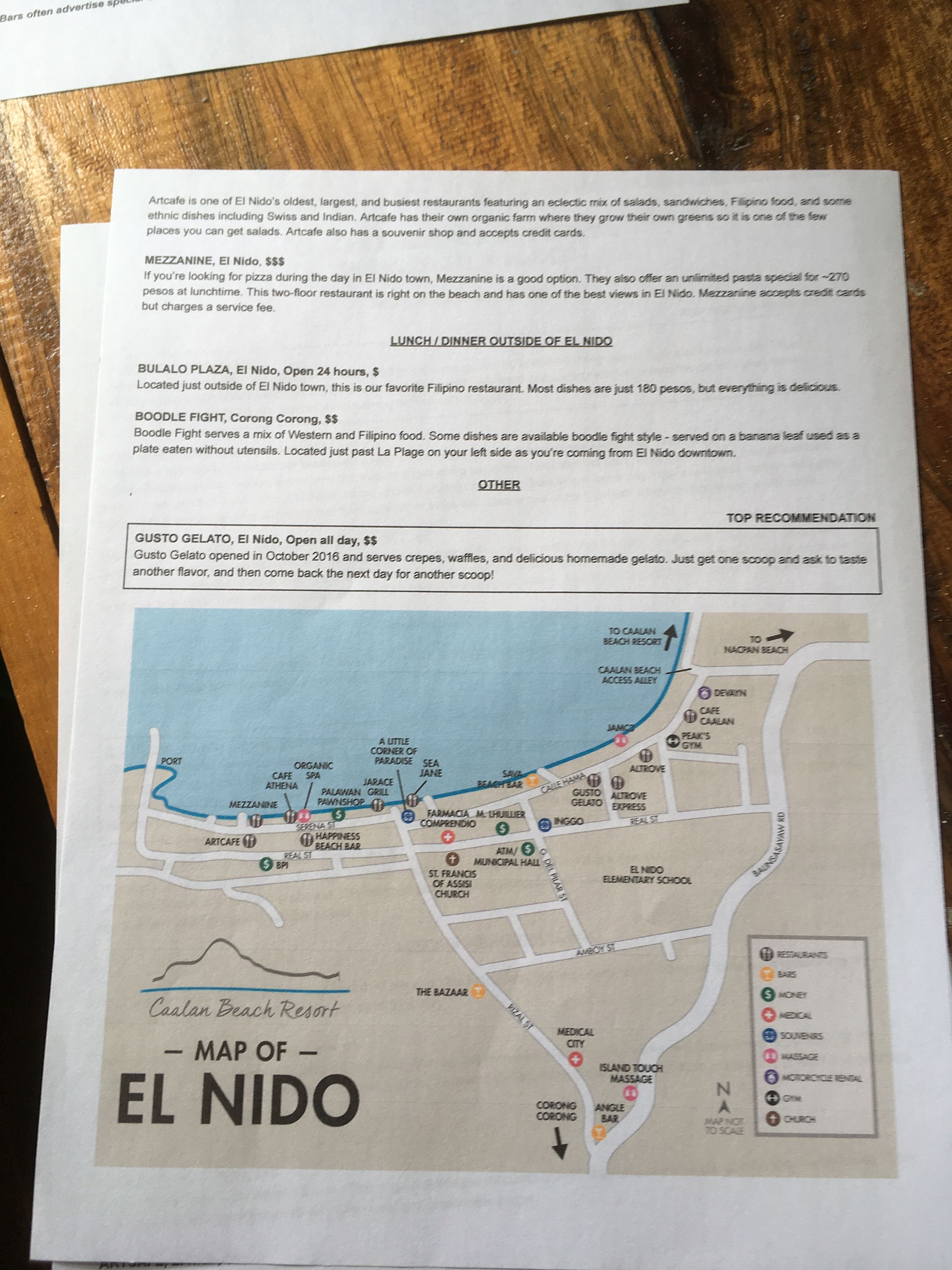
A woman in her mid-20s with hints of Middle Eastern ancestry confirmed our reservations and radioed for two (2) smaller tricycles to pick us up. She also provided insights and impressions about the entire place, handing out a simple map of El Nido that included a list of nearby massage parlors, bars, and restaurants.
Simple map guide in downtown El Nido, Palawan, provided by Caalan Beach Resort.
The road that led to Caalan Beach Resortwas too narrow – barely a meter wide in some areas – that on several occasions along the way, either our ride or the incoming one had to stop and give way to the other.
The cemented road followed the shoreline until you hit an unsealed portion lined by coconut, banana & other small fruit trees as well as a variety of ornamental plants with nipa huts, slow-slung houses, two-story concrete hostels, ‘sari-sari’stores (a small, family-operated shop that sells sodas, snacks & various household goods typically attached to the house), makeshift food-stands, dogs by the roadside, all mingled in a locale called “Barrio Taiyo” (Taiyo Village).
At the resort, we were greeted and offered welcome drinks by Bee, who explained that she and her husband, John, were helping their parents run the place during their vacation. She added that her father, married to a Japanese woman, was an engineer from South Korea who decided to settle in this part of Palawan when he was assigned to work on a road construction project in the area.
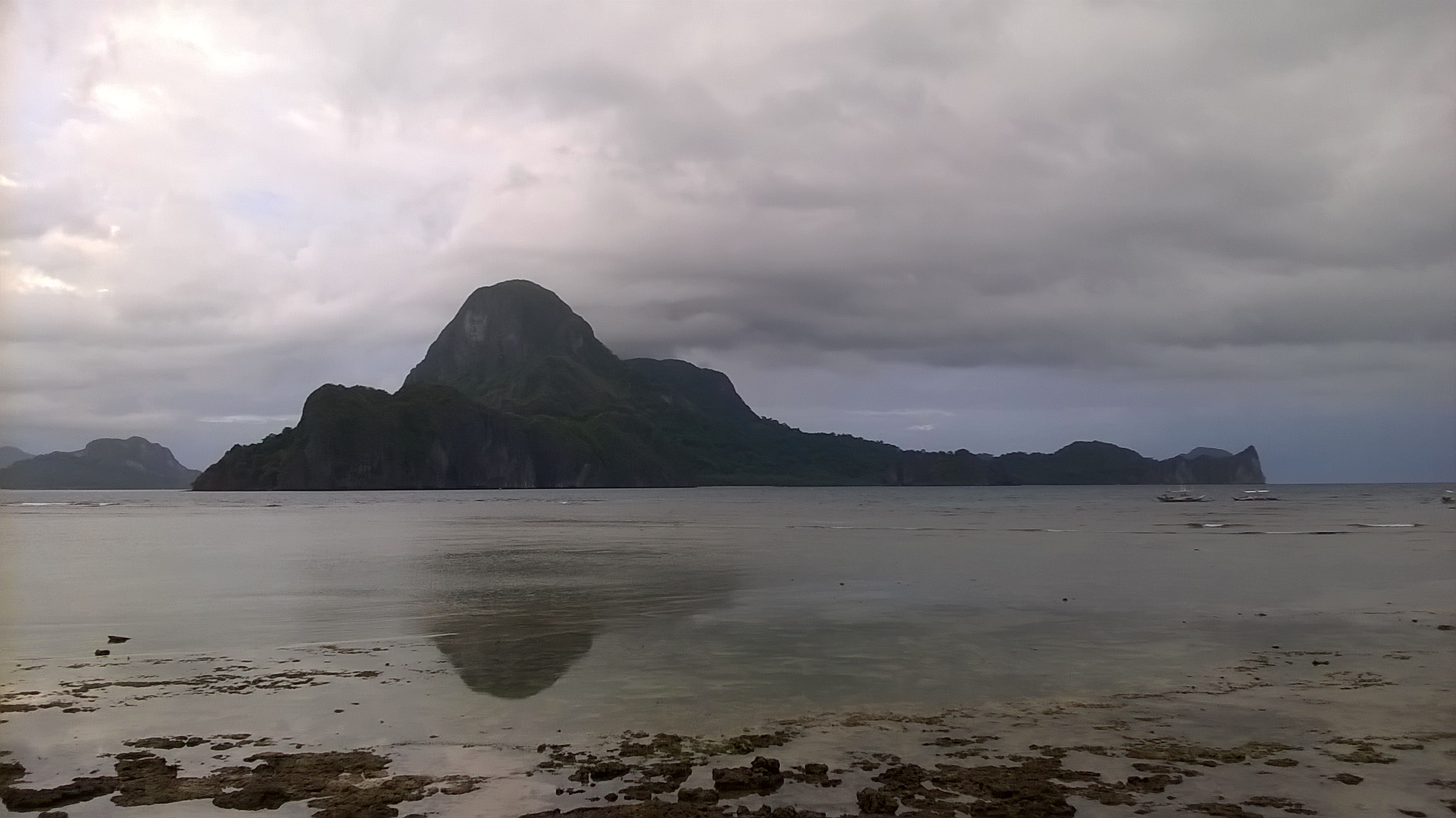
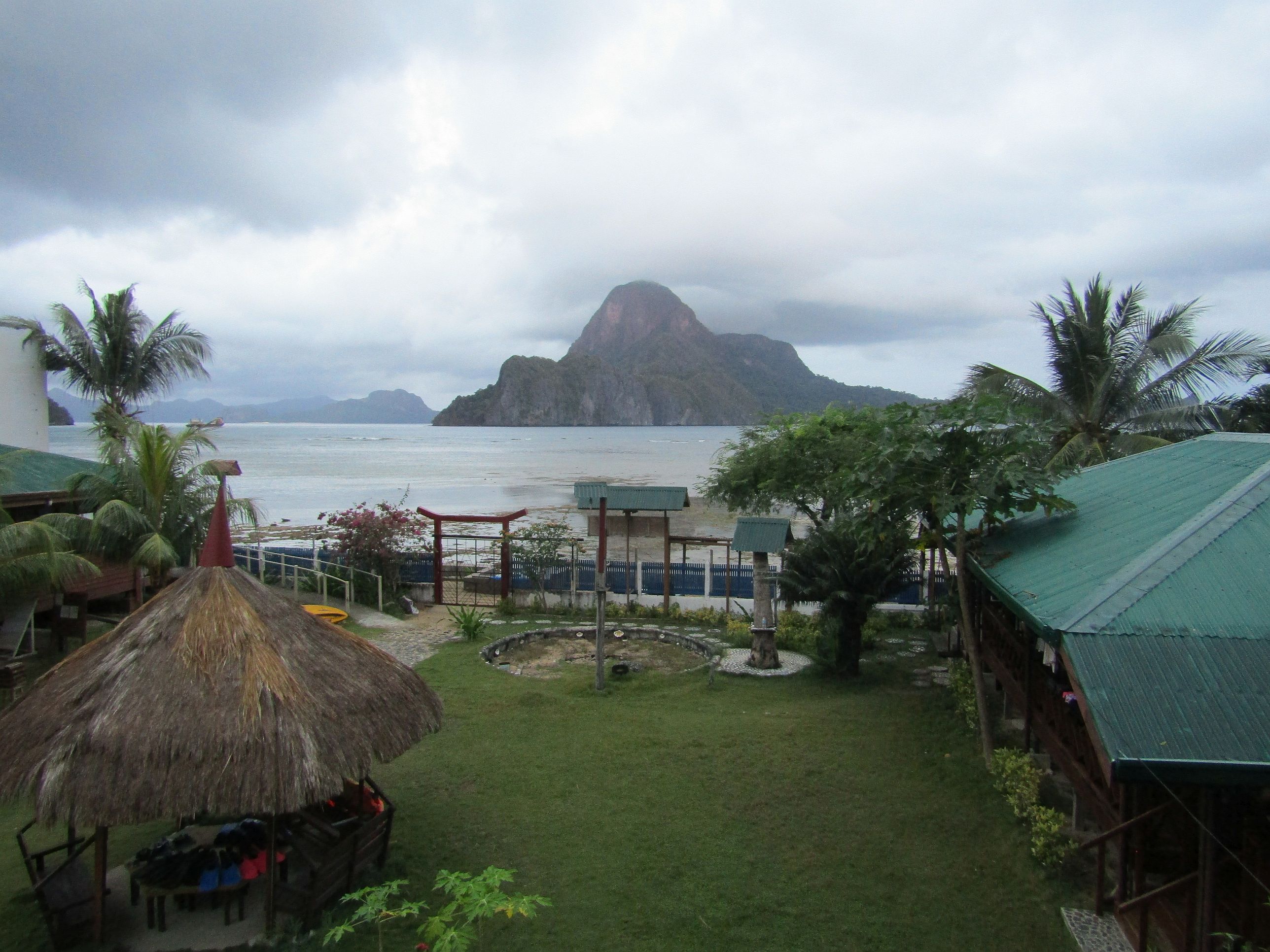
We finally settled into our second-level room, which featured a balcony offering magnificent views of several islands in the bay, with Cadlao Island being the largest and most immediate.
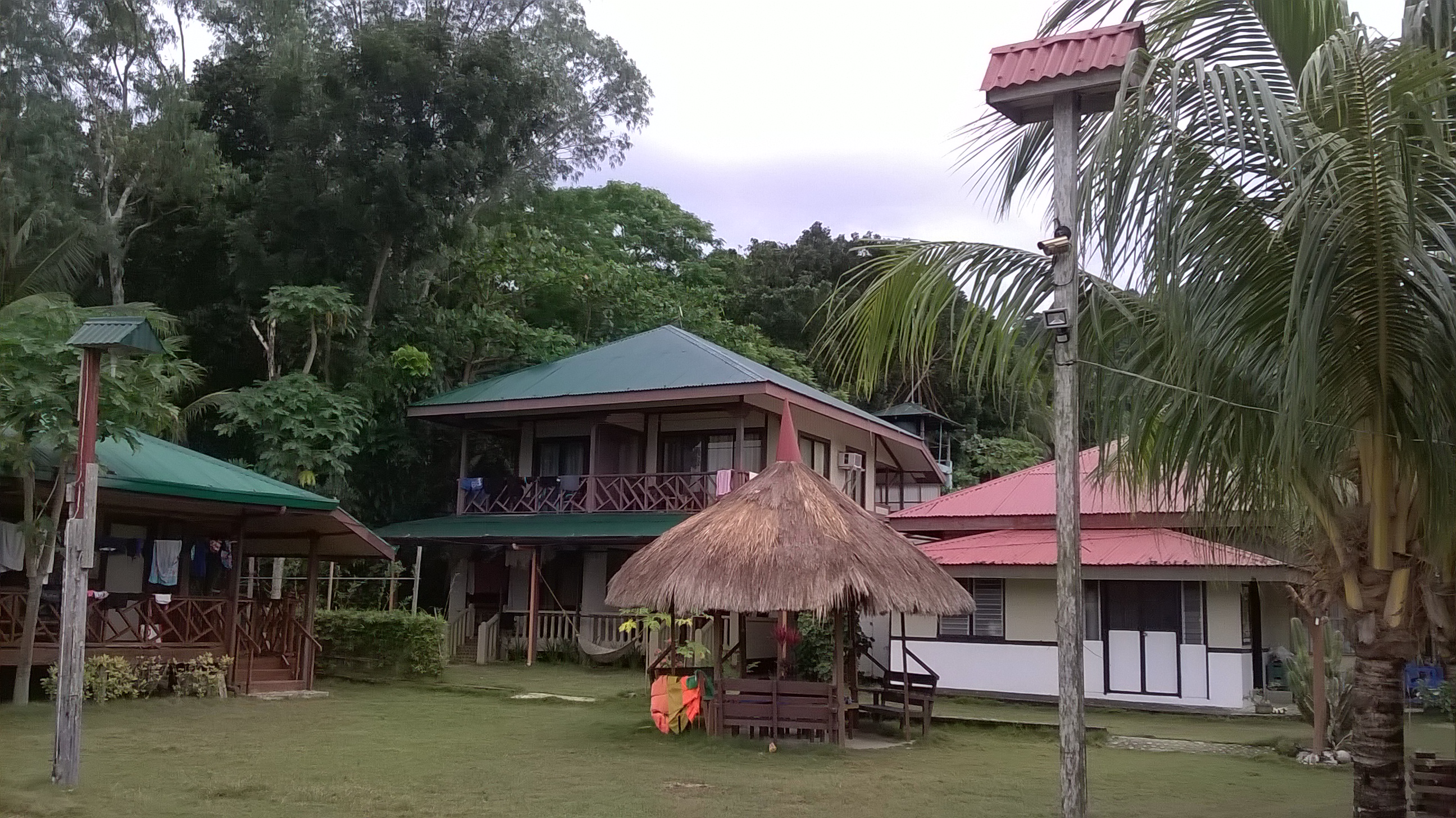
That’s our room on the right, 2nd level inside the Caalan Beach Resort in Barrio Taiyo, El Nido, Palawan
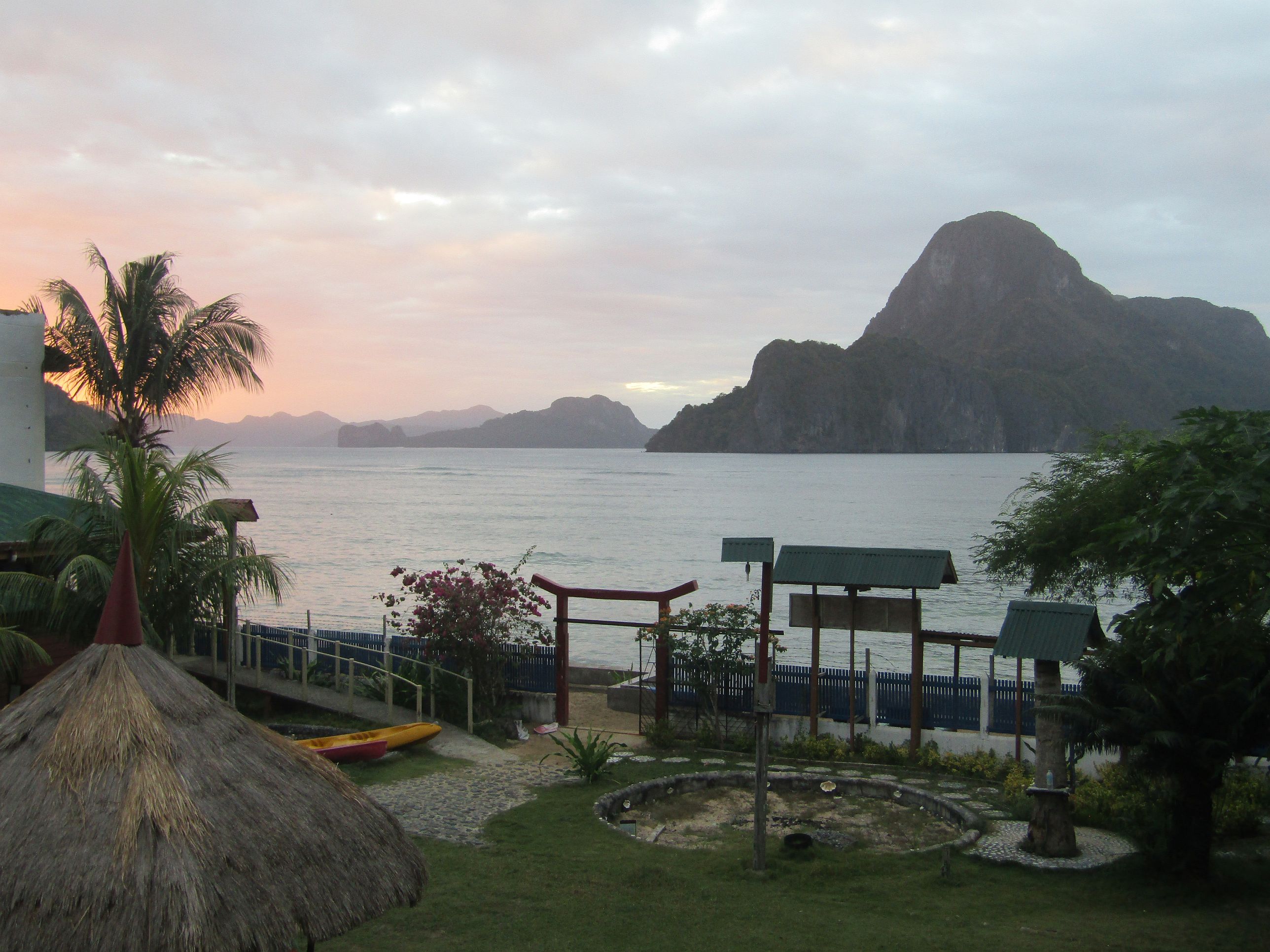
This is the view from the terrace if you stay in the room seen in the preceding picture.
Mat & Johan checked out the beachfront but found it too rocky and the nearby waters too shallow to take a quick swim, so we all just had a quick nap before heading out back to town to have dinner after briefly waiting out the mild drizzle brought by dark clouds that passed by.
The beachfront at Caalan Beach Resort was too rocky to take a quick swim in.
Calle Hama is the unofficial party street in El Nido, as it’s where most tourists end up after their excursions along the beach. It’s a narrow, interior road; hence, it is closed at night to all vehicular traffic – except for tricycles owned by resorts along the coast – to allow enough space for all the touristy activities.
Due to poor or even non-existent urban planning & zoning, it suffers, just like most remote bayside resorts all over the country, from its inability to exude any charm or appeal. The area is a haphazard collection of food stalls, souvenir shops, hostels, and houses, where locals, backpackers barely out of their teens, and elderly tourists mingle and wander around.
After trying out a few pieces of “barbecue-on-a-stick” from a sidewalk stand, we got bored with the area, as it was a bit early, and took another tricycle ride towards “Bulalo Plaza“.
We stopped just a few meters after we exited the junction of Rizal Street and the Taytay-El Nido highway. Unless you’re a local, and although the place is open 24 hours a day, it is easy to miss, as the small signage is often overwhelmed by the cliff walls and the surrounding greenery.
We climbed a few steps into the eatery and were ushered to a table right in the middle of the place by a pleasant, effeminate waiter who introduced himself as Megan. The entire setup resembled a kitchen converted into a restaurant, featuring about eight wooden tables and bamboo benches in a squat, elevated location that faced the highway.
Two orders of the house special, ‘bulalo‘ (beef shank soup with vegetables), a plate of ‘seafood sisig’ (a variety of minced seafood sautéed in a sizzling skillet topped with chilis & fresh egg), rice, sodas, and a bottle of beer were more than enough for our stomachs. Afterward, we decided to walk back to town to shake off some of the cholesterol deposits.
Along the way, Mat & Johan inquired at a roadside travel and tour stall for the earliest trip back to Puerto Princesa on Wednesday to catch the underground cave trip on the same day. Mat balked at the idea after learning that they would not only barely make it to PP on time but also lose the money he had paid for their already booked and scheduled return trip.
Mat and Johan — just outside a travel & tour stall along the Taytay-El Nido National Highway
Back at Calle Hama to get our free ride back to the resort, the trio went shopping for souvenirs while I scoured the place for some cold beer in cans. I managed to get some, but they were not cold, so I searched in vain for some ice. Our driver suggested I could get some at the resort, so our tricycle squeezed back into that narrow alley, its motor sputtering in the stillness of the early evening along the shore.
Ruby showed up later in the room holding a block of ice wrapped in plastic that Bee had given her. While they all prepared their things for the island-hopping trip the next morning, I sat back on the bed to enjoy my ice-filled glass as I slowly poured the country’s best beer –San Miguel– into it.
It was a luxury I would regret in the next few hours, in fact, for the next few days.
Day 3 – Feb. 7, 2017 – (Tuesday): Island Hopping Tour Day
Immediately after breakfast, John knocked on our door and informed us that we needed to prepare for the island-hopping tour by 9:00 AM. A few guests had already milled around the nipa-roofed gazebo, where we could see them choose and pick among several sizes and colors of snorkel gear neatly arranged atop a low table in the middle of the sandy floor.
Early morning in El Nido, Palawan
Last night, however, my seemingly innocuous decision to ask for some ice for my warm canned beer resulted in vomiting episodes and several trips to the bathroom – bad water– that rendered me so physically exhausted. But who wants to miss a cruise of the islands on a nice day in El Nido?
He prepped six (6) other guests and us on what to expect during the ‘island-hopping’ tour and offered great tips on how to ‘survive’ the almost day-long water trip. Then, without John, our boat crew of four (4), led by a spunky Palaweña in her late twenties, herded us to a quarter-mile walk along the shore towards the deeper part of the bay where the resort-owned outrigger was moored.
Yesterday afternoon, before heading downtown for dinner, we agreed to purchase the “Island-hopping package C” (“Hidden beaches and shrines“), which started with a nearly hour-long ride to Tapiutan Island.Our group was barely enjoying the waters in our snorkel gear when a coast guard band of two aboard a small motorboat waved us to move to a different location to protect the coral reefs in the area we were in.
Tapiutan Island from a distance
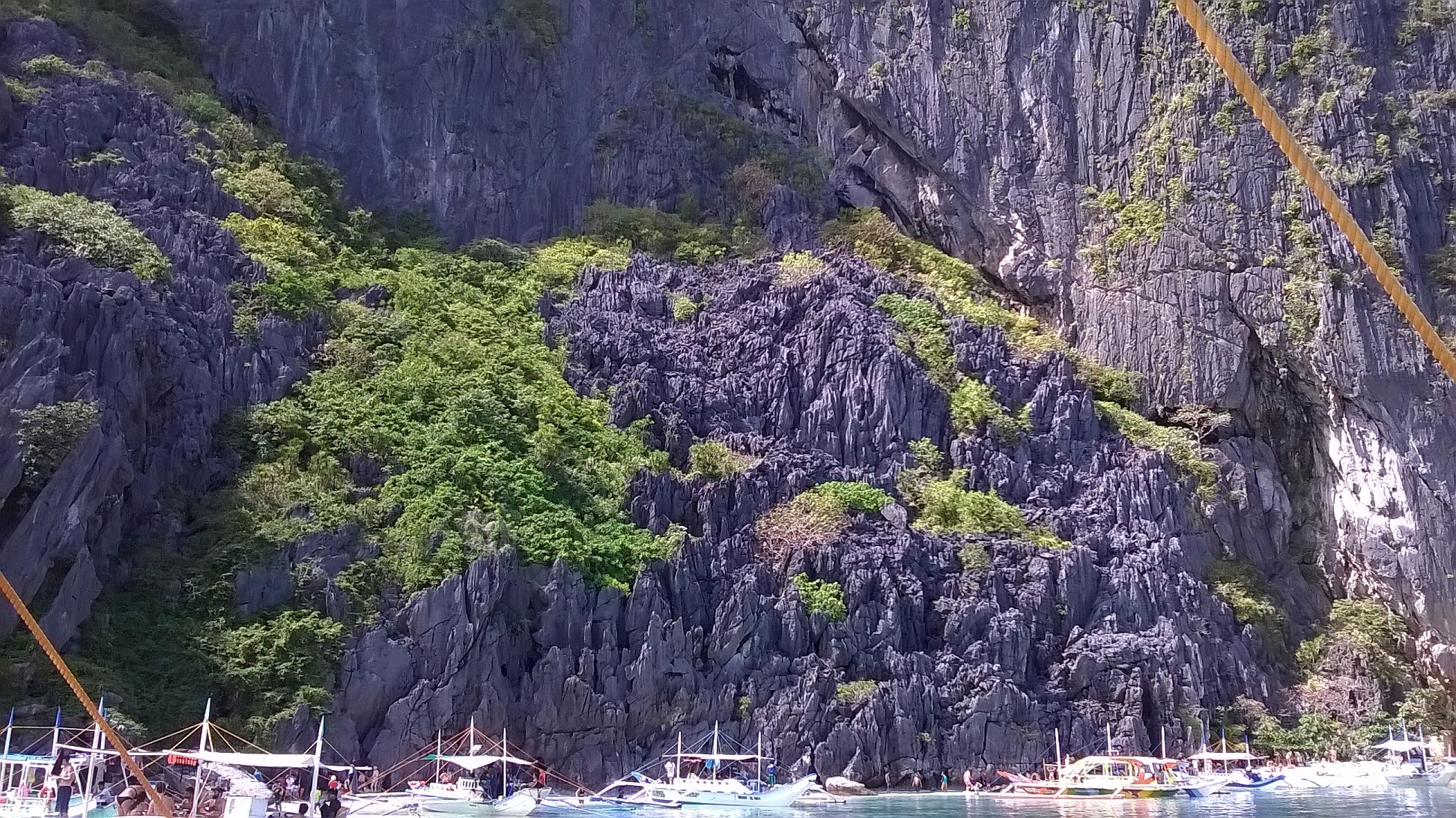
The next stop would be ‘Secret Beach‘. It is accessible via a narrow portal that leads to a cove with shallow water, surrounded by limestone walls that have witnessed a significant slice of mankind’s history. The big boulders below the water made it an ideal place to waddle around and enjoy the sun.
Lunch aboard the boat consisted of a salad medley made of cucumbers, tomatoes, lettuce, grilled ‘pork liempo’ (pork belly), steamed ‘tahong‘ (mussels), grilled ‘tambakol‘ (skipjack tuna) complemented with slices of watermelon and pineapple. We also bought fresh coconuts from an enterprising vendor who sold canned soda and beer on a boat.
Boats converge in the calm waters on Matinloc Island, where island-hoppers have their lunch.
After lunch, our boat headed to “Hidden Beach”, which was the most challenging part of the trip for non-swimmers, as one had to fight a swell near the edge of the cove, amidst huge rocks that were constantly slammed with waves. At least two boat crews had to assist each guest who either couldn’t swim or was unwilling to venture into the dangerous waters.
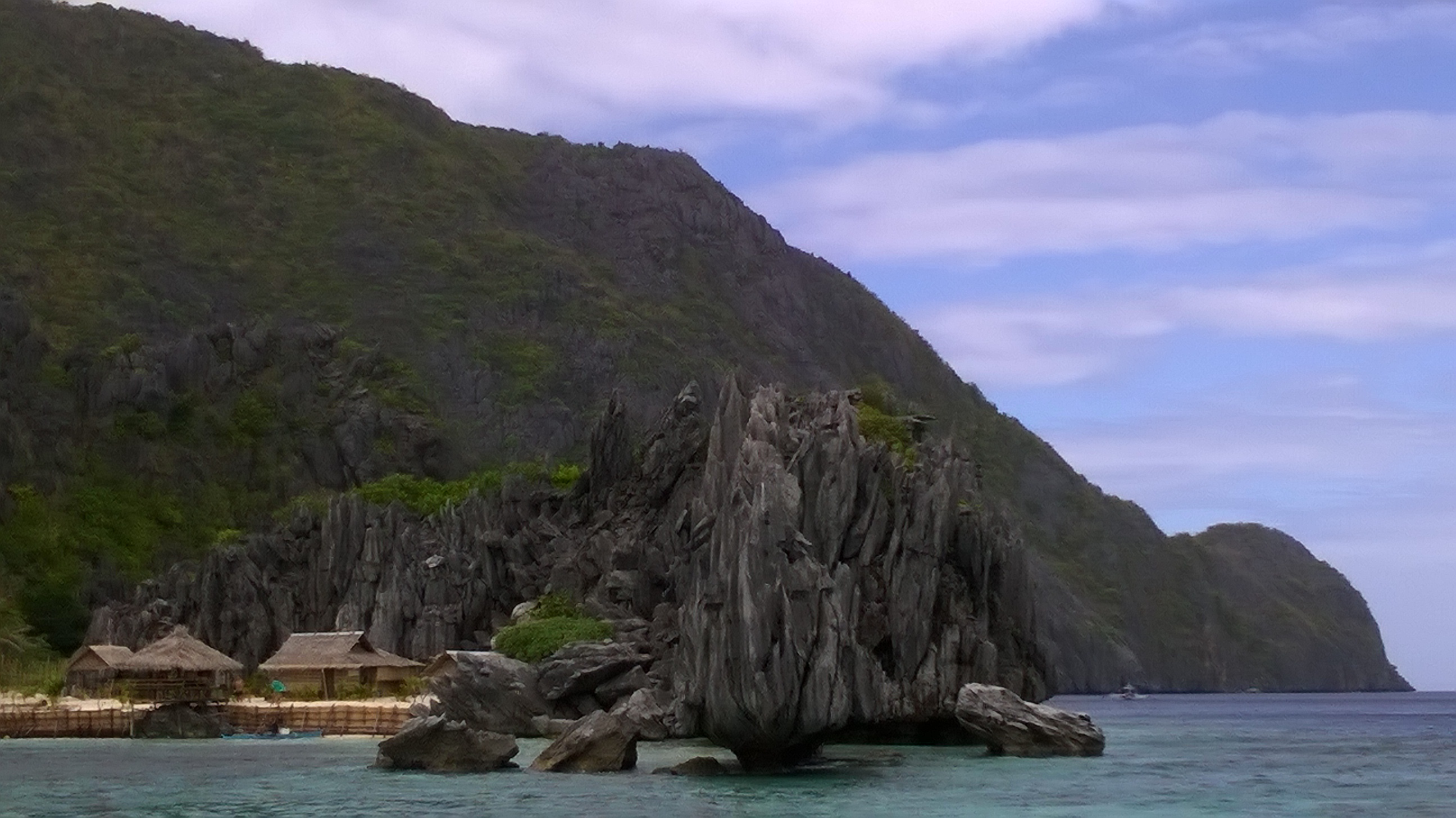
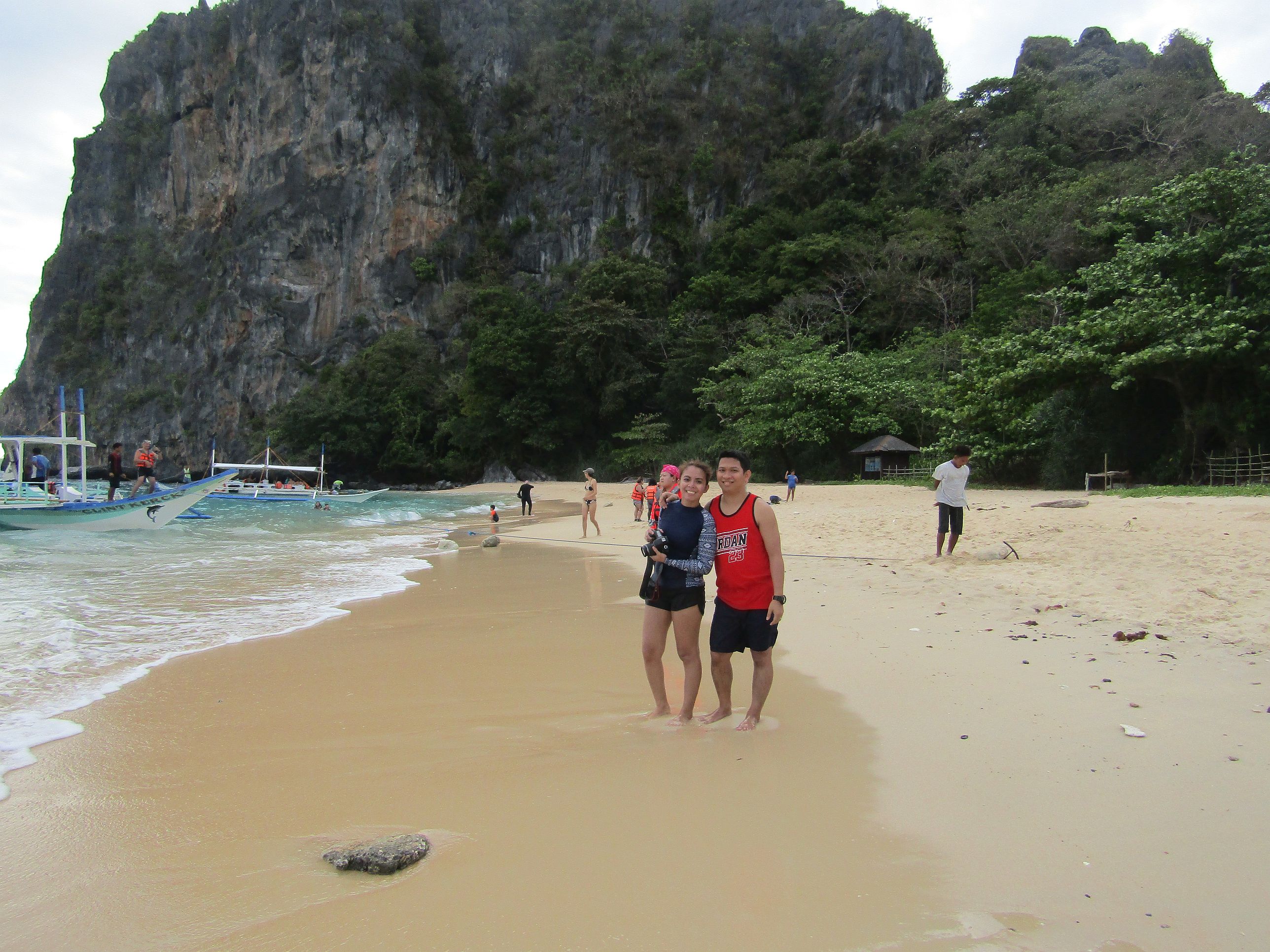
The last leg of the tour was a brief stop at the “Helicopter Island” – so-called because its silhouette resembles a helicopter when viewed from a distance – where we took pictures of the majestic cliff walls. We missed those beautiful sunset views, as gray skies dominated the rest of the afternoon.
Matt & Johan at the shore of Helicopter Island, El Nido, Palawan
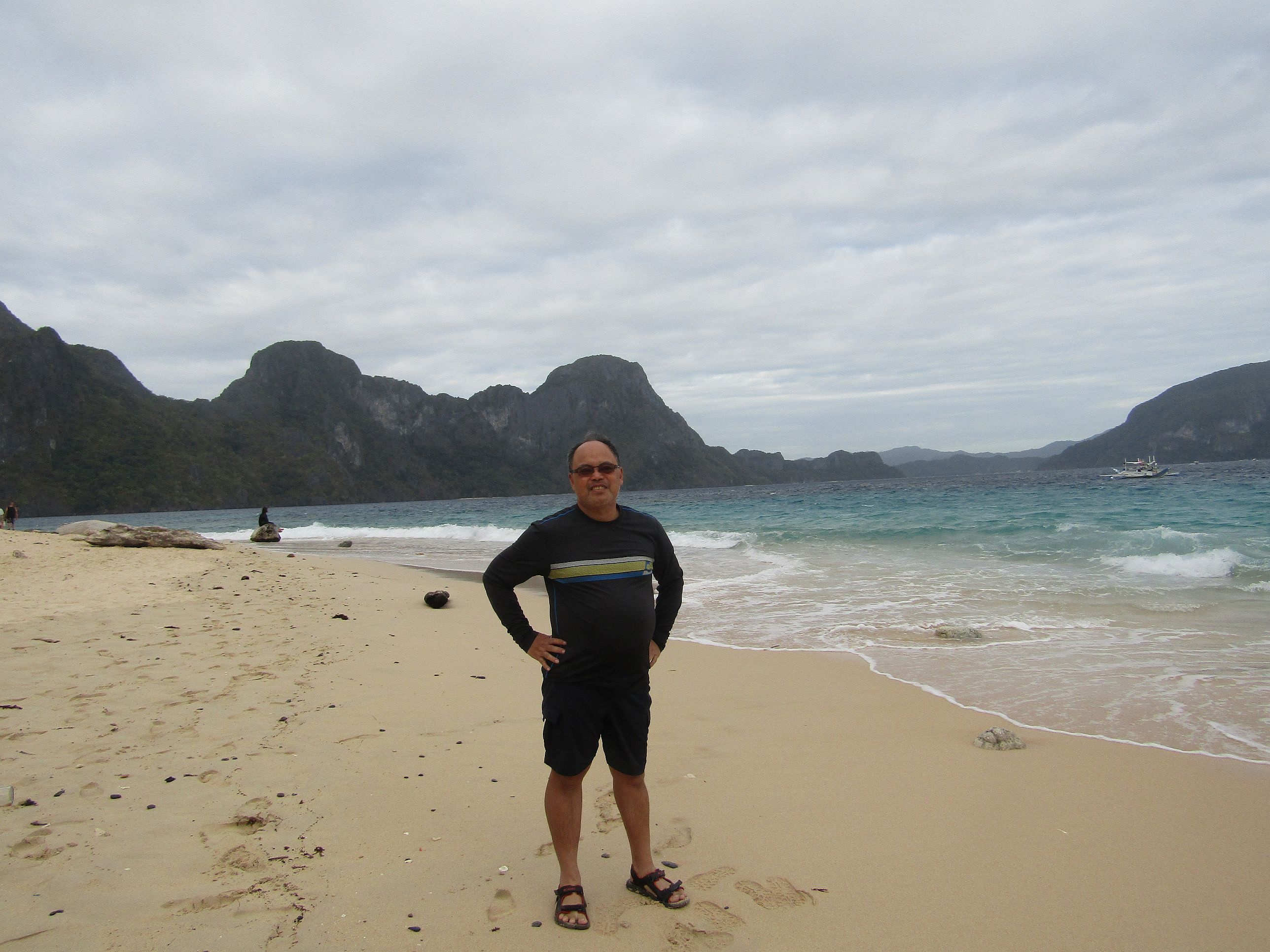
The web author- in El Nido, Palawan
It was almost 5 PM when we finally made the channel crossing back to the bay and a short walk along a narrow, tree-lined path leading to the resort’s back door, where some drinks and biscuits awaited us.
Day 4 – Feb. 8, 2017 – (Wednesday): Back to Puerto Princesa on a Bum Stomach
My stomach felt better after a cup of tea and a Pepto-Bismol tablet. Breakfast consisted of two boiled eggs, as I was too weak and tired to go to the restaurant. The styrofoam box with my dinner lay untouched on top of the shelf. Last night, after the boat trip, Mat & Johan went back downtown to get some food and check it out a bit more, while Ruby just opted to stay to help me out with my stomach bug.
We quietly packed up our belongings, including our still-damp clothes, as the lack of breeze from the bayfront and the fact that it had been mostly overcast for the remainder of the afternoon after the boat trip didn’t help the somber mood.
A narrow tricycle with enough space for the 4 of us took us back to town for our ride back to Puerto Princesa. At the bus terminal, I took care of our luggage. At the same time, they walked off in search of a pharmacy to obtain some anti-diarrheal tablets, electrolyte mix (Oresol), and bottled water to stabilize my stomach on the long trip back to PP.
For reasons unknown to us, we were transferred to another van loaded with two other passengers just a few miles outside of El Nido. The van was more comfortable, so we didn’t complain. The return trip was uneventful except for a lunch stop at an open-air restaurant that offered a nice view of the hillside and a glimpse of the waterfront further down.
We all managed to doze off in the air-conditioned van along the way, possibly in anticipation of the activities ahead in PP, or perhaps because our bodies were still recuperating from the strenuous water activities of the previous day. Or maybe it was just another one of those sleepy, beginning-of-summer days in Palawan that’s perfect for a siesta?
By 2 PM, we’re back in the city of Puerto Princesa, and we had to wait for a few minutes at the odd mixed-business-and-living-room-like reception area of the enigmatic D’ Lucky Garden Inn– our overnight shelter for the day before we head back to Manila the next morning.
The place had an unusual appeal due to its maze of very narrow passageways that led to several doors, leaving you guessing where they would lead next. I suspect that the entire place is an ‘all-purpose lodge’ that can accommodate all patrons looking for either a quick 3-hour ‘love motel’service or weekly/monthly renters.
Mat had booked two separate rooms for us, and both had that unmistakable scent of a love motel, which I could describe as a mix of household bleach and a strong musk fragrance. Mat and Johan’s room even had a motif —a red, mosquito-net-like fabric draped over the center of the double-sized bed.
One of the maze-like alleys inside D’Lucky Garden Inn – Puerto Princesa, Palawan
After settling down in our rooms and cold showers, we rested for the remainder of the afternoon until the couple took off again aboard another van for the ‘firefly watching’ tripin an area of the Iwahig River where a penal colony is situated nearby. They would be the only takers for the PHP 1,200 (USD 24) per head tour, as inclement weather discourages other tourists.
Meanwhile, Ruby wandered all over to sort out the entire compound while I stayed inside the room to battle the bacterial infection that had now settled in the lower intestines. The numerous trips to the bathroom made me so hungry that the ham & cheese sandwich, fries, and a bottle of Sprite that I ordered did not last long on the serving tray.
Mat had sent a text message to inform me that we both were already asleep when they returned from their trip by 9:30. They would report the following morning that while they enjoyed the food at the restaurant stop before they took the boat for the firefly watching, just a few of them showed up and failed to dazzle with their fireworks as it briefly rained during the trip.
Day 5 – Feb. 9, 2017 – (Thursday): Puerto Princesa Airport in 3 Minutes
Since our one-and-a-half-hour flight back to Manila was scheduled for noon, just after having their early morning coffees, the trio accepted the offer of one of the receptionists, whose husband owns a tricycle, to give them a ride to Baker’s Hill and Mitra Ranch at a discount. Ruby decided to return to Baker’s Hill to buy that delicious hopia again, this time as ‘pasalubongs‘ (presents) for the folks back in Manila.
The young couple at the zipline experience inside Mitra Ranch, PP, Palawan
Entrance to the former Mitra family residence in Palawan. It is now a family-run museum.
With renewed spirits after spending almost 18 hours in bed since our arrival, I decided to explore the place after a hearty breakfast of ‘cornisilog‘ (corned beef hash, fried egg, and fried rice). My bum stomach had markedly improved after the continuous intake of the electrolyte mix, cold Sprite, and Diatabs.
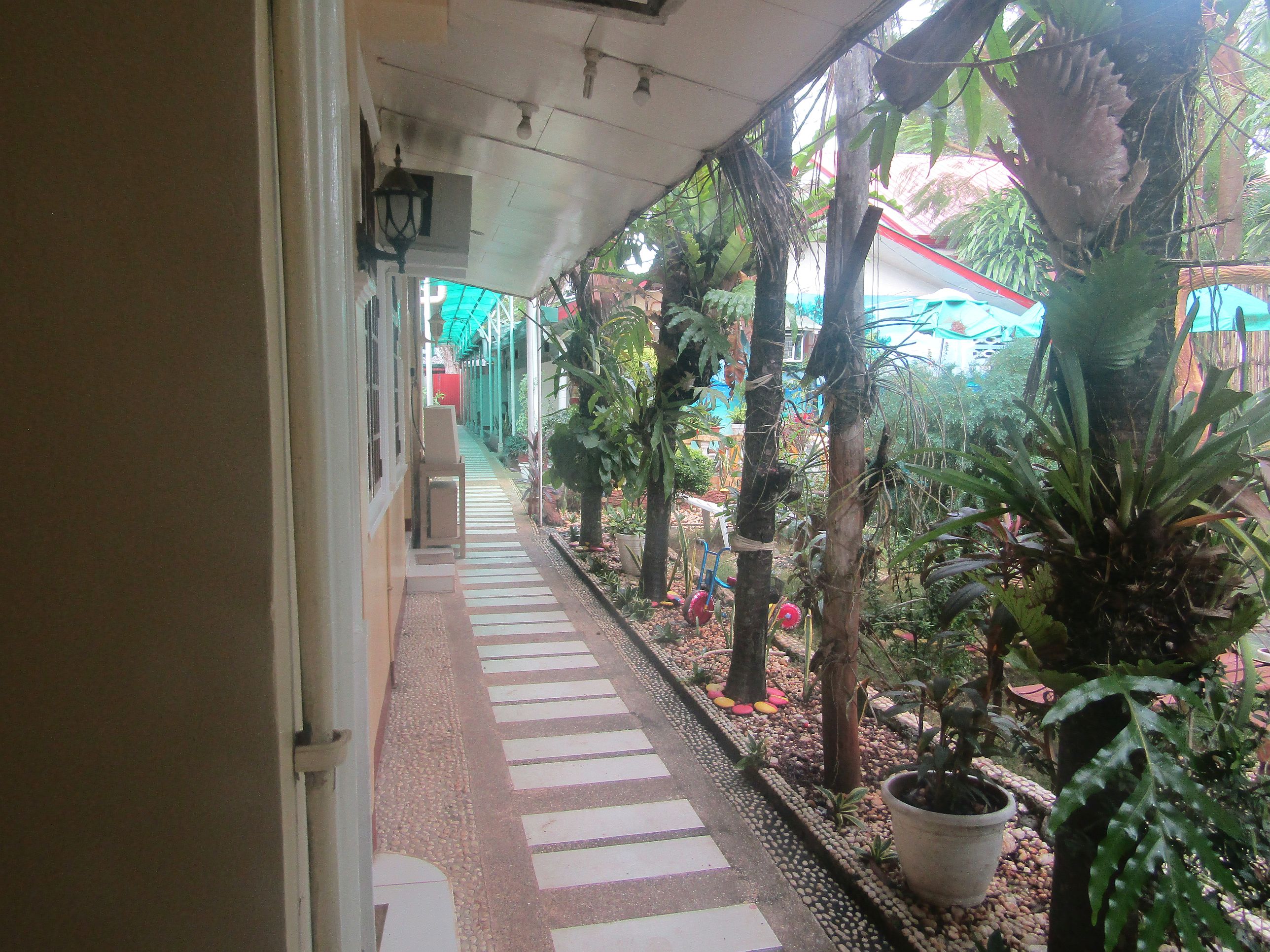
The ‘lucky garden’ was just across our room, so I made a few trips between the bathroom, the garden, and the restaurant just to the right. I took a few pictures of the surrounding areas to pass the time while I waited for the trio to return.
A nipa hut in the middle of the D’ Lucky Garden Inn’s interior garden
Probably the owner himself was the chief landscaping architect of the entire place
Sometimes you visit a place, and one bad experience would be enough to ruin your entire perception of its people. On the other side of the coin, the friendliness of the people in a particular place could be so overwhelming that you wish that you had stayed much longer.
Palawan is one of those places that could be categorized as the latter. Its people will afford you just the right amount of personal space so that you can introspect on your life’s journey and enjoy what the entire island has to offer.
Ruby, Johan & Mat at Puerto Princesa airport’s boarding gate
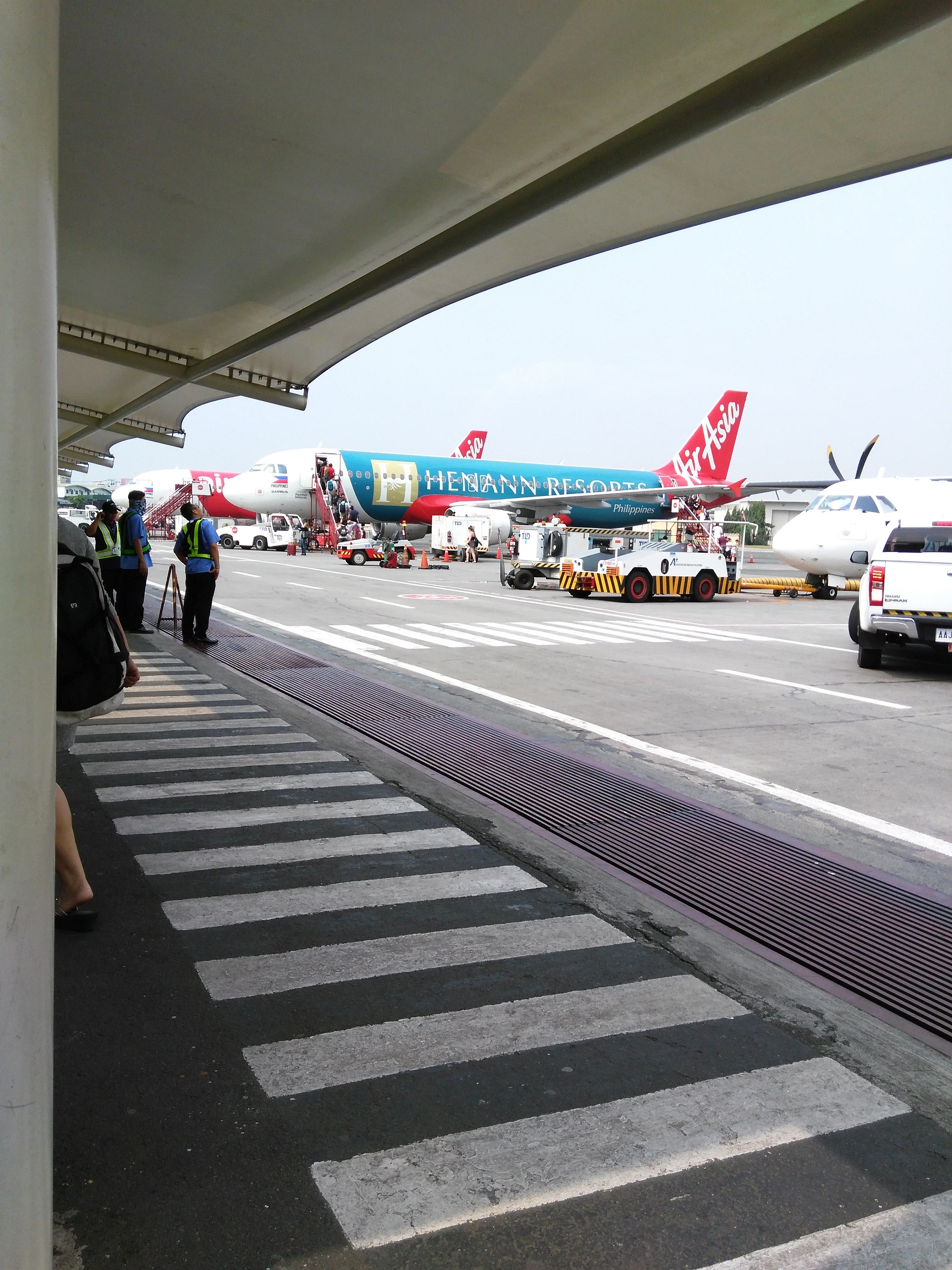
Malaysian-owned Air Asia planes at Puerto Princesa airport
After the trio arrived, a nearly brand-new white van picked us up at approximately 10:50 AM. From PEO Road, it made a left turn towards Rizal Avenue, then turned right into an open gate after a brief moment. After that very long trip to El Nido and back, we’re all surprised by that relatively brief interlude of a ride to the airport.
At 10:53 AM, we quietly unloaded our bags from the van and headed to the Air Asia check-in counter for the flight back to Manila.
During our short trip to Siem Reap to marvel at the spectacular temples in the Angkor complex – Angkor Wat is just the centerpiece of this massive Khmer kingdom – we learned not only about the ancient past but also how young Cambodians look to the future. Thanks to our young ‘tuk-tuk‘ driver, Lam Lot, and the universality of the English language.
Aboard his black-colored cart with that distinctive purple seat covers, pulled by a 125 cc. motorcycle, he informed us that he had invested approximately US$1,450 ($550 for the cart and $900 for a popular Japanese-brand motorcycle) in his contraption after leaving his all-around job at a hotel that paid him US$100 per month.
Taxis are scarce, especially in the outskirts of downtown Siem Reap, making tuk-tuks the most convenient way to get around the city. Although shops are abundant that rent out motorcycles, scooters, ATVs, and bikes, you’re on your own to figure out your way around.
Educated by Buddhist monks, Lam Lot is the epitome of the new breed of young Cambodians who are determined not only to forget the grim, yet not-so-distant past and focus on the present, but are also willing to embrace new technologies.
During the Pol Pot regime, being an intellectual meant the death sentence. These days, thanks to the Internet and the tourism boom, young Cambodians are increasingly aware of what’s happening in and outside their country. They are also willing to take the lead in propelling their country forward.
Ducks for sale: a young Khmer woman on her way to the market
Lot, who preferred to be called by that name, is employed by the hotel (Sekla Villa Angkor) where we stayed, which has a stable of about 4 or 5 tuk-tuk drivers to transport guests around for free as a marketing ploy.
We got endeared to him by his persistence in conversing with us in English, although we had to ‘cup our ears’ to his mouth for us to comprehend what he meant.
Accompanied by hand gestures, we were able to convey most of what we wanted to accomplish during our city tour. He also refused to accept our tips (but we persisted) for the trip from the airport to our hotel and informed us (yes, almost scolded us) that “everything was included in the hotel deal.”
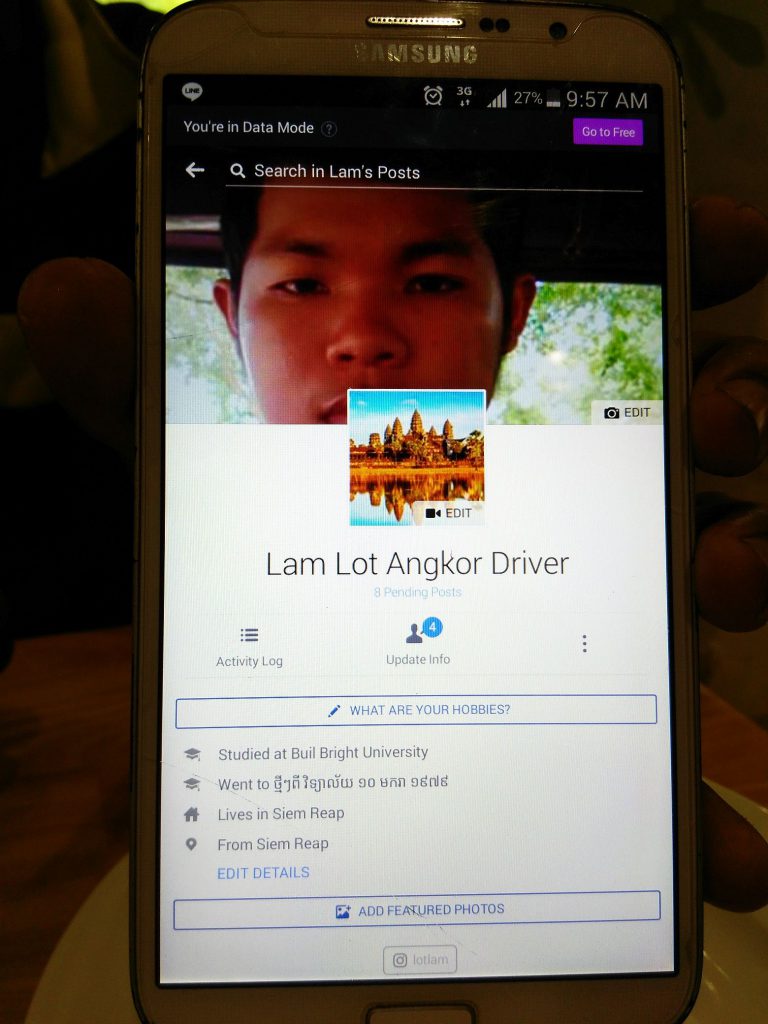
Our young tuk-tuk driver proudly showed his social media profile on his smartphone.
Before we headed to our room, we paid for the “Grand Circle Tour” ($5) and the “Sunset Viewing” ($10) at one of the temples along the way, but it made us wonder why the former didn’t already include the latter. We also reminded the young lady receptionist that we wanted the same tuk-tuk driver who brought us in.
The next morning, immediately after we had our breakfasts, Lot greeted us with his sheepish smile and provided us with an overview of the Grand Circle Tour of the Angkor complex using a map that he pulled out from the canopy of his tuk-tuk. He had also brought a cooler, which he filled with ice and several bottles of water.
Except for our lodging, we had done almost no research about the Angkor complex. We all thought that visiting Angkor Wat was simply a matter of seeing another UNESCO World Heritage site in a couple of hours, taking a few pictures, heading back to our hotel to rest, and then picking another interesting spot to visit in the city. How wrong we were.
Siem Reap, despite its eclectic blend of the old and new, its provincial and small-town charm, had already instilled a mixed feeling of excitement and sadness inside me yesterday after I saw piles of garbage strewn all over the place, just a few miles from the airport and within the city proper.
A small creek, floating with food take-out boxes and an assortment of plastic debris, nearby our hotel, didn’t help to contradict that sadness — that, sometimes, borders on outright disgust.
Soon, the narrow inner roads gave way to broader, cemented roads, where, from a distance, we could see a cluster of tall, white-colored structures with bright red roofs — the Angkor Complex Visitors Center.
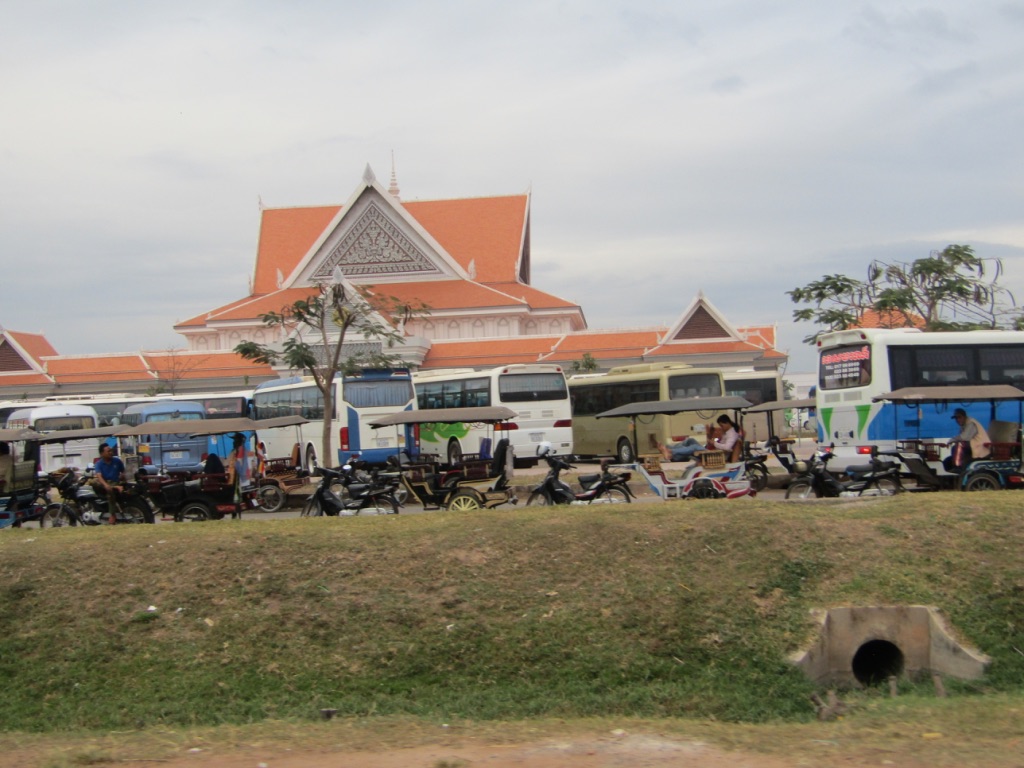
Tourist buses, scooters, and tuk-tuks vie for space at the Angkor Visitors’ Complex.
Lot told us to get our tickets inside and pointed to a spot where he would meet us amidst the pandemonium of people — tourists who had poured out from numerous tour buses, cars, tuk-tuks, scooters, bicycles, peddlers, and tour guides– in the parking lot.
He had also explained to us along the way that ticket prices were increased from US$37 for a single-day entry (usually $20). The special “buy 2 days and get the 3rd day free” offer is now $62 (usually $40) to take advantage of the influx of Chinese tourists visiting Cambodia for their holidays, as it coincides with their Lunar New Year.
The US dollar is the unofficial and widely accepted currency in the country, although locals will still gladly take Cambodian riels. Most shops will either give your change in riel or dollars, depending on what’s available.
Now armed with our 3-day passes, we drove for another mile or so until we reached a checkpoint manned by two uniformed personnel who verified our faces with the pictures on the passes and punched the date we entered, located at the back of our tickets.
It was after we made a short right turn towards our first stop in our grand circle tour that we all realized how massive the Angkor complex was. This is going to be a very long day.
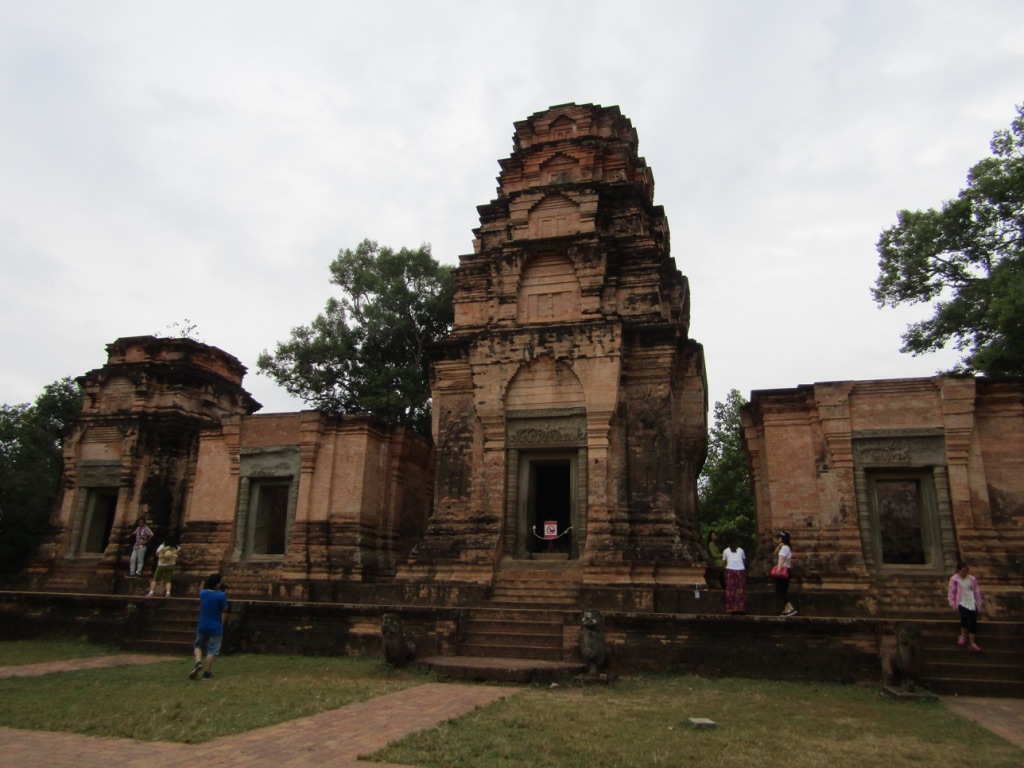
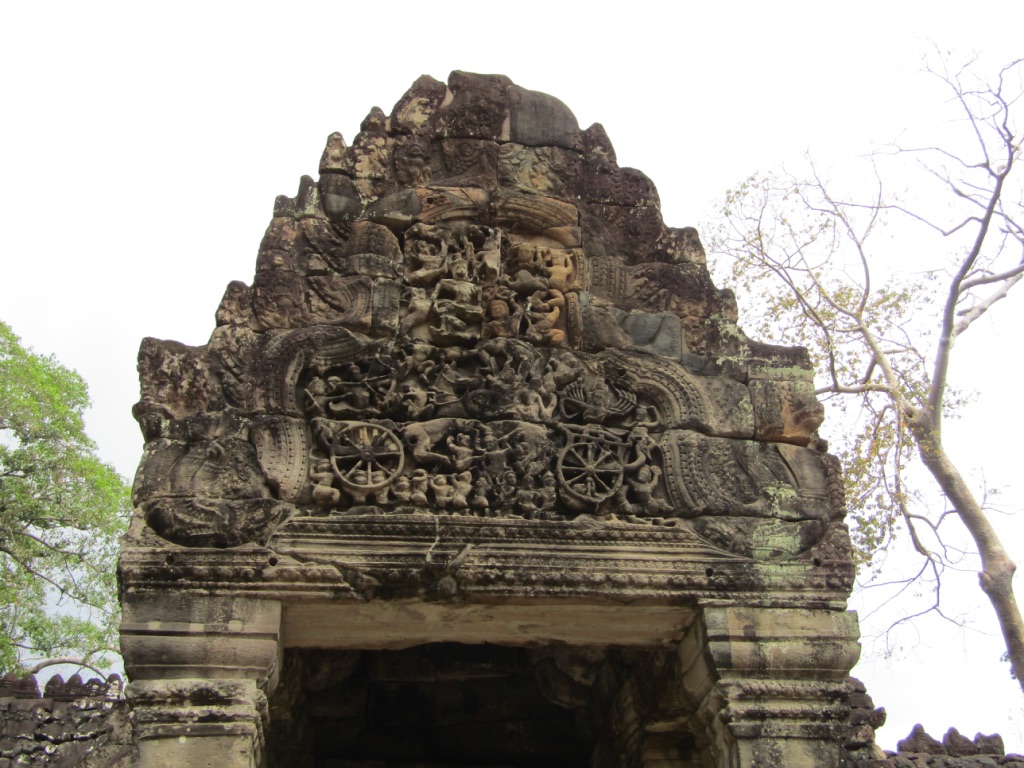
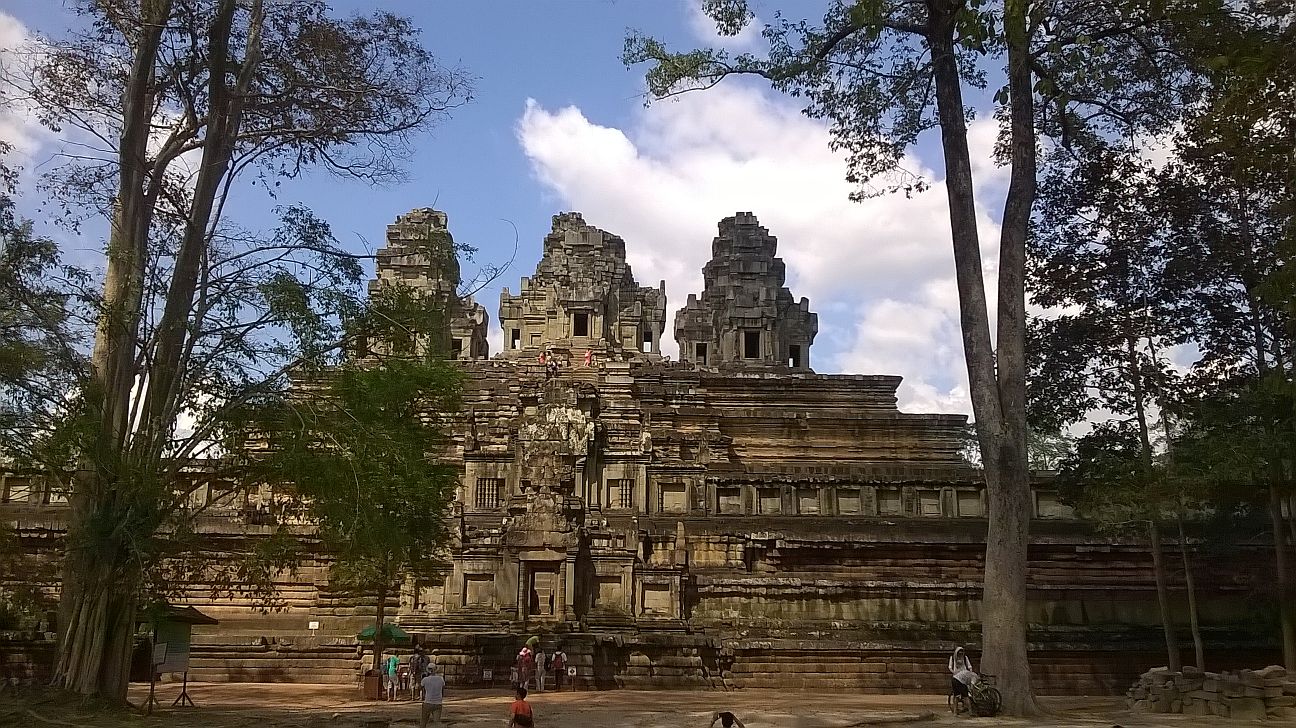
Our first stop is Prasat Kravan (modern name: “Cardamom Sanctuary”). Features magnificent interior brick bas-reliefs.Very detailed carvings everywhere you look!
The temples in the almost 16-mile-long ‘grand circle tour’ not only mesmerized, tantalized, and dazzled our eyes but also made our feet very sore. Unfortunately, I lost my custom-made foot orthosis during the flight to Manila (we traveled to Siem Reap via Hanoi from Manila), and the off-the-shelf foot support I used provided little relief.
There were several occasions during our 3-day sorties inside the Angkor complex that I preferred to stay in the tuk-tuk with Lot due to the constant pain in my left ankle. At the same time, Ruby and her sister, Rosana, excitedly clambered up the steps of the taller stone towers.
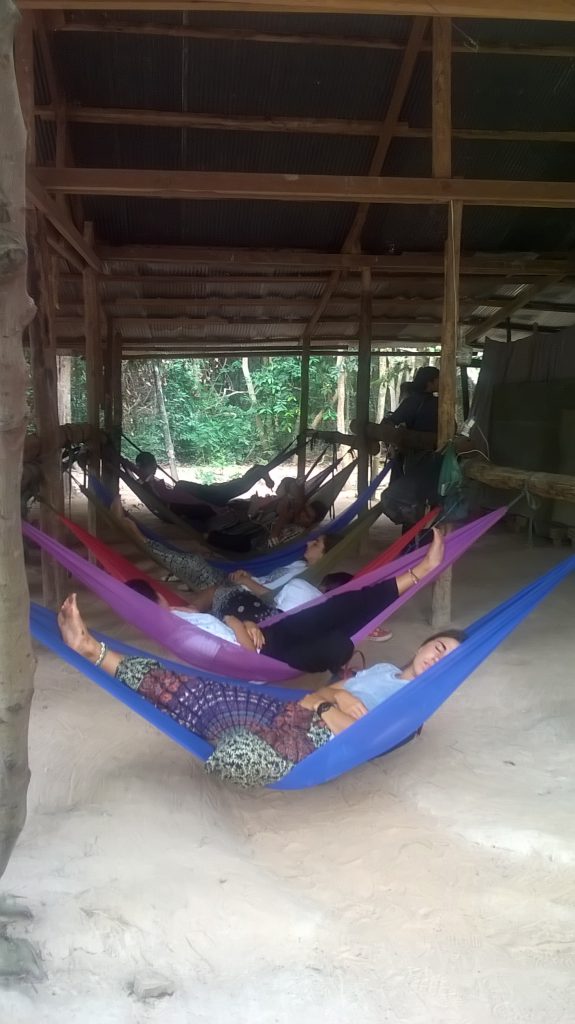
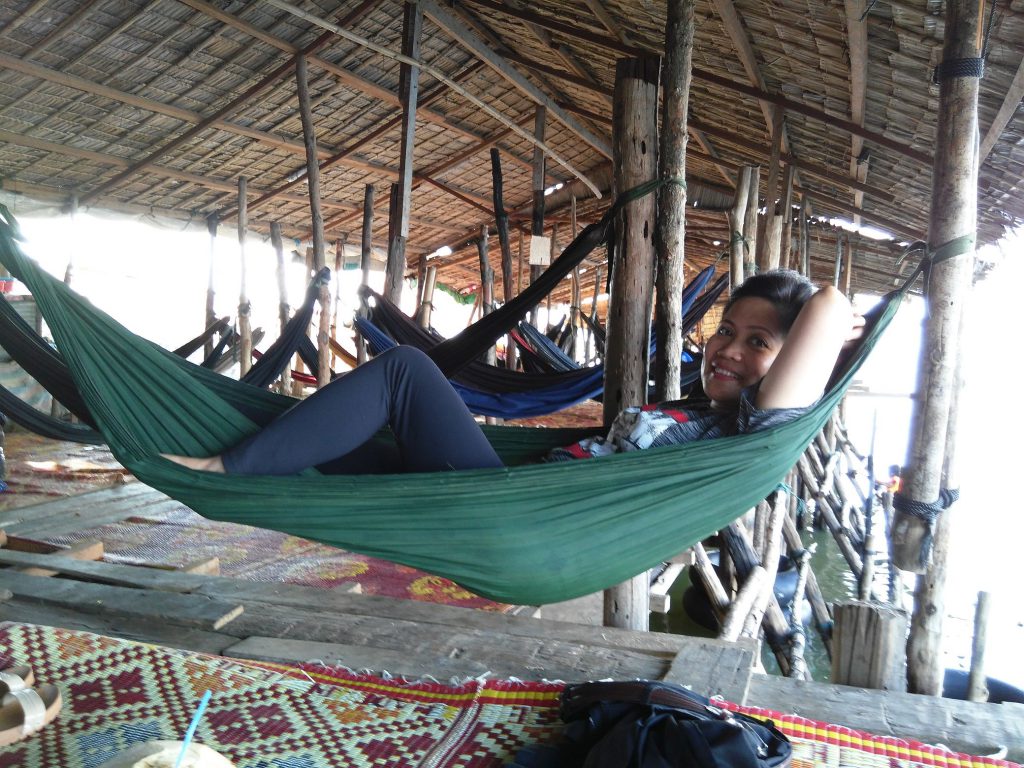
By past noon, we found ourselves sleeping in a row of hammocks beside a roadside eatery near Neak Pean, an artificial island with a Buddhist temple at its center. Most eateries inside the complex -as well as the tuk-tuks– have hammocks that provide a quick way to take a nap.
Tired from all the walking, tourists take a nap in hammocks provided by a roadside restaurant near Neak Pean.
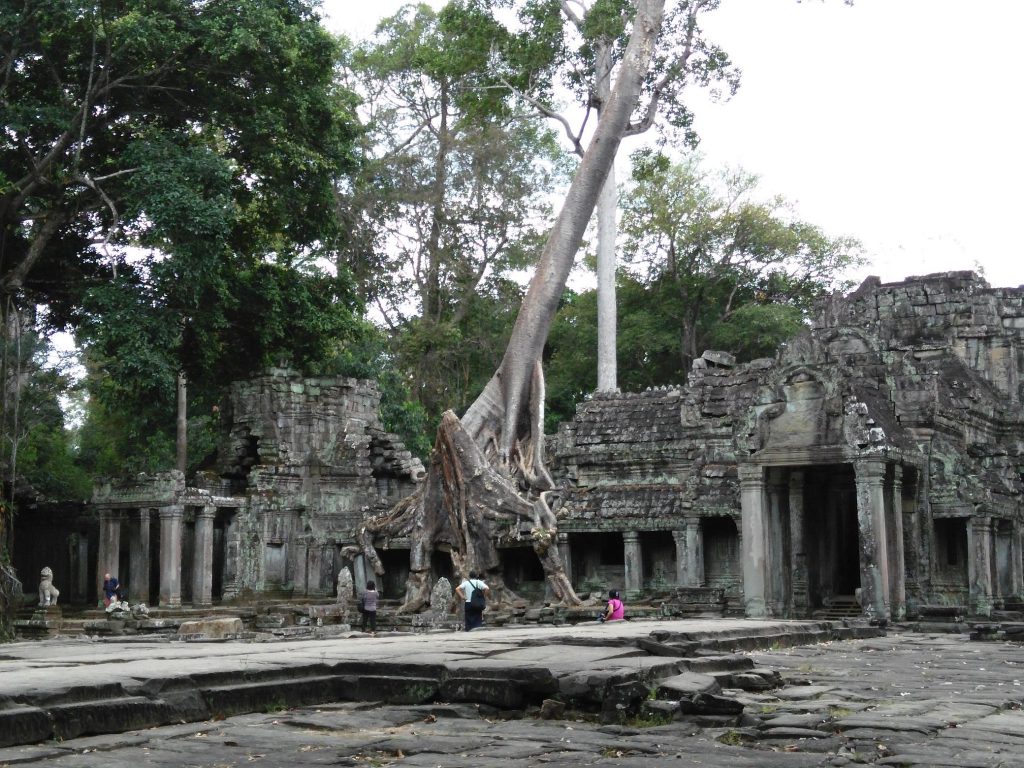
We were so tired after we emerged from the west gate of the next temple, Preah Khan, that we had the comforts of the hotel bed in the back of our heads as soon as we boarded Lot’s tuk-tuk once again.
Nature vs. Culture: Old trees interlaced among the ruins in Preah Khan
The Bayon was so big that we all decided to take a few photos aboard the tuk-tuk, revisit the place the following day, and head back to the hotel instead. Not after we passed by a memorial for people who died in the ‘killing fields’ during the Pol Pot regime.
Before we headed to our room, Lot informed us that he would take us to a massage parlor – they’re all over the city – to soothe our tired legs and bodies, as well as a night tour of downtown Siem Reap. We had to do this impromptu trip in a jiffy as we still had the “sunrise viewing” of Angkor Wat that required us to be up by 4:30 AM the next day.
If there’s a compelling reason to return to Siem Reap, it would be those massage parlors. Not only were the massages ridiculously cheap -as low as $1.50 for an hour-long foot massage- but they also served as the perfect way to end your very, very tiring day inside the ancient complex.
You would do your conscience a big favor when you tip well those masseuses and masseurs, as we all agreed that those low rates straddle the thin line between slave labor and gainful employment.
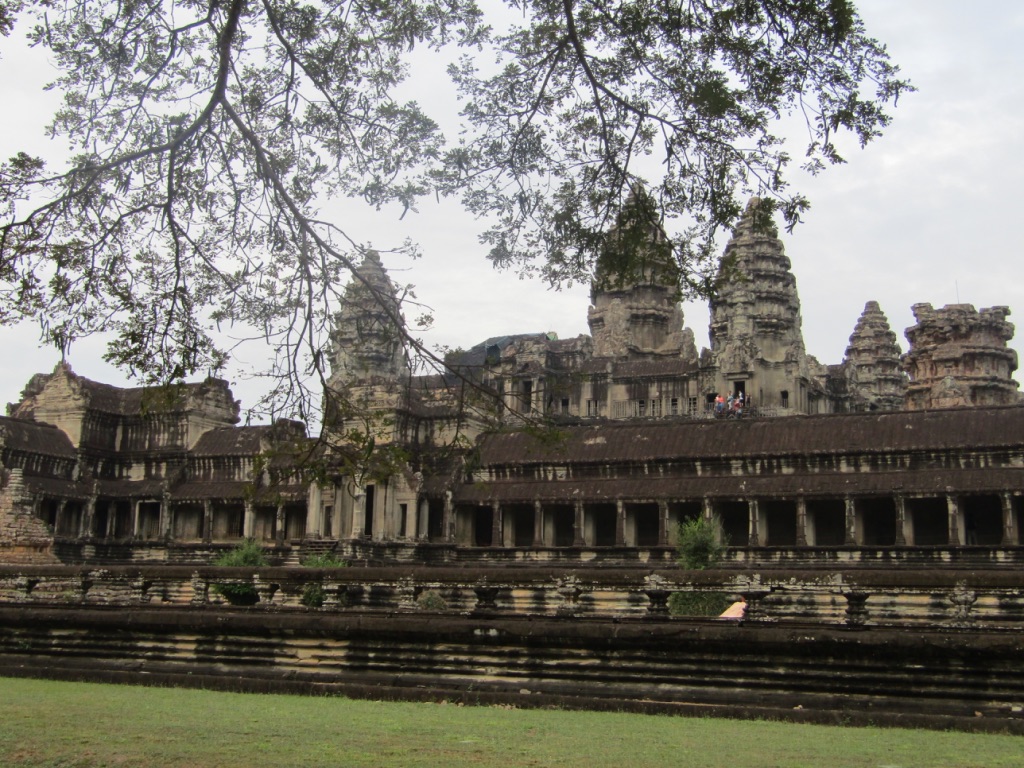
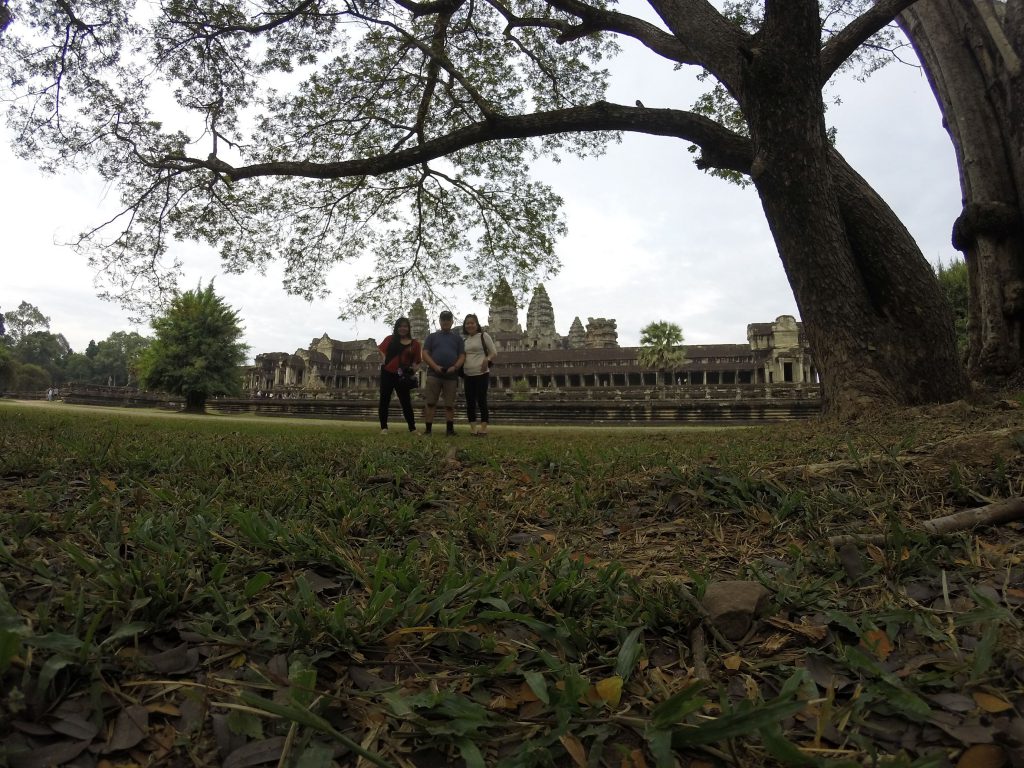
Mid-morning at the east gallery side of Angkor Wat
Angkor Wat’s east facade as captured in this GoPro video clip.
Very early the following morning, after we picked up our breakfasts in paper bags from the receptionist, Lot motored us to a different route for our dawn viewing of the magnificent Angkor Wat—the main reason for our trip to Cambodia.
We eventually spent almost half a day inside the splendid Angkor Wat, whose walls, lintels, nooks, and crevices were adorned by some of the most fascinating carvings and inscriptions the human race had ever seen. We also managed to venture as far as the outer, eastern portion of the complex.
For the Khmers, life goes on, content with the knowledge that the temples will remain with them for as long as they live. For us visitors, we can only enjoy every moment of this special opportunity to marvel at one of mankind’s most remarkable creations.
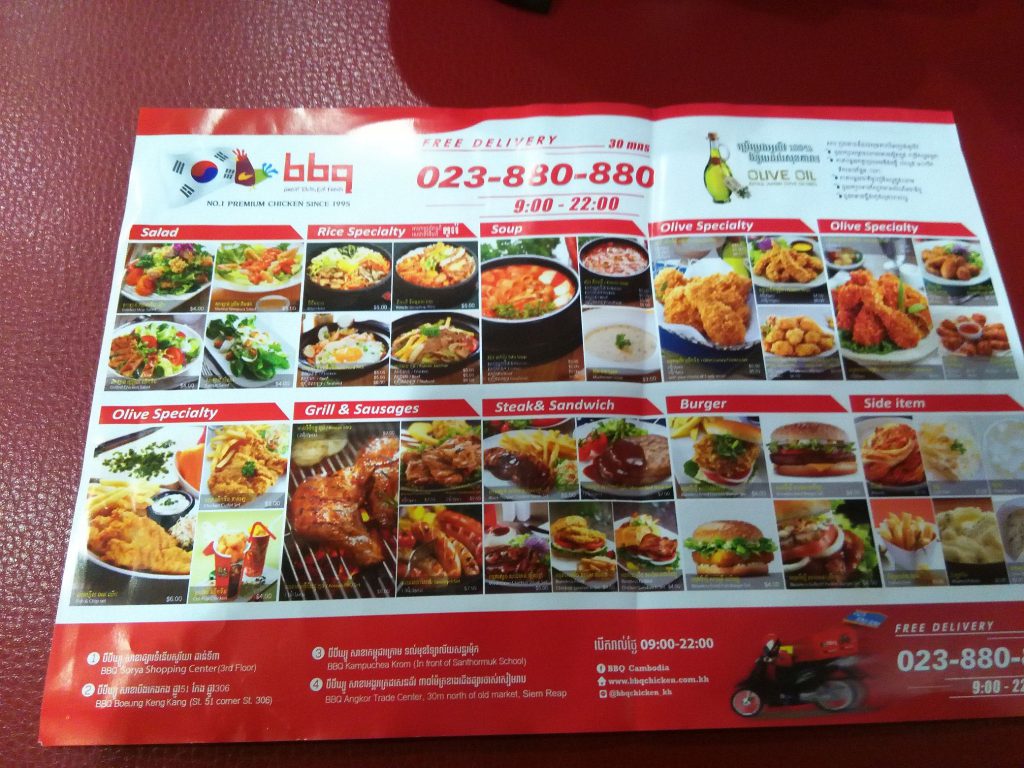
Later on, he showed us another part of downtown that’s popular among ex-pats and had lunch at a fast-food joint that featured an eclectic mix of just about everything on their menu.
The fast-food restaurant’s olive oil-fried chicken recipes were delicious.
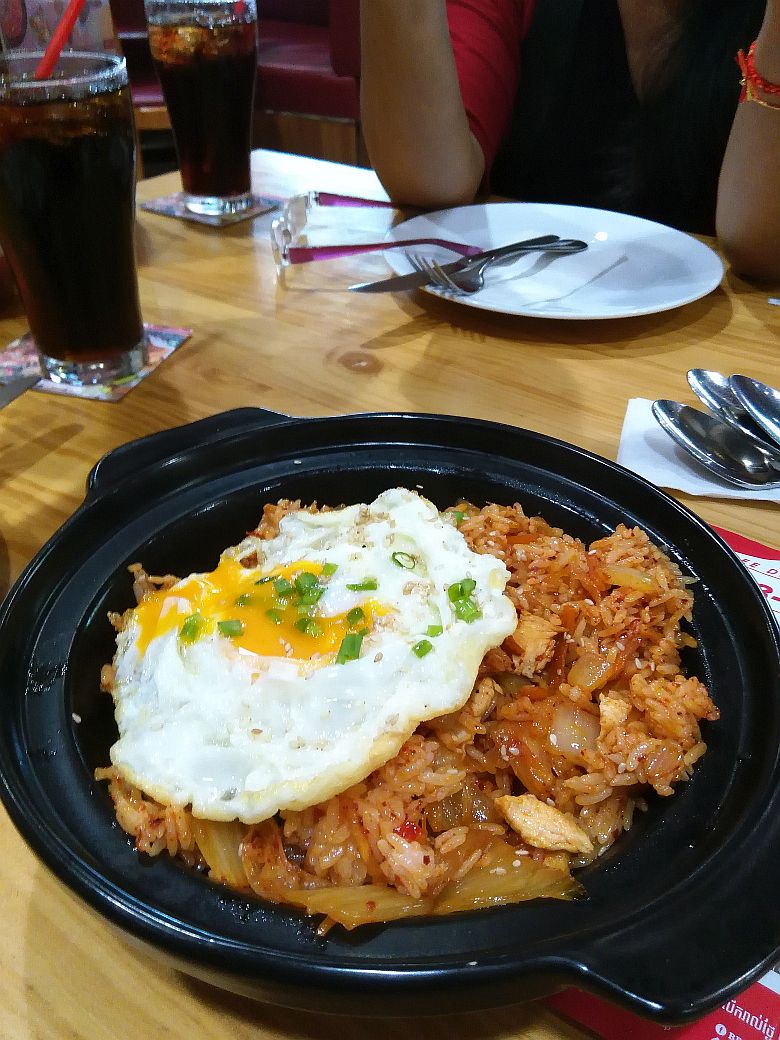
So similar to a plate of ‘tap-si-log’ (and variants) in the Philippines. But this one had a “Korean twist” — fried rice with kimchi.
Afterward, Lot recommended that we visit the fishing village of Kompong Phluk, which took the better part of 1.5 hours for the one-way, back-breaking trip on mostly unsealed roads.
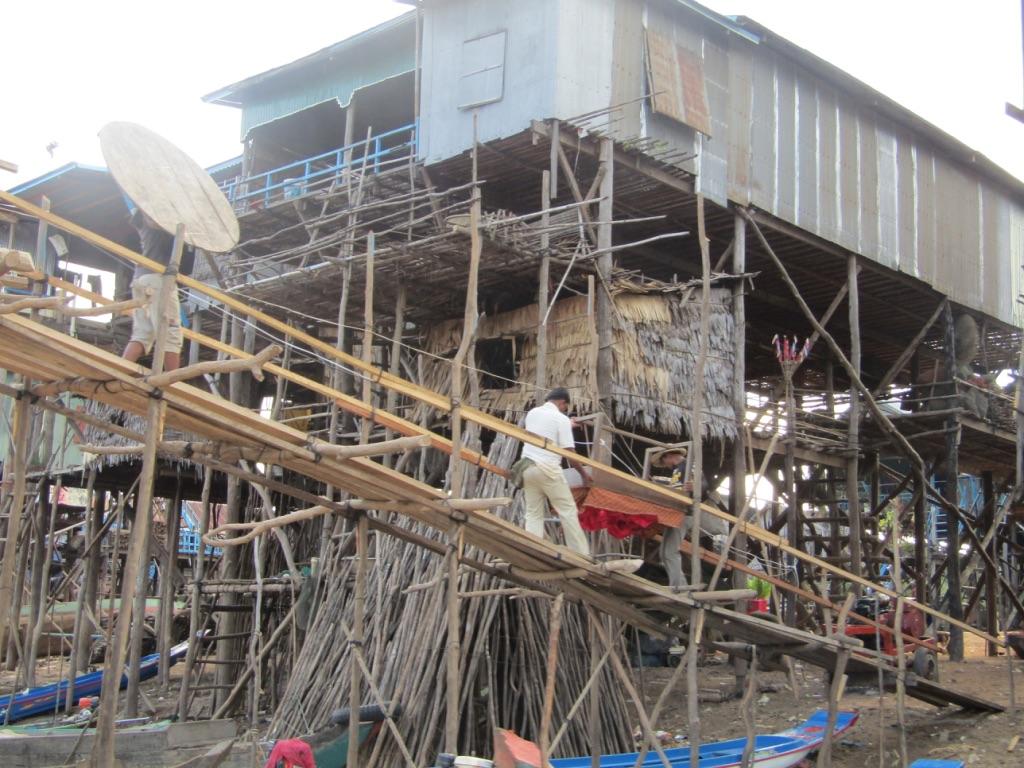
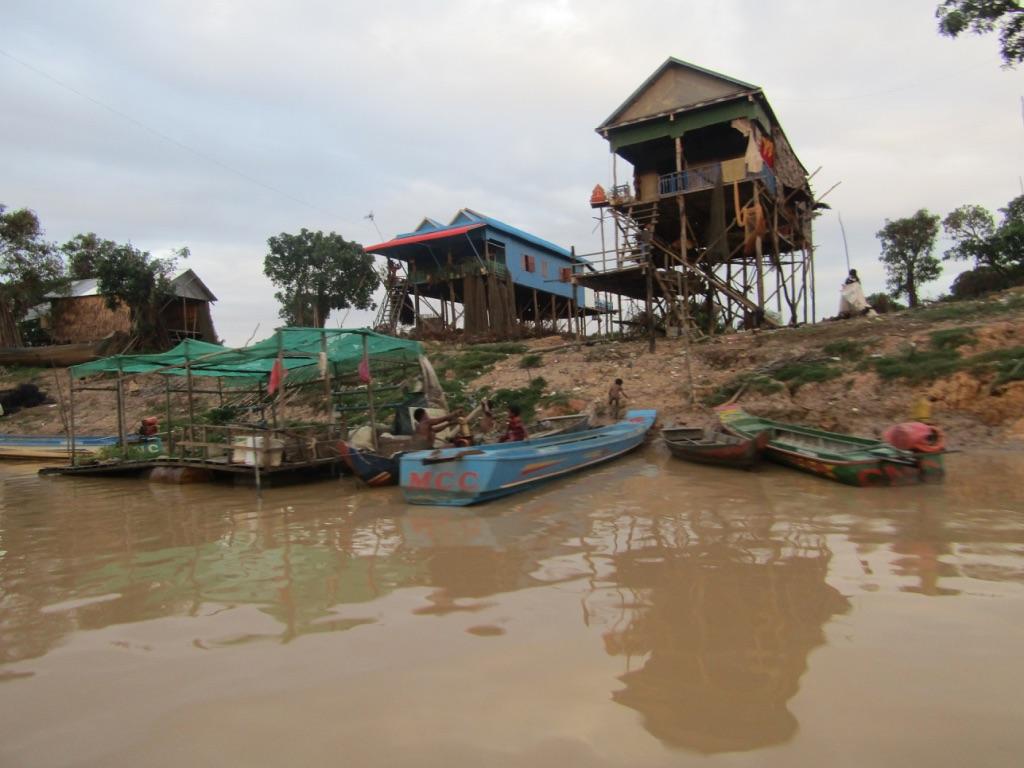
It was almost like a scene from a “Mad Max” movie as our boat meandered along the murky Tonlé Sap river, whose stench competed with our curiosity for any marine or human activities on this surreal backdrop.
On a muggy day, the sight of these houses on stilts is surreal — like a ‘Mad Max’ movie.
Fishermen ply their trade along the riverbank of Tonlé Sap.
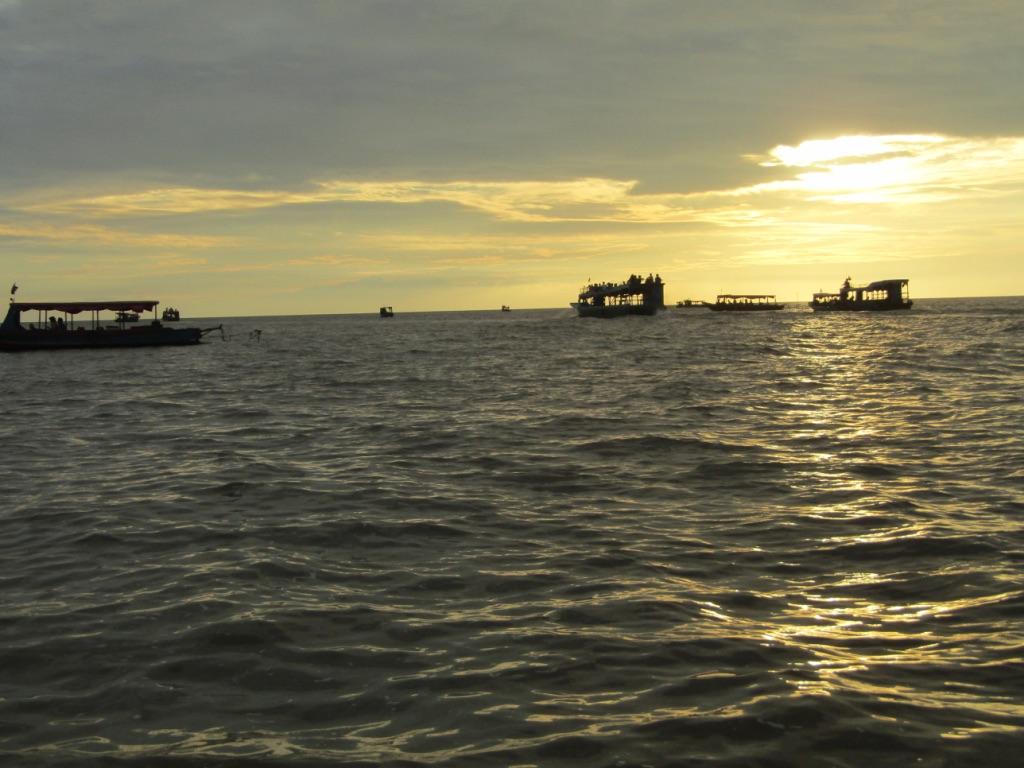
The Tonlé Sap River ends at a lake of the same name and connects it to the 7th-longest river in Asia, the Mekong. Just like the river, this vast lake had suffered significant sedimentation due to the exploitation of its resources. A patina of brown seems to tint the water as the sun’s reflection bounces from the bottom towards the surface.
Dusk arrives in Tonlé Sap Lake.
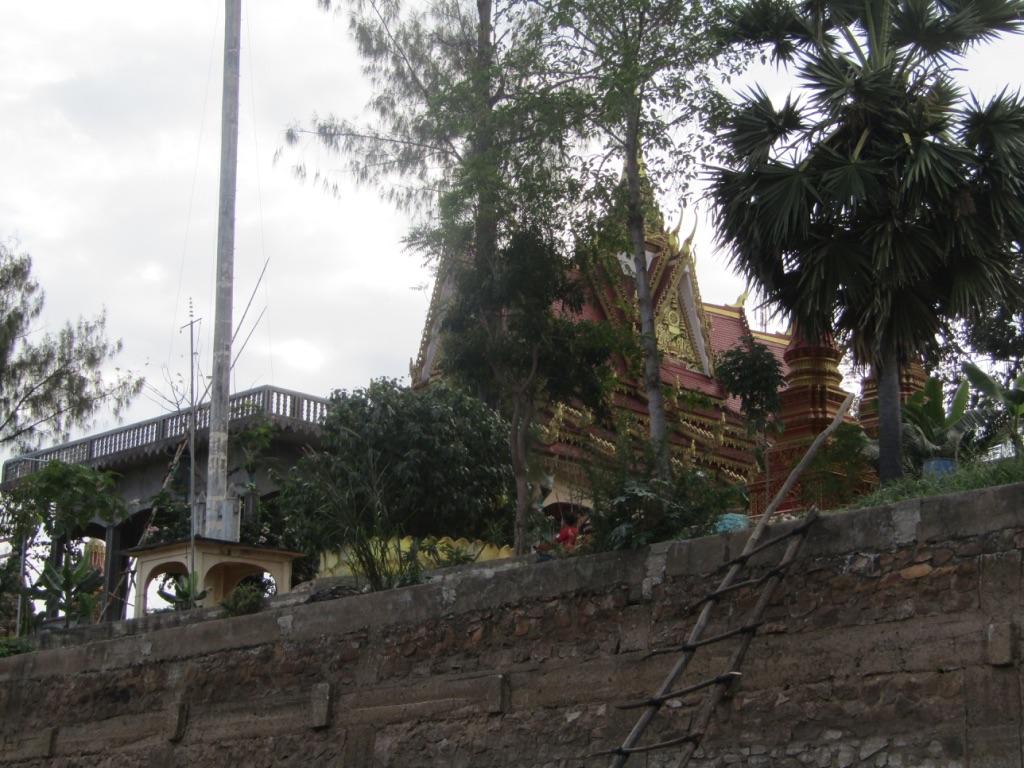
A Buddhist temple sits atop the banks of the Tonlé Sap.
On the way back to our hotel, Lot would point out to us the dusty road that leads to his parents’ house, where he and his young wife stay. He pays for the family’s food and utility expenses. A few more miles on the same highway, he would point to a grocery store owned by a relative of his wife, where she helps out.
On our last day in Siem Reap, Lot would take us to the old market early in the morning, where we bought a suitcase for all our extra stuff since we arrived in Hanoi exactly a week ago. He also helped us get discounts for all our souvenirs in the tourist market near the very popular night attraction in downtown, ‘ Pub Street’.
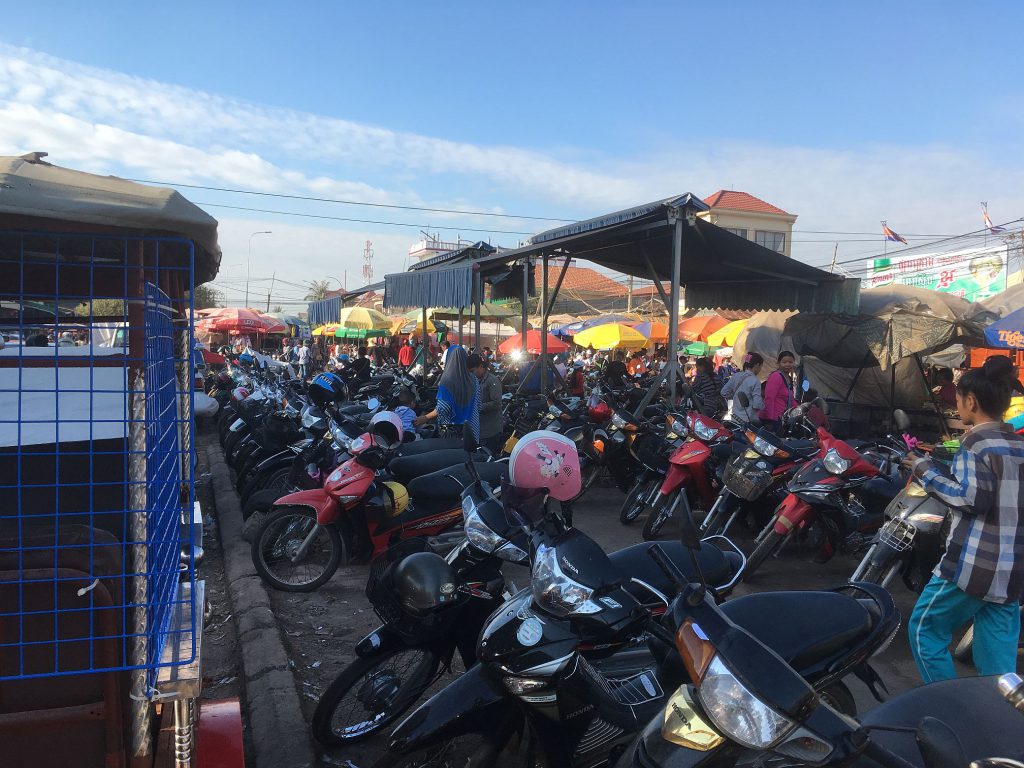
Parking a tuk-tuk can be difficult in the old market.
After we packed all our bags and turned them over to the front desk for safekeeping, we checked out of our hotel and allowed Lot to decide how to spend the remaining eight or so hours we had to spare before our late evening flight to Puerto Princesain the Philippines.
Without wasting any time, he drove us to the temples in Ta Phrom, a much smaller complex located east of the Bayon. Because of the humidity, I decided to stay aboard his tuk-tuk while I peruse my newly-purchased guide book, “Ancient Angkor” by Michael Freeman and Claude Jacques.
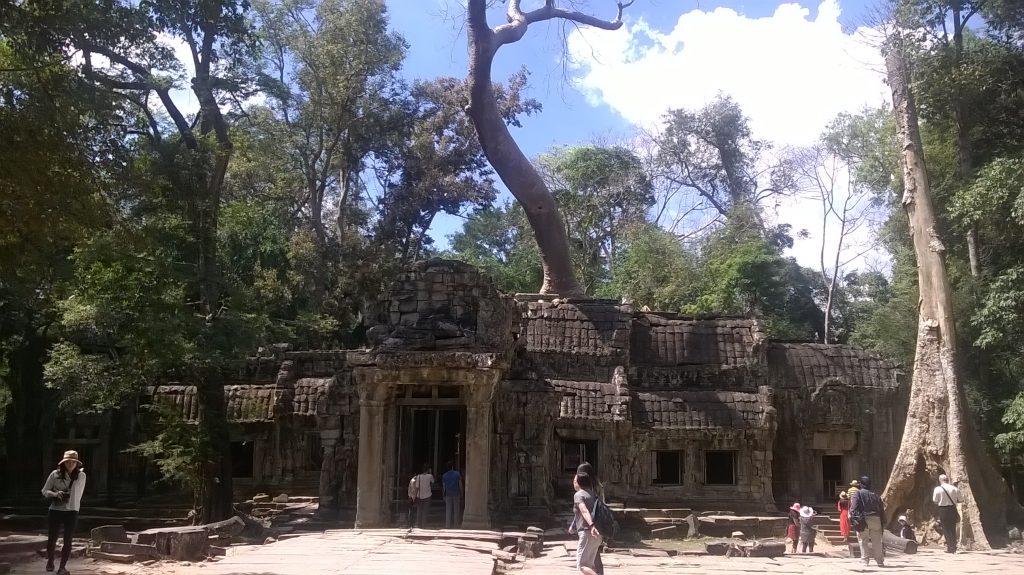
The Ta Prohm’s entrance gate. It is a temple monastery with mostly silk-cotton trees interlaced among the ruins.
Touring the Bayon alone would take you the entire day…or, a few weeks!
While we waited for the sisters, we had our late lunch at a spot where locals and tuk-tuk drivers eat – a pair of tourists on backpacks was also present – and enjoyed fried chicken wings, fish, and sautéed mustard greens, accompanied by a generous portion of steamed rice.
After we had picked up the sisters, we passed by the Bayon again, hoping to relax in one of its many open spaces near the water, as the noonday heat had significantly increased the humidity.
He suggested that we buy some snacks and drinks once outside the Angkor complex, and suggested that we proceed to a “picnic spot where he often goes when he and his wife were still sweethearts“.
The place turned out to be West Baray, a man-made lake or reservoir constructed in the 11th century and a crucial component of the Angkor complex during the heyday of the Khmer Empire.
Some construction is underway on the artificial island, the West Mebon, where a magnificent bronze Vishnu still stands, located in the middle of this vast reservoir that covers an area of approximately 1,760 hectares (4,349 acres).
It’s very popular with locals who go there to picnic, take naps, or take a quick dip in its murky, brown water. There are no gates, either, where you pay a fee up front to enter.
Lot spoke to an elderly woman, who then proceeded to find a spot for the four (4) of us amongst the numerous huts that were on stilts.
Taking it slow and easy in West Baray after all those walks inside the Angkor complex.
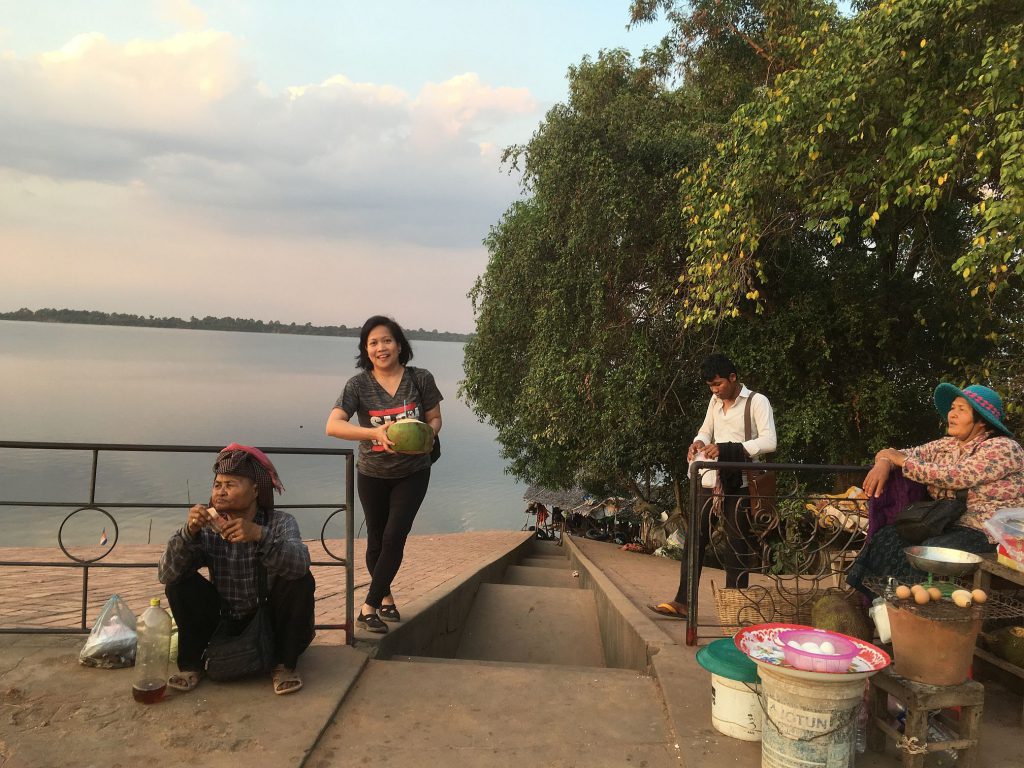
Ruby is enjoying fresh coconut juice at the reservoir (West Baray) in Siem Reap.
Each hut seems to have a few hammocks randomly strung on it, but we found it more refreshing to lie on the mats strewn on the bamboo floor.
It was in this rustic setting, after we had some snacks, that I pondered long and hard on the calm waters of the West Baray. My thoughts drifted back to the days when I was still a young kid growing up in the sleepy town of Baclaran.
Manila Bay was my West Baray, and the nearby Redemptorist Church (Our Lady of Perpetual Help), although not afloat in a body of water, could have been the West Mebon.
The noonday heat had reached its peak, and a slight breeze from the north lulled the three of us into a slumber while Lam Lot borrowed a piece of cloth from the elderly woman as he prepared to take a swim.
In my brief dream, various nostalgic moments rolled through my mind. Still, they were not too vivid enough for me to recollect when I woke up smiling afterward – except for one:
That I was walking along the grass-lined walkways inside the Angkor complex, where the Khmer people were all smiling at me on a quiet day, sometimes in those ancient days.
From Hanoi Old Quarter, where we stayed at a cramped but comfortable hotel –Hanoi Guest House– along Mã Mây Road, a van took us eastward for a three (3) hour drive along Vietnam’s countryside.
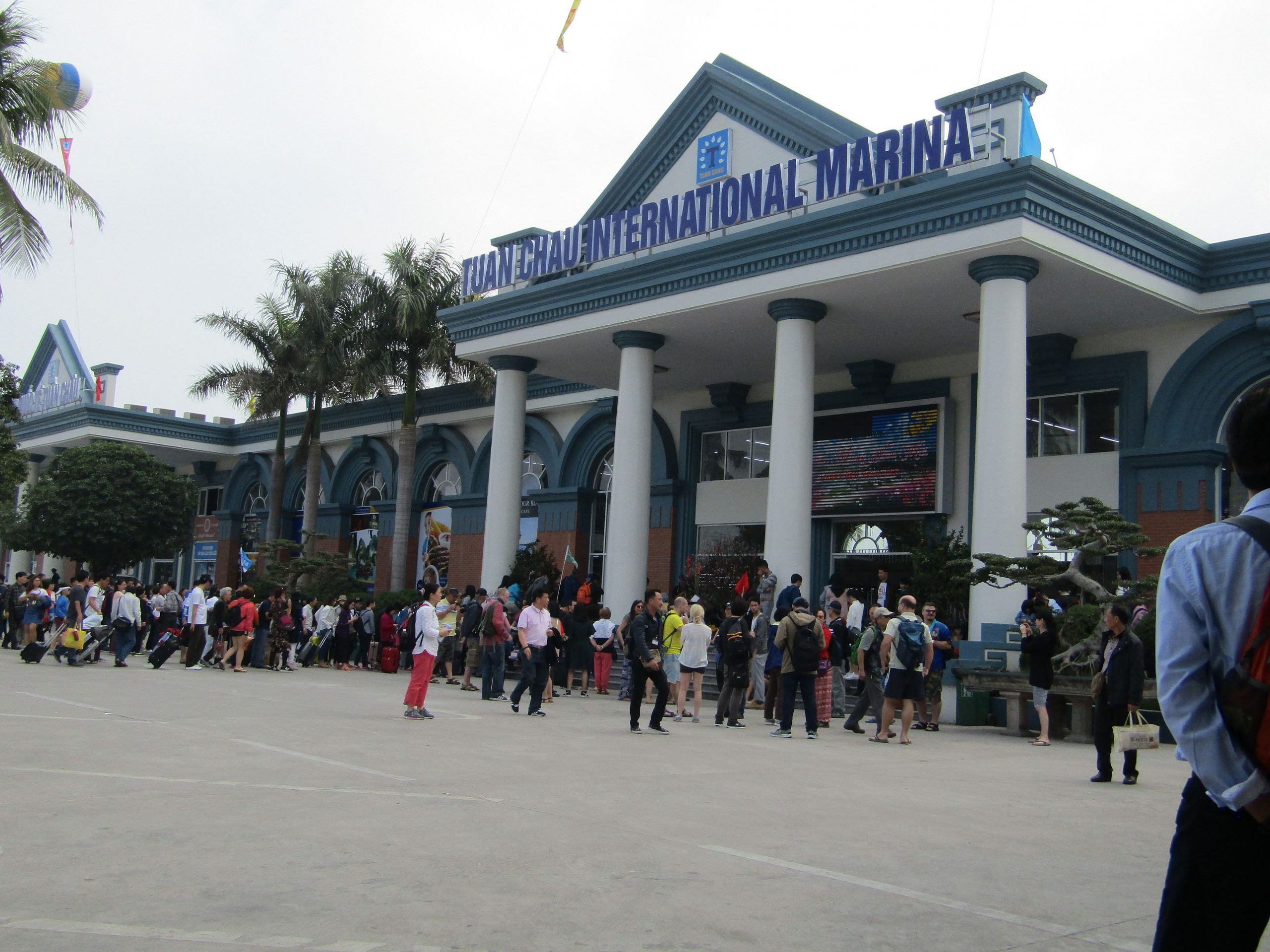
The ride ended at a nondescript, squat, white-washed terminal building (Tuan Chau International Marina), whose design seemed a bit out of place. Our guide instructed us to wait while he purchased our entrance tickets.
My initial impression of the place was, “here we go again, just another tourist-packed place hyped up by all those travel magazines.”
All ‘junk boat’ tours to Halong Bay start at this architecturally-inapt building.
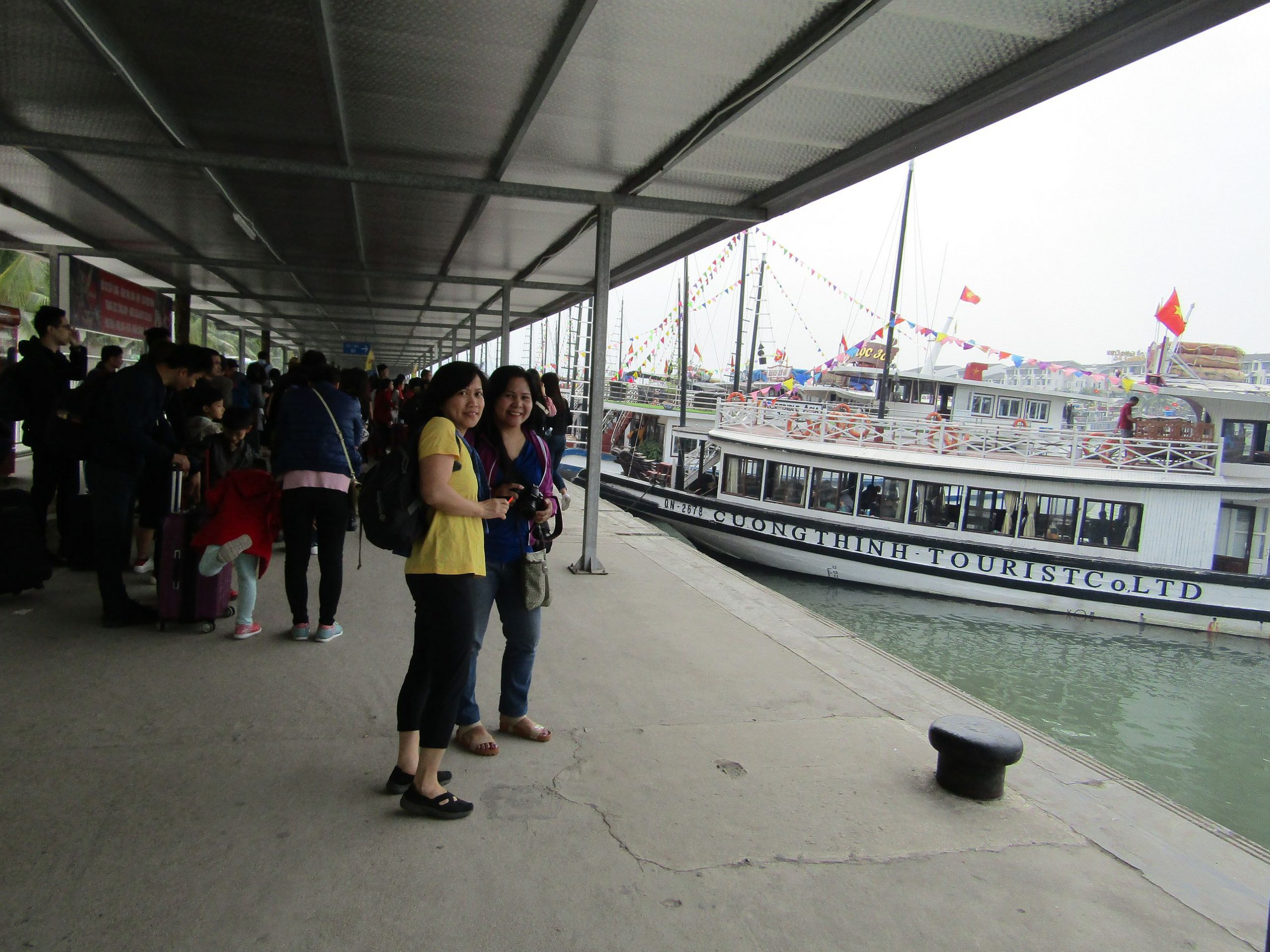
Ruby and Rosan wait for their boat ride.
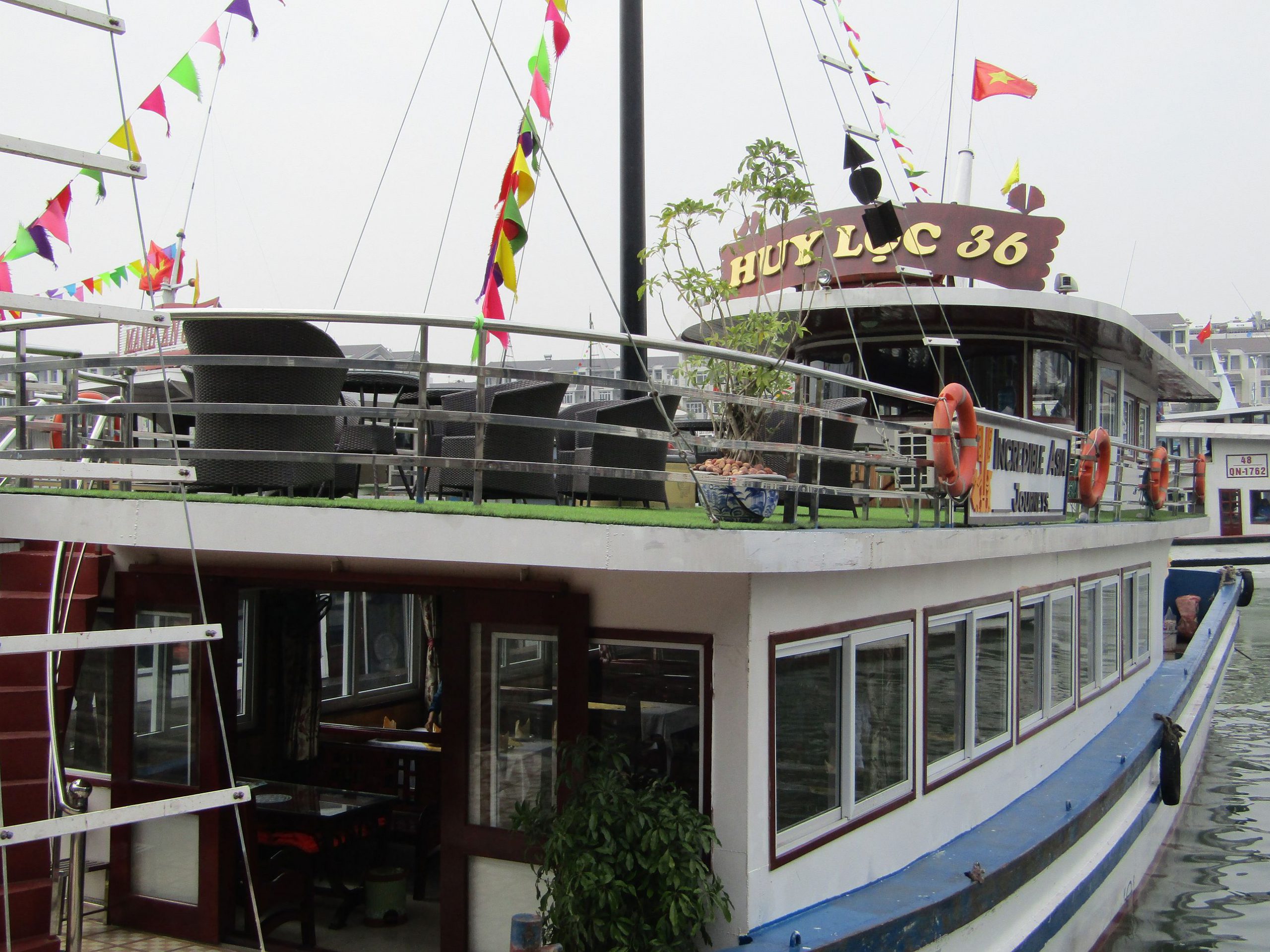
A brightly decorated boat — always ready for the Halong Bay cruise
It was not until we went past the visitors’ building and saw the open waters as we followed the crowd of tourists queuing for their boat rides that my biased, unimpressive opinion about the whole trip slowly gave way to both astonishment and awe.
For US$72 or less (depends on what tour company you booked with) that included stops for lunch (not free) & some shopping along the way, as well as the included simple lunch during the boat ride in the bay, it was an okay deal as you’re visiting a UNESCO World Heritage spot.
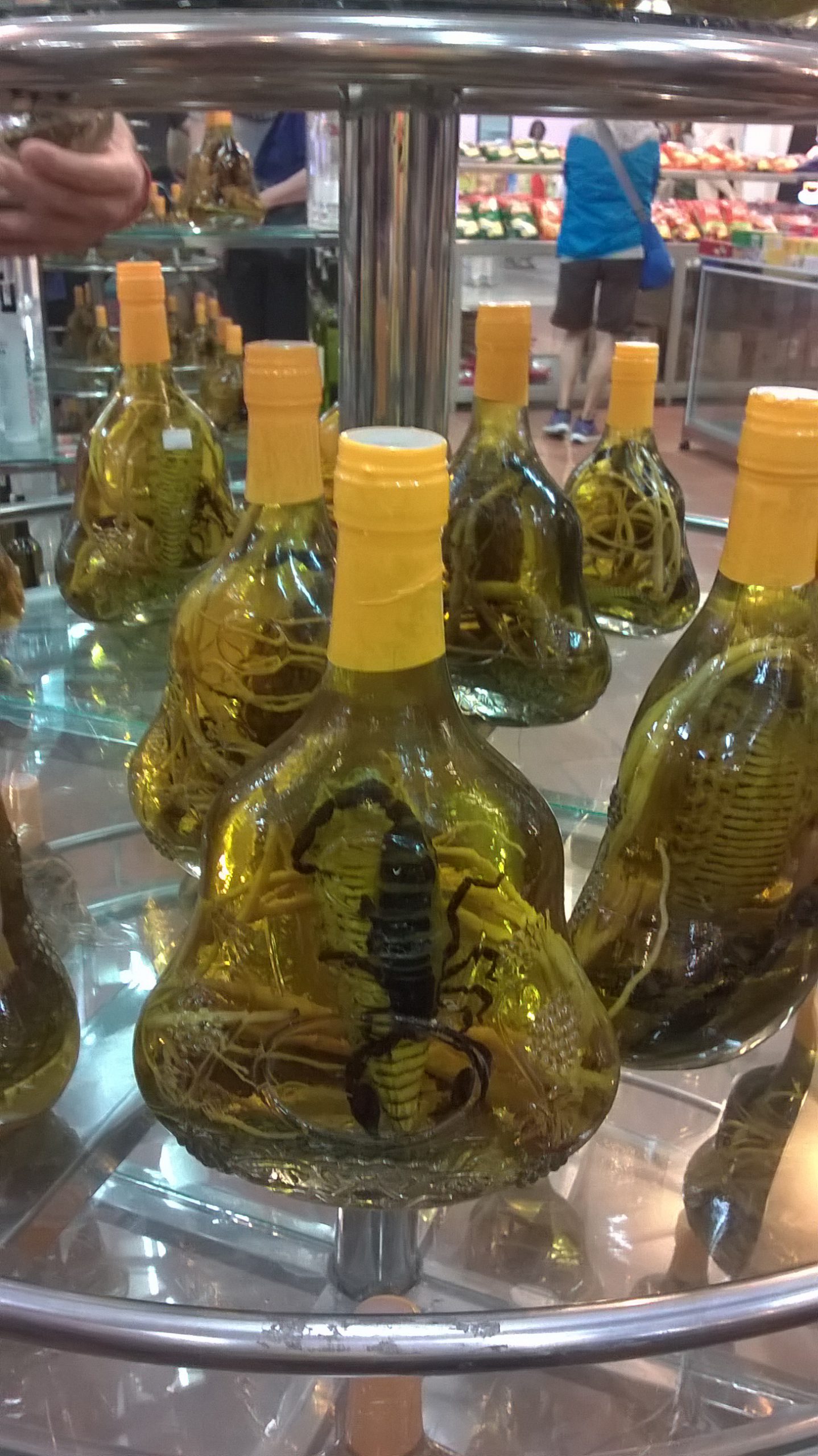
Scorpion and snake-infused ‘medicinal’ wine, anyone???
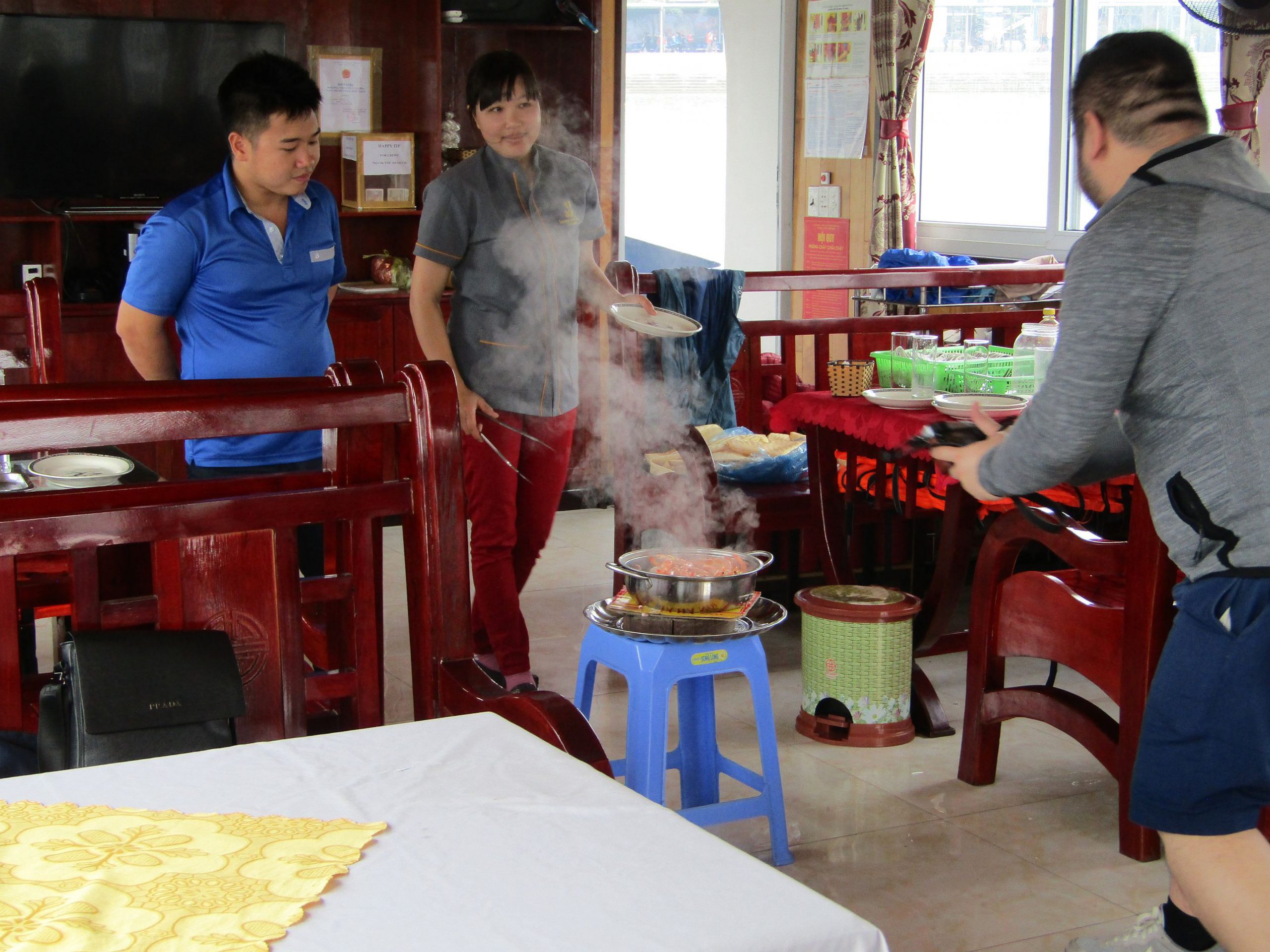
A ‘cooking show’ on the boat just before serving lunch
Whether you’re part of a big group or hire a unique boat all for yourself, Halong Bay is sure to offer that special connection with nature and add credence that traveling is the best form of education. One’s romantic notion of a place, as seen in those glossy magazines and books, will now depend on your perception while you’re there. You can now paint your picture.
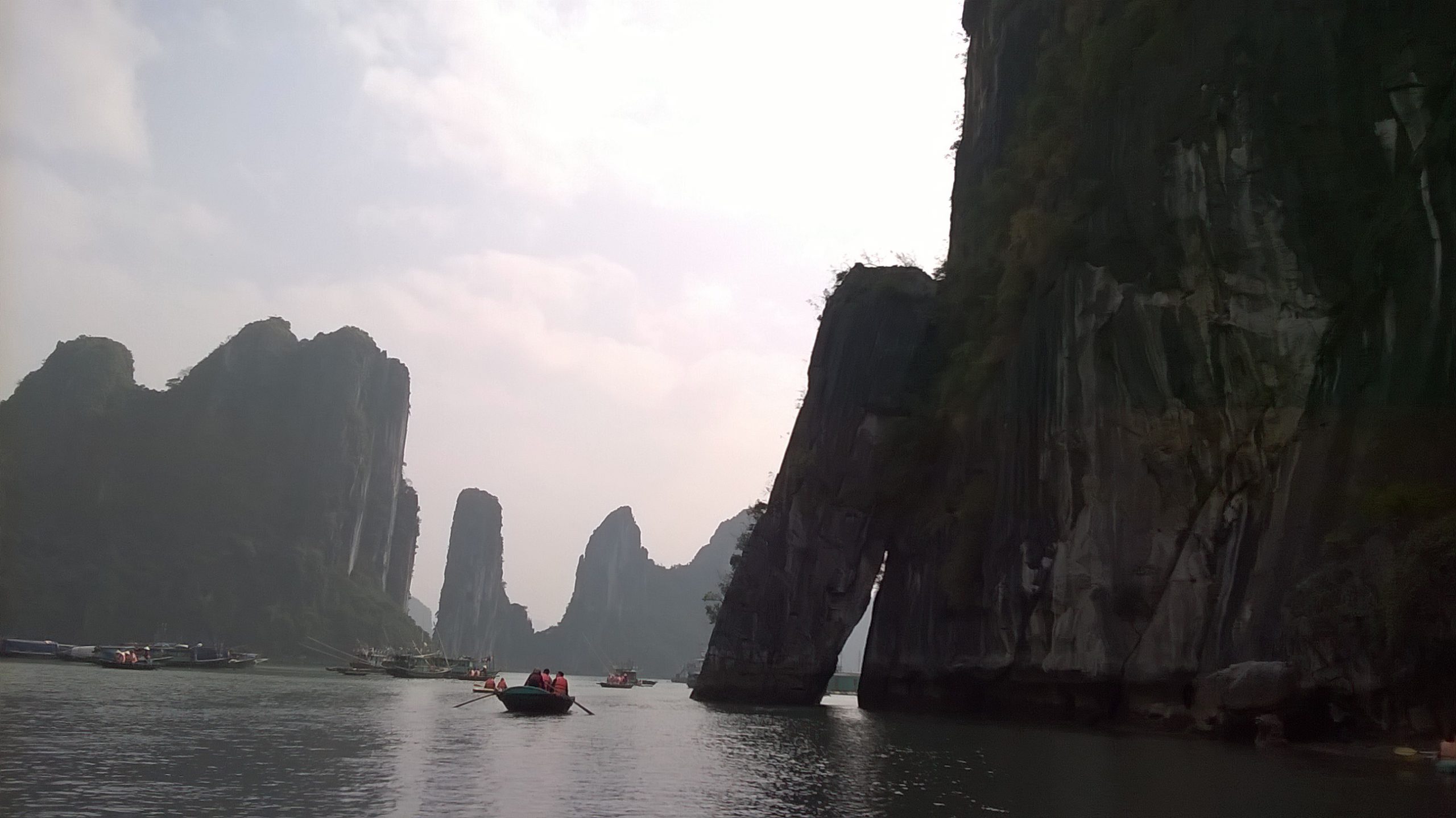
Among nature’s wonders
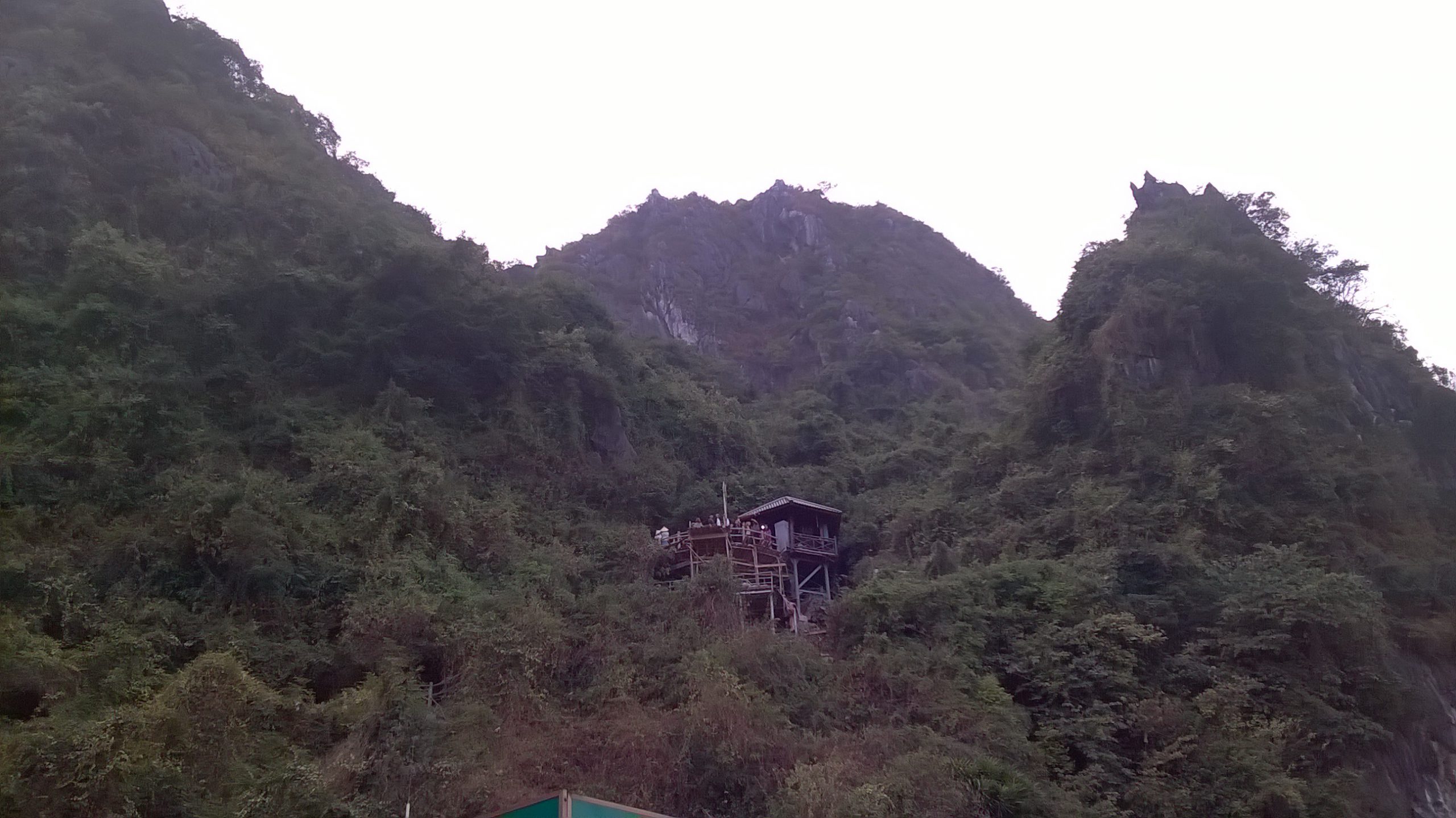
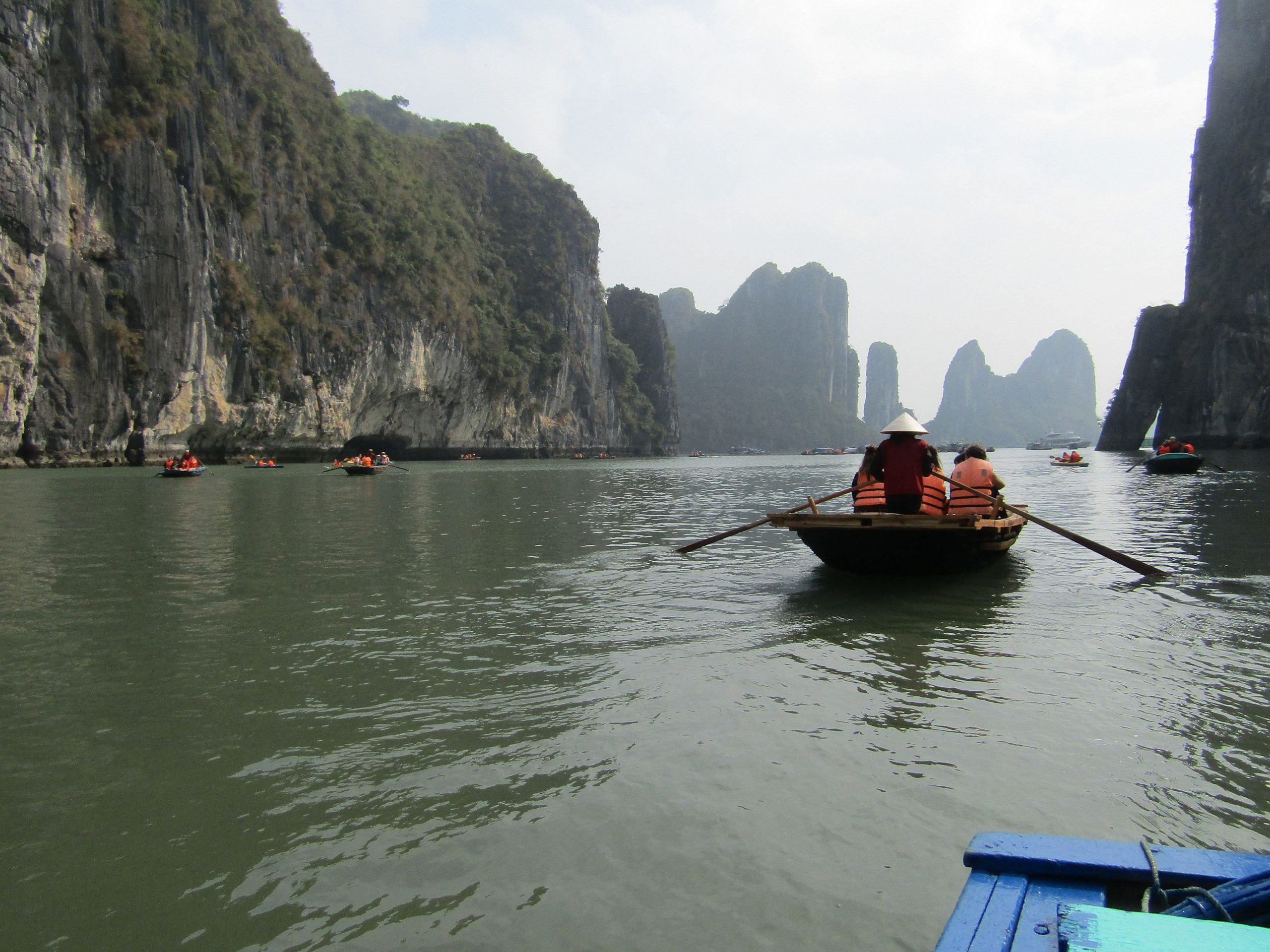
Our Halong tour had two (2) options: explore some islands by a smaller boat (maximum of 4-5 persons) helmed by an experienced boatman or paddle a kayak (for two) on your own. It also included a longish stop at an island where you’ll hike up a steep bluff to explore the caves — this sweetened the deal.
Up this steep bluff lies one of the entrances to the caves
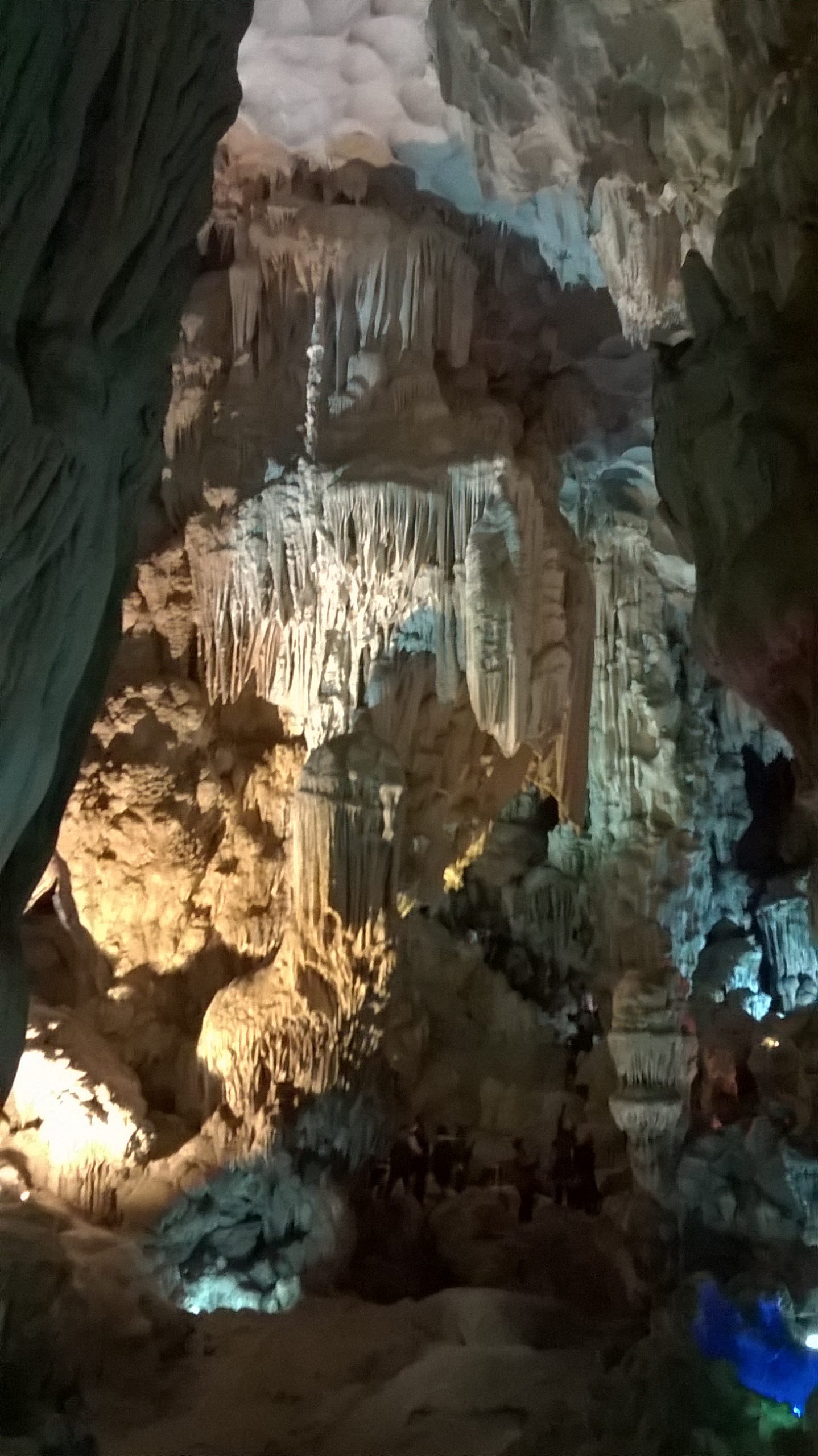
Time and water created these mammoth formations inside the caves
Depending on your budget, it would be a good idea to spend a night or two and explore the other bay areas where you can walk along its shores and swim while having a nice view of everything.
We did not see activities like swimming or other water sports in the nearby areas where most of the tourist buses parked.
You can ride a smaller boat or paddle a kayak to explore the numerous islets.
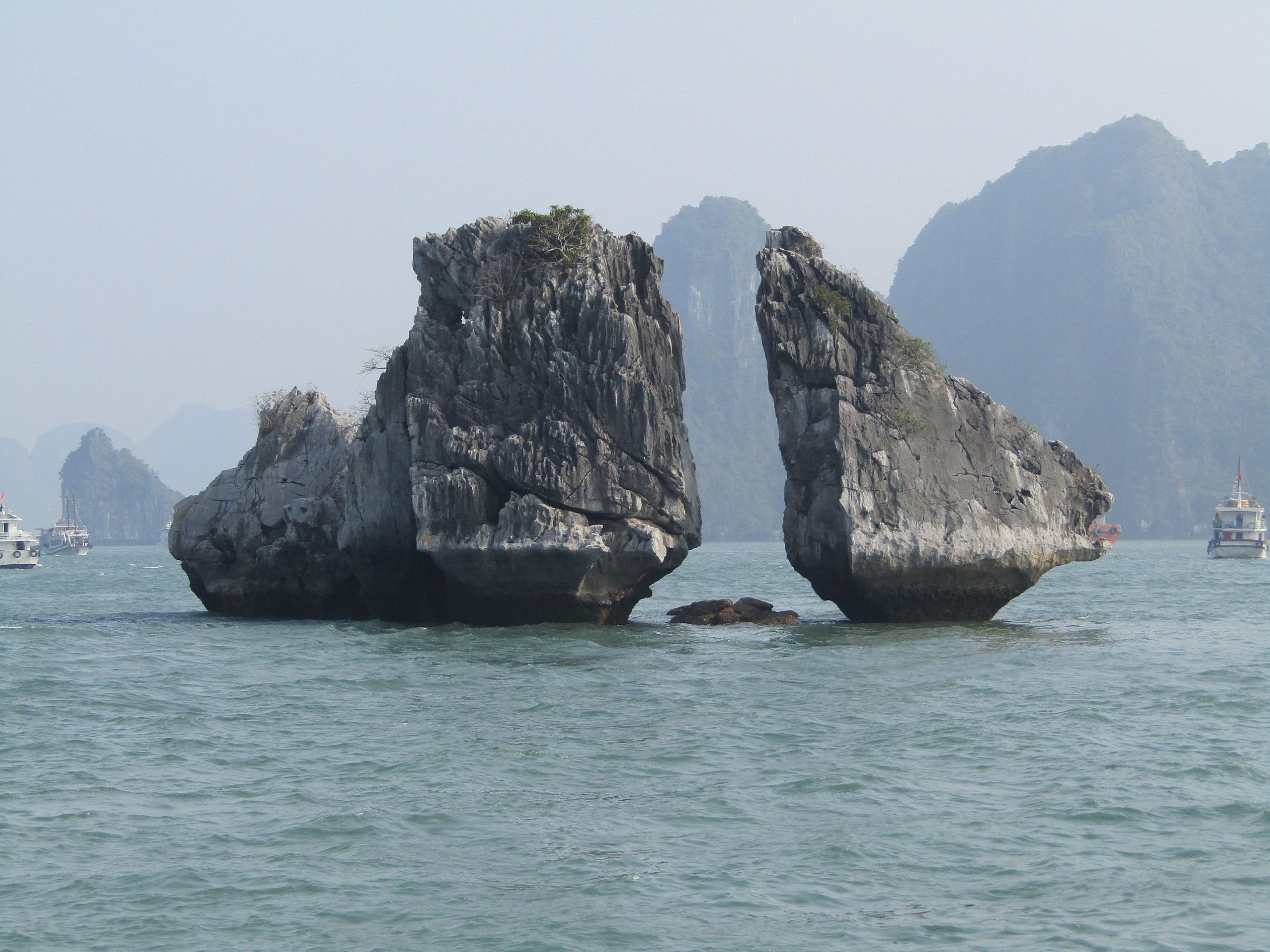
These islets dot the Gulf of Tonkin.
On that return trip to your hotel, you’ll have that smile that you have finally visited that “famous, picturesque place in Vietnam.”
I have to admit that it took a very long time before I realized that those seemingly entertaining casino sorties that we have had in the past years almost made me among the stupidest people in the world.
It took me a lot of time to finally realize that casinos are simply mass financial slaughterhouses designed to make fools out of people and to take away their hard-earned money by utilizing all schemes – devious or not – possible.
In these days and ages of social media, some people even take their foolishness to new heights by posting their casino addictions primarily via “vlogs” (video blogs) on YouTube, Vimeo, and other websites. Most of these poor, misguided souls get their highs from playing the slots machines and by the number of visitors or ‘hits’ on their vlogs — and they think they are popular when their vlogs get viral.
Casino owners and operators are simply laughing: these gambling addicts provide free advertising for the casinos, and vlogs promote gambling to a much wider audience. This is just another foolish denial of the gambling addict and a means to legitimize one’s vice.
It’s only a matter of time before casinos get all they have. The others who claimed fun, food, strategy, discipline, and additional self-deceptions have been sucked in, chewed up, and spat out.
Roulette Roulette Table Chips Money
In addition to their massive mailing & advertising campaigns, casinos employ people called “VIP Hosts” to cater to gamblers with lots of money to lose. These scumbags will seemingly give big-time gamblers attention and care while milking away all their money.
The whole premise of a host is to extract as much money from players as possible. Casinos award hosts bonuses based on how much the gambler loses. This is pure and simple evil.
Entertaining or not, there is always a sinister feeling that I get each time I enter a casino – – or any gambling establishment. Entering one, you get sucked into a place that distorts your concept of time and money.
Time and money: that’s what the casinos take away from ordinary folks out to have a good time or hard-core gamblers.
More than money, it’s that valuable time you lose for the rest of your lives while you’re inside casinos that make you much more foolish than you think otherwise. The time I wasted is no different than what a prisoner loses while locked up in jail.
All for what? Wasting countless hours staring and pressing that ‘BET’ button in slot machines (yes, casinos try their best to make them more animated via more giant screens and louder speakers) simply to watch a virtual reel spin on a colored screen?
These man-made contraptions have what the casino industry euphemistically termed a ‘random number generator.’
The truth is these machines are designed and programmed to bring guaranteed financial ruin to any casino habitué who had that fantastical notion that they can make these gambling establishments their ATMs.
The key word is here is: “programmed”. So, how can you beat a machine – in the long run – that was designed and made to pay out lower than the amount of money you put in?
Now that I have just mentioned ATMs, some casinos offer “NO ATM FEES” inside their places. Mind you, this is not a service to help people out but just another one of their many devious schemes to facilitate the transfer of people’s hard-earned savings and checking accounts to the casinos’ already-fat accounts.
Watching the green baize while your bankroll dissipates because of the huge casino advantage is no fun.
And all along, their second-hand-smoke-smelling employees quietly (or, sometimes, brazenly) celebrate that they had legitimately defrauded people of their nest eggs yet expect tips from those they had just robbed.
It’s OK to lose your time and money for a worthwhile cause but lose both inside a casino? Casinos provide all the tools to make a person stupid. Just think about it.
There are better and much more exciting things to do in one’s lifetime than spending the bulk of your time inside a casino.
It took me a lot of time before I finally realized that I was punishing rather than entertaining myself when I went to a casino.
Casinos also fool you about the “real-world” concept of money. You give them real money, but they give chips or a piece of paper in return. These simple diversions are mere ploys that make it easier for them to take all your real money.
Casinos also fool you by giving the illusion that whatever you lose, you can have it all back with a single ‘lucky break’ — a break that will never come.
How can a good thing come out of a place borne out of a devious scheme?
For people who still have difficulties seeing through the lies and deceptions of casinos, it’s just a matter of admitting you have an addiction. And the realization that casinos do their best to get you deeper into that addiction.
No matter how hard casinos try to trick people -through their massive advertising campaign- into believing that their places are just fun, you can have a good time. This may be okay if you possess that super willpower(in reality, this feat is almost impossible as we’re all just human) and simply go to a casino to eat, drink and be merry and not have anything to do with their slot machines and table games…then go straight home.
But that’s the initial bait casinos have laid out for people on their path to financial ruin. While inside a casino, the lure of these money-draining slot machines and the hard sell of their dealers to play those table games whose odds of winning are stacked heavily against players are simply too hard to resist.
Some may have wised up and gotten scared after realizing they were in a life-stealing vortex. Others simply fell into the same trap and lost all their money. But, newbie gamblers with fresh faces filled with excitement, hope, and gambling naïveté fill the spaces left by those fun-seekers who have deceived themselves at the hands of the super-slick gaming establishment.
So, why fall into these traps laid out by casinos when you can have a better time with your family and friends in honest-to-goodness places that serve better food and entertainment?
Casinos, therefore, are just a trap borne out of a devious scheme — for your financial ruin and for you to become a prisoner by way of the precious time you lose when you’re inside one.
Most people will recognize their lack of power to solve specific problems if they are honest. When it comes to gambling, I had noted – including myself – that many problem gamblers could abstain for long stretches but were caught off guard and, under the right set of circumstances, started gambling without thought of the consequences.
Through willpower alone, the defenses they relied upon gave way before some trivial reason for placing a bet. Willpower and self-knowledge will not help in those mental blank spots, but adherence to spiritual principles solves our problems.
I believe that to believe in a power greater than ourselves and to acknowledge that gambling is evil are necessary for one to sustain a desire to refrain from gambling.
So, don’t let casinos make a fool out of you. Avoid them by all means, at all costs, and recognize them as places of evil.
Remember when you see that big “CASINO” sign, whenever and wherever you are: You will lose your CAsh and visit a SInister place… so, just say NO.
God of Heavenly Punishment (Photo credit: Wikipedia)
“There was once a very, very rich man who found that riches did not satisfy. His name was Solomon. He wrote a book about it called Ecclesiastes. This rich king had tasted just about everything life could offer. Wealth? No one could exceed him in luxury. Wisdom? The whole world knew how wise he was. Fame? He was king, the most famous man of his time. Systematically he sampled all of life’s pleasures and powers, yet all ultimately disappointed him. All prove meaningless.
“What is the point of life?” he asked. You worked hard, and someone else gets all the credit. You struggle to be good, and evil people take advantage of you. You accumulate money, and it just goes to spoiled children. You seek pleasure, and it turns sour on you. And everyone–rich or poor, good or evil, meets the same end. We all die. There is only one word to describe this life: meaningless.”
But, is it? Is life really meaningless? Is that all there is in life –the summary of the number of years we had live in this planet? Does man’s existence on Earth simply goes and on until this planet or the entire universe gets obliterated by a decaying sun?
Surely, when humans try to ponder the unknown, tons of questions need to be answered. Is there such thing as an afterlife? Is there a God?
In our vain attempts to give even the most preposterous explanations to the great unknown, they had also given rise to a multitude of religions, sects, cults, tribes, fan clubs or what have you.
On the other hand, mankind has been trying to use every scientific means to disprove any religious theories about the creation of just about everything the mind can think about. That the universe – which our planet is but a tiny speck within – is but the result of a mega blast and that humans simply came about through a series of evolutions.
And that everything that the human mind could comprehend simply happens randomly. Really? Everything is just random?
Each individuals’ appearance on this planet may have occurred randomly at birth but have you ever wondered why life spans differ? There are souls that don’t even see the light of day, others die young while some of our elders even express their desires to die so much earlier in their struggle to cope with the hardships and difficulties that accompany old age.
In the worldly context of King Solomon‘s search for life’s meaning, he also voiced the unfairness of life:
“People don’t get what they deserve. Good men suffer while wicked men prospers. Everything seems determined only by time and chance.”
And just how many times we had asked ourselves that we deserved more in this life? Why does success, in whatever means we try to measure it, seem very elusive? Why do we see other people seem to have all the comforts of life while others still wallow in poverty?
On the other hand, why do some people so suddenly give up a life of unbridled extravagance to be of service to the poorest of the poor — and find their true happiness in the process?
Our futile attempts to quantify life and find meaning in it is hampered, of course, by our very own making: the concept of time.
Time is the great equalizer and it measures, regulates and rule each and everyone’s lives. There are no exceptions and short cuts. We will all die.
Science and technology may have found some solutions in making our daily chores so much easier and, on a few cases, extend our lives a few years longer. But, there will never be an eternity for us in this planet as long as there is the concept of time.
We could all be likened to a mouse trying to catch its tail.