

During our visit to Puerto Rico earlier this year, I brought my Garmin NUVI 660 to test its accuracy and dependability.
Since we bought the unit around mid-2007, it has been our constant travel companion on many trips around California and has been quite dependable most of the time.
The Garmin NUVI 660 is the company’s best-selling unit for many reasons. Its 4.3″ color screen seems to be the right size for any automobile without a built-in GPS navigation system. The included windshield attachment is durable and well designed.
Other features like hands-free calling via Bluetooth-compatible phones, an MP3 player, an FM transmitter, a “travel kit” (a collection of apps like a currency converter, calculator, world clock, etc.), a picture viewer, and storage expansion via the SD card slot make it the hands-down choice for first-time automobile GPS buyers.
But the simple yet highly functional user interface made Garmin’s NUVI series a winner. With a few taps on the display, you’re ready to navigate.
And if your Bluetooth-compatible phone rings while you’re navigating, simply tap the phone icon and you’re ready to answer the call via the built-in microphone & speaker!
Except for new construction and a few interior roads, the built-in North American map was generally accurate.
I updated it via DVD software only to the latest 2008 North American map when I discovered that our car was literally running through the waters of the Carquinez Strait as we passed through the newly constructed Benicia-Martinez Toll Bridge – the gateway that connects northbound I-680 to northbound I-80.
We had booked our rental car with Hertz weeks ahead for a six-day tour of this U.S. territory in the Caribbean.
Puerto Rico’s main airport is in San Juan, while our hotel was booked in the second-largest city in the islands – Ponce – which was a good 65 miles away. This would be a good initial test for the GPS unit in beautiful Puerto Rico.
I had already saved some of our intended destinations in the GPS unit’s Favorites folder.
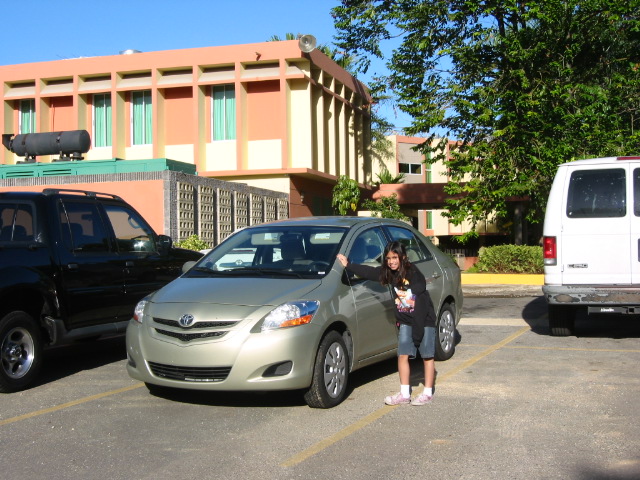
So, after getting our rental car – a mint-green 2008 Toyota Yaris – from the Hertz compound 2 hours after we landed in the Luis Muñoz Marin Airport (SJU) in San Juan, I hooked-up the unit unto the car’s windshield (unlike in CA – where I had to use a friction-mount -, attaching it on the windshield in PR is not illegal), tapped on a few icons as soon as it powered-up and on we headed to our hotel in Ponce!
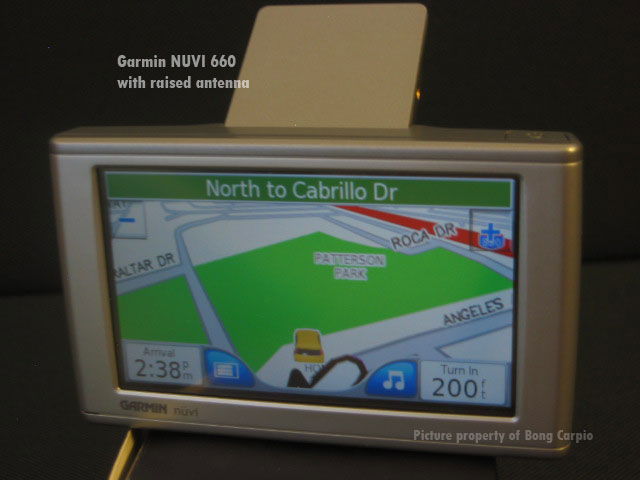
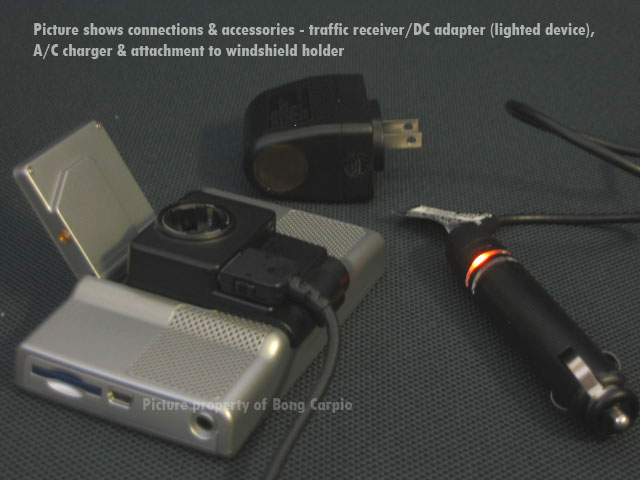
It passed the initial test with only a minor quirk. While it guided us correctly to the main city, it failed to recognize the mostly one-way, narrow streets where our hotel was in downtown Ponce. I had to park the car a few blocks away and looked for our hotel…yes, with the GPS in my hands!
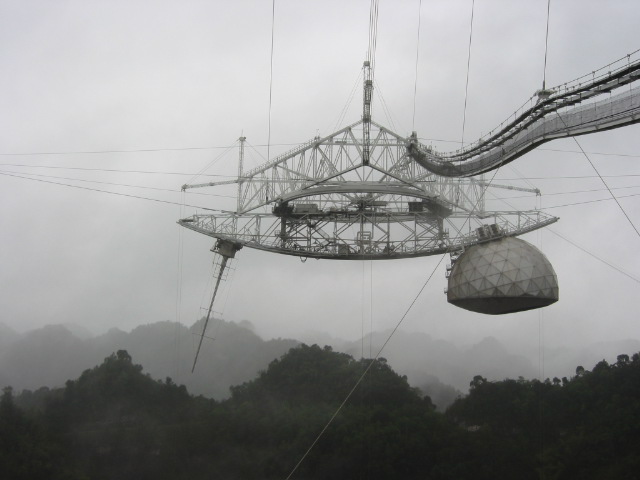
The following day, on our trip to the Arecibo Observatory, the GPS unit was at its least accurate. While it can accurately track the main highways, it kept telling us ‘to turn left -or, right- along Carretera (Highway) 111‘ while we’re already traversing the steep, twisting ascents of the same highway!
We also had a lot of ‘dead spots’ while cruising along a few mountain stretches. I thought that as long as you have a view of the open sky, your GPS unit could easily pick up satellite signals.
Of course, as in most densely populated cities like San Francisco, California, it takes a while for the unit to pick up satellite signals; I was surprised it could easily get a reading in the metropolis of San Juan.
One very useful feature of this gadget is the ability to track where you are and, from your location, get all the useful information – auto services, hotels, gas stations, food, etc.- that you may need.

A good example is when we were at Plaza del Mercado (a public market) in Santurce, San Juan, PR, and it was raining a lot. Finding a taxi was extremely difficult because the place was a little off the beaten path.
Garmin NUVI 660 to the rescue. I simply raised the unit’s antenna, tapped the ‘Food, Lodging’, then the ‘Spell Name’ icon, entered “Taxi,” and voila…I got the names and phone numbers of available taxicab companies nearby.
A quick call to the taxicab company of our choice, and within a few minutes, a taxi appeared from nowhere to take us back to our hotel!
Overall, I was quite satisfied with the NUVI 660’s performance. It not only gave us peace of mind that we would get where we wanted to go, but also offered other little things the device can do.
The Garmin NUVI 660 is a must-have device for travelers.
Highly recommended.
NOTES:
After buying his first GPS unit in 2000, a Rand McNally GPS for the Palm III, the author has used Garmin GPS units exclusively since acquiring the Nuvi 660 in 2007.
He has utilized, after the Nuvi 660, the Garmin Nuvi 2360 (4″ screen), the Nuvi 65LM (6″ screen), and currently uses the Nuvi DriveSmart 86 NA (8″ screen) for older model vehicles without built-in GPS units.
He also utilizes a Garmin Edge 830 bike computer/GPS during his bike rides.