
On a recent trip to Scandinavia (Norway, Sweden, and Denmark), I once more experienced one of my life’s simple joys: riding a bicycle.
I was a high school student in the early 70s when I became a serious cycling enthusiast by building my own road bike. I frequented bike shops to buy parts and accessories at the Cartimar Market and Shopping Center in Pasay City (Atlas Bike Shop and Christy’s were my favorites), small bike shops along Quezon Blvd in Quiapo, Manila, and in Antipolo, Rizal (now Antipolo City).
I was also a habitué of the big Patria Bike Store (owned by the Kairuz family) along Buendia Avenue in Makati, Rizal (now also a city), where I would spend hours just admiring all the expensive European (Campagnolo, Cinelli, Simplex, Huret, Stronglight, Weinmann, Universal, etc) and Japanese-made (SunTour, Shimano, SR, Nitto, and Sugino) bike accessories.
But I had my first bicycle when I was about 8 or 9 years old, when my father converted a small, dark green, Japanese-made (WWII-era?) commuter bike with rod-actuated caliper brakes into a modern “playbike” by changing the leather seat into a “banana-style” saddle and the low handlebars (where parts of the rods and levers of the hand-braking system were attached) into an “easy-rider” or “monkey bar” style handlebars, which was all the rage in the 70s.
Growing up, bicycling let me explore places far beyond the confines of Baclaran, Paranaque. I would ride with glee, bravado, and pride through all the streets and alleys of our busy town (primarily because of devotees of the Baclaran Church or Shrine of the Mother of Perpetual Help, run by the Redemptorist missionaries), venturing beyond nearby towns and well into the cities of Pasay and Manila.
With the road bike, I would go well beyond cities and into provinces in the Philippines. From Baclaran, I would ride solo or with a few cycling buddies to the highlands of Tagaytay City in the province of Cavite, sometimes venturing as far as Nasugbu, Batangas.
During school breaks while in high school, I would load the bike into my father’s car or his “owner-type” stainless-steel jeep when he visited relatives in Talavera, Nueva Ecija. From there, I would go further up north into the provinces of Nueva Viscaya and Isabela.
As a freshman pre-med student, I, together with a childhood friend in Baclaran, Ray Anthony Nario (I would learn later from his older brother that he had passed away), would go on an all-day ride along the quiet roads of the “backdoor” of Rizal Province, which I have a separate story for.
I also have another -and more compelling- reason to love bicycling: it helped me exercise a polio-ravaged left leg.
After I quit medical school, I found myself busy making a living in the information technology sector, along with a side gig trading in the Philippine stock market (but I had to earn my degrees in Information Technology and Accounting), and I took a long hiatus from cycling when I switched to swimming.
But through it all, I would need to have a road bike in the house, even just to longingly gaze at it.
During that period, I collected pro cycling videos (mostly on VHS tapes), read the latest cycling news, and attended a few events. To this day, I maintain a “fleet” of three (3) road bikes, a touring/gravel bike, and a mountain bike — even though they aren’t used as much as the lone road bike I had in high school.
Norway and Denmark rank among the top 10 countries in the world for cycling infrastructure. Denmark, in particular, prioritizes bike lanes when planning new communities and ranks second only to the Netherlands as the world’s most cycling-friendly country.
In Norway, we joined a group, and a van picked us up at the port in Filipstad, Oslo, and briefly drove us to a shop called “Viking Biking and Hiking” along Nedre Slottsgate Street near the Nordic Bible Museum. We were led to the back of the shop, where the eight of us got the appropriately-sized bikes and helmets.
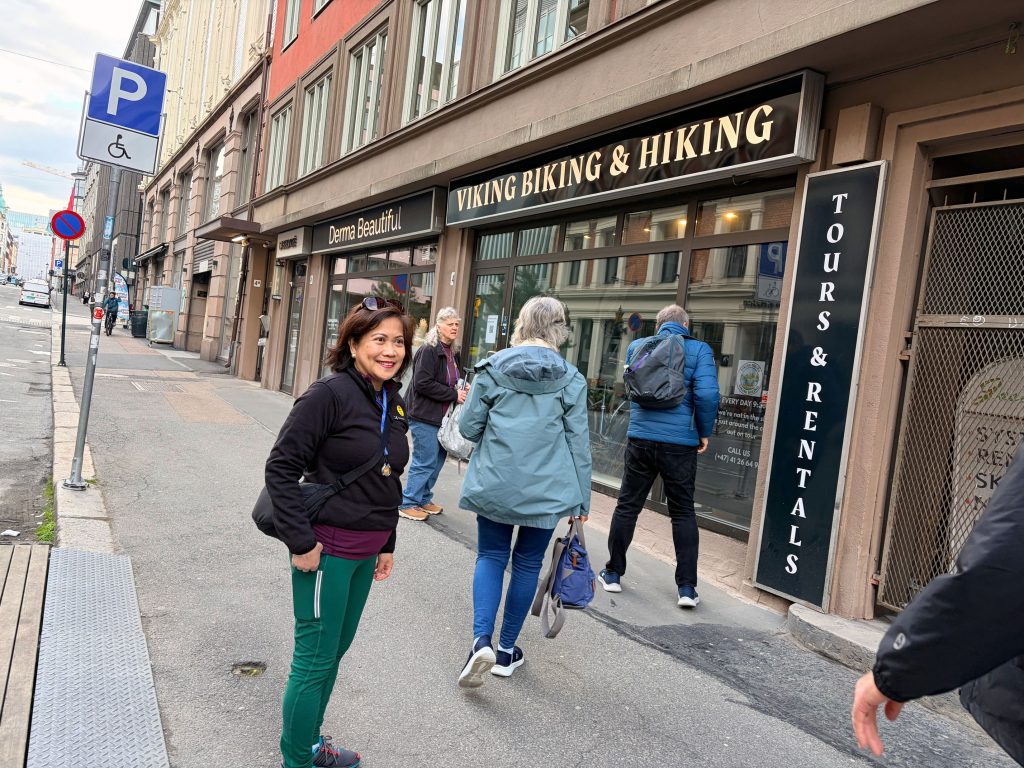
If you’re a solo traveler, you can simply rent the bike of your choice for about $38 (Norwegian Krone or NOK 350) a day and ride to your heart’s (and health’s) content around the city.
But if you want some company, along with a guide and a set of places to visit in Oslo – like we did – in a span of three (3) hours, you can book your ride for around $48 (NOK 440) at Baja Bikes.
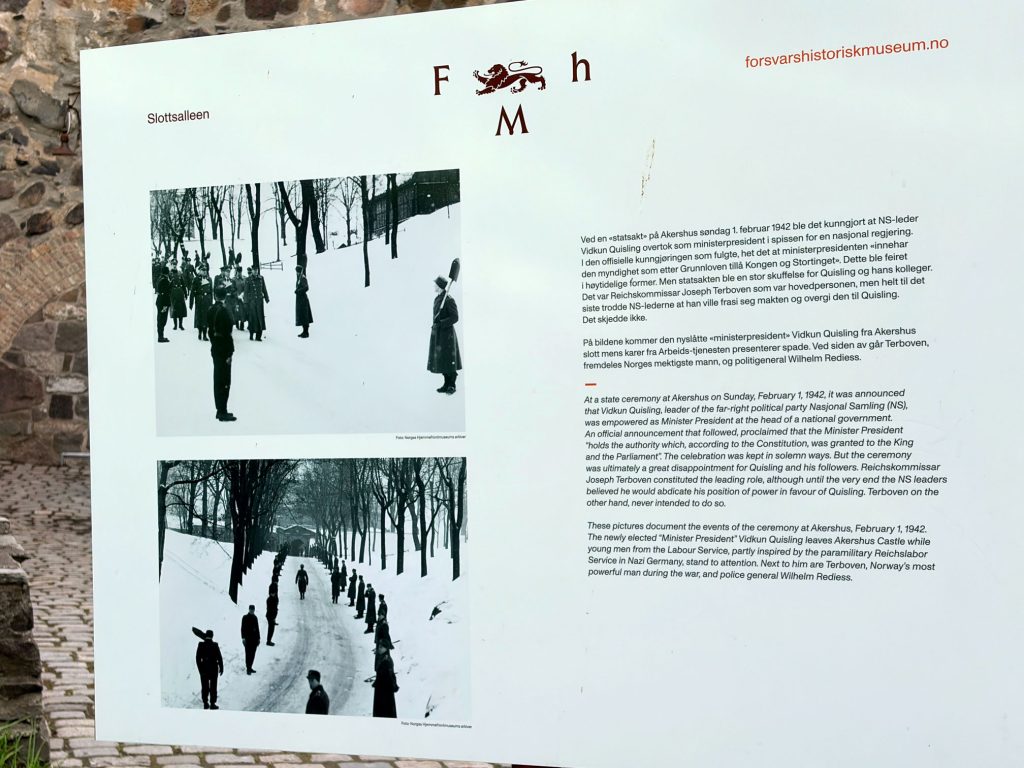
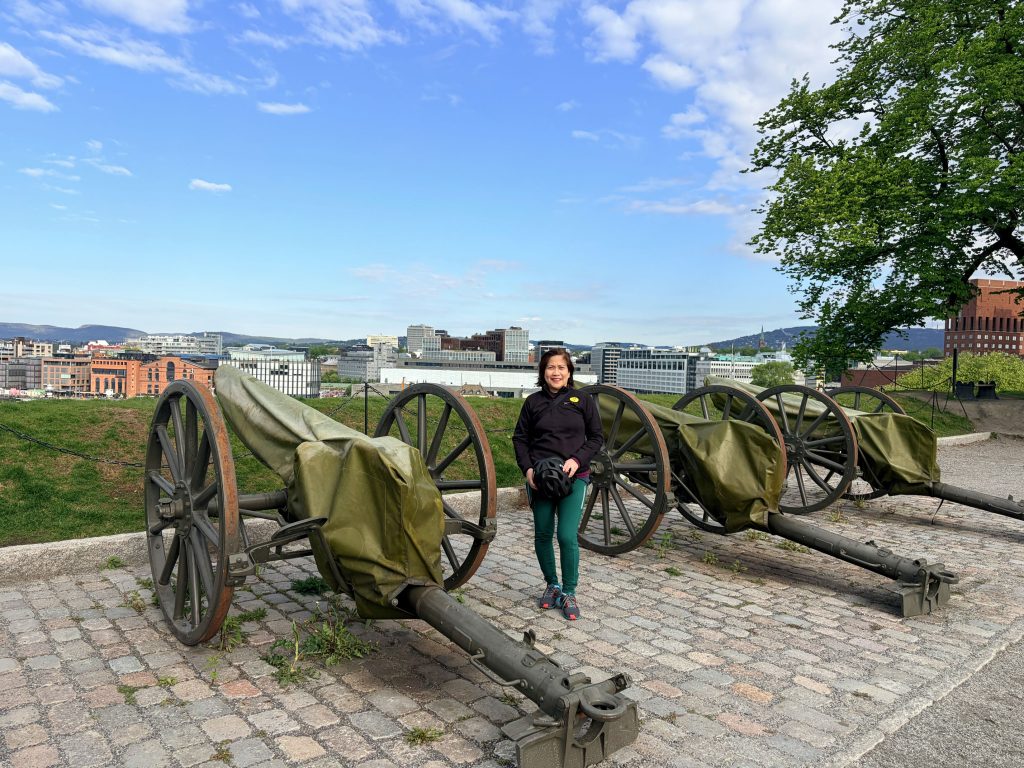
From the bike shop, our initial stop was the massive Akershus Fortress (Akershus Festning for Norwegians), which houses the Akershus Castle, the Armed Forces Museum, and Norway’s Resistance Museum. We spent about 30 minutes inside, with the fortress’s summit offering fantastic views of the city!
From the fortress, our bikes glided down a steep alley towards the Oslo City Hall (Oslo Rådhus). We stopped in front of the functionalist/Scandinavian art-deco-inspired, red-brick-laden building.
The halls leading to the main entrance are lined with murals depicting the country’s historic past (real and mythical), civic life, occupations, and resistance (to the Nazi regime) during the Second World War.
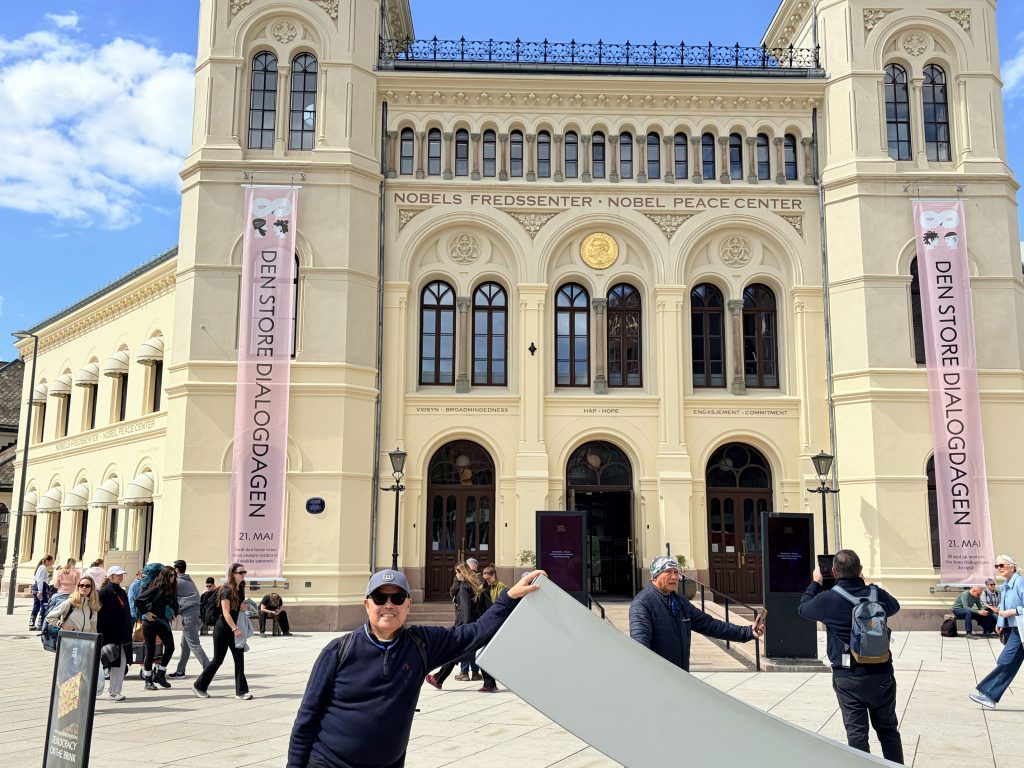
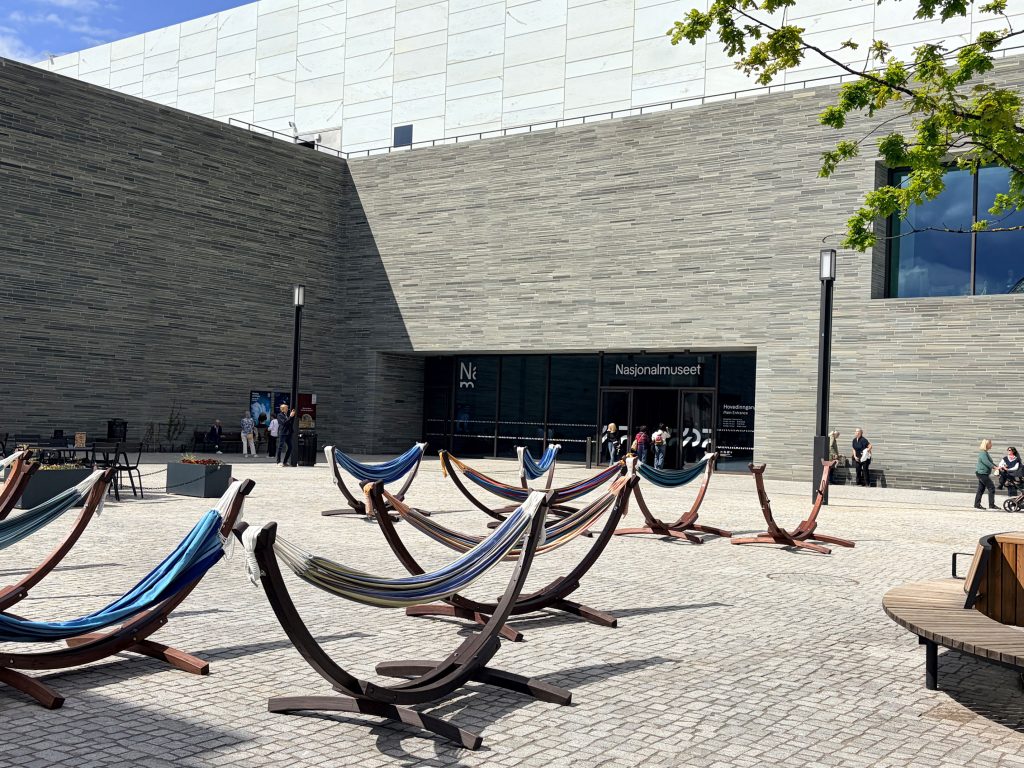
It’s inside Oslo’s City Hall, where the Nobel Peace Prize is awarded, with the Nobel Peace Center and the adjacent National Museum (Nasjonalmuseet) just a stone’s throw away.
From the City Hall, we will ride towards the majestic main avenue, Karl Johans Gate, past the National Theater, and towards the Royal Palace, where the equestrian statue of Karl Johan (better known as King Charles III John of Norway and King Charles XIV John of Sweden – at the same period) overlooks the 3/4-mile long avenue that ends southeast at the Oslo Central Train Station.
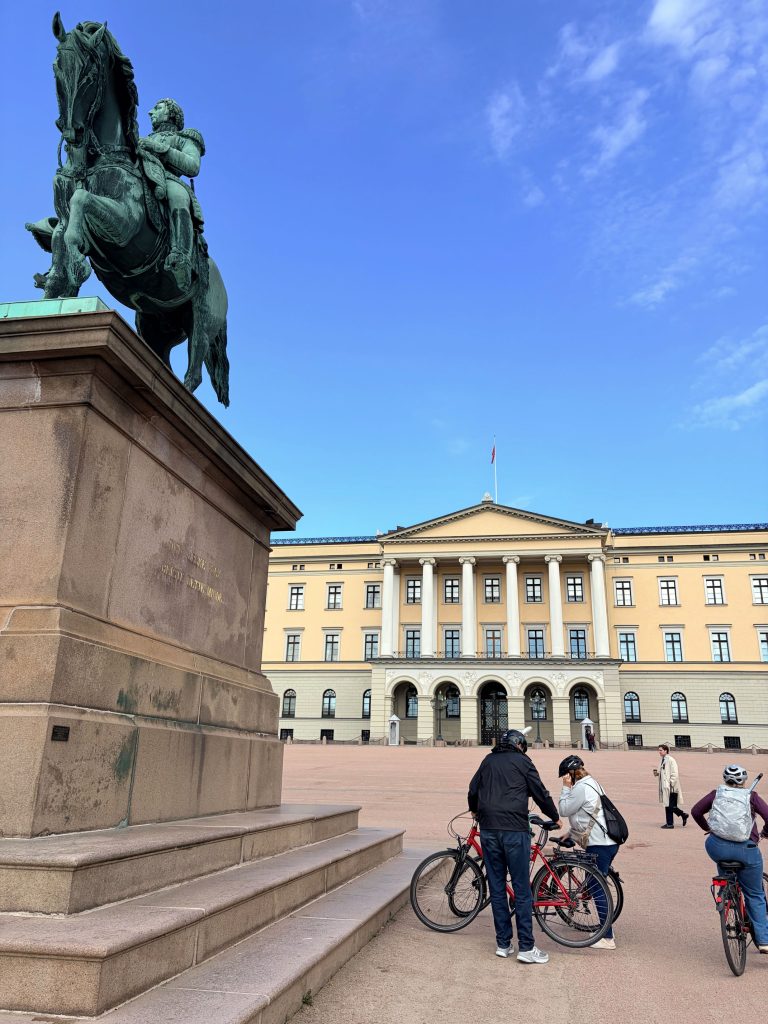
We stopped and parked our bikes at the base of the monument to catch our breath (the wide yet smooth path leading to it is what seasoned cyclists call a ‘false flat’ terrain) and listened to a bit of history from our guide.
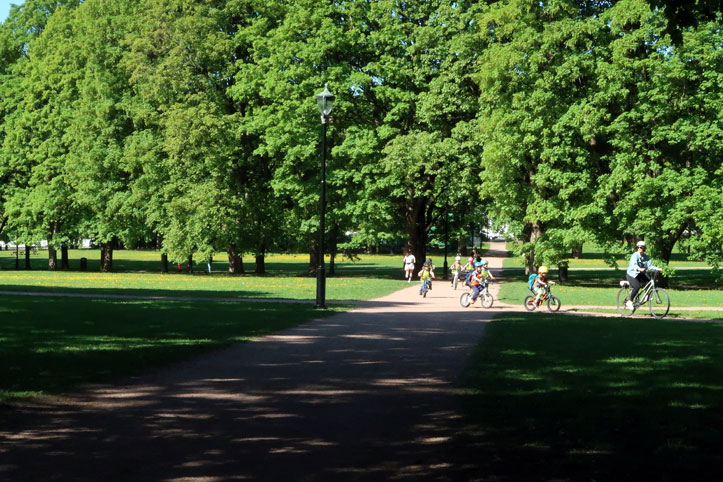
We utilized a small pathway along the right side of the Royal Palace en route to our next destination – the Vigeland Sculpture Park. The VSP is simply part of the larger Frogner Park, which covers almost 110 acres (approximately 45 hectares). It was one of the more enjoyable segments of the bike tour as we meandered through the quiet neighborhoods of Oslo, some of which are home to foreign consular officers.
We were atop our bikes for almost a quarter of an hour, passing by the Vigeland Museum, which used to be the studio-workshop of the person who masterminded all the sculptures (it culminates with the same thought-provoking, 17-meter-tall granite installation called the Monolith), you’ll see in the park named after him – Gustav Vigeland.
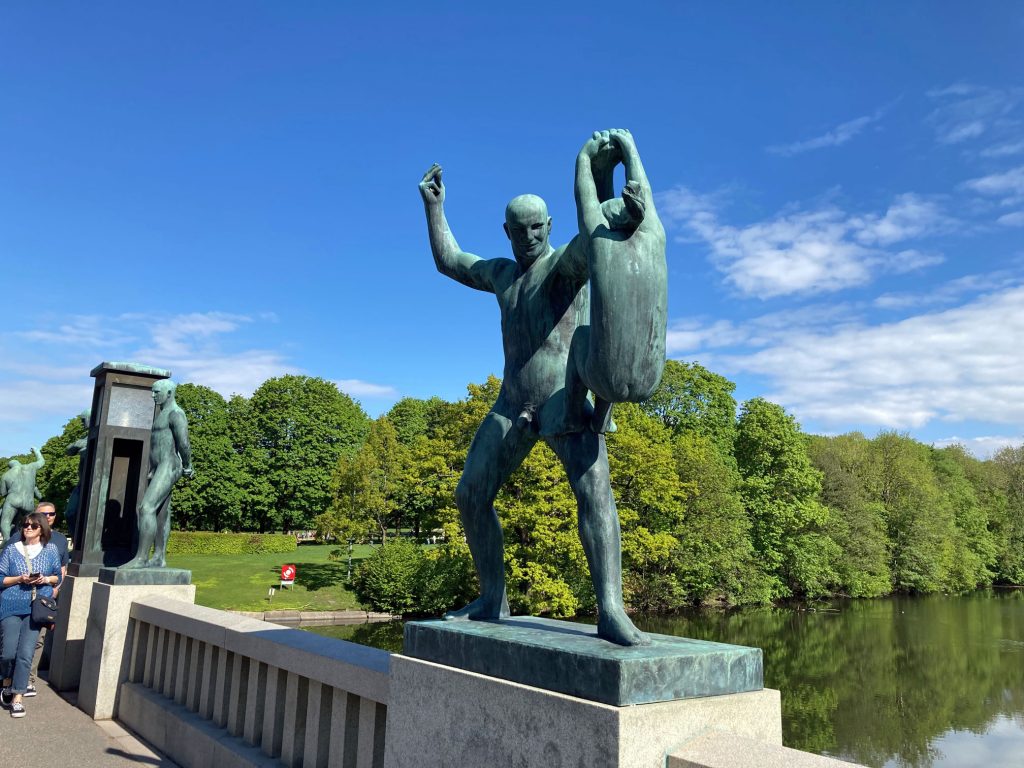
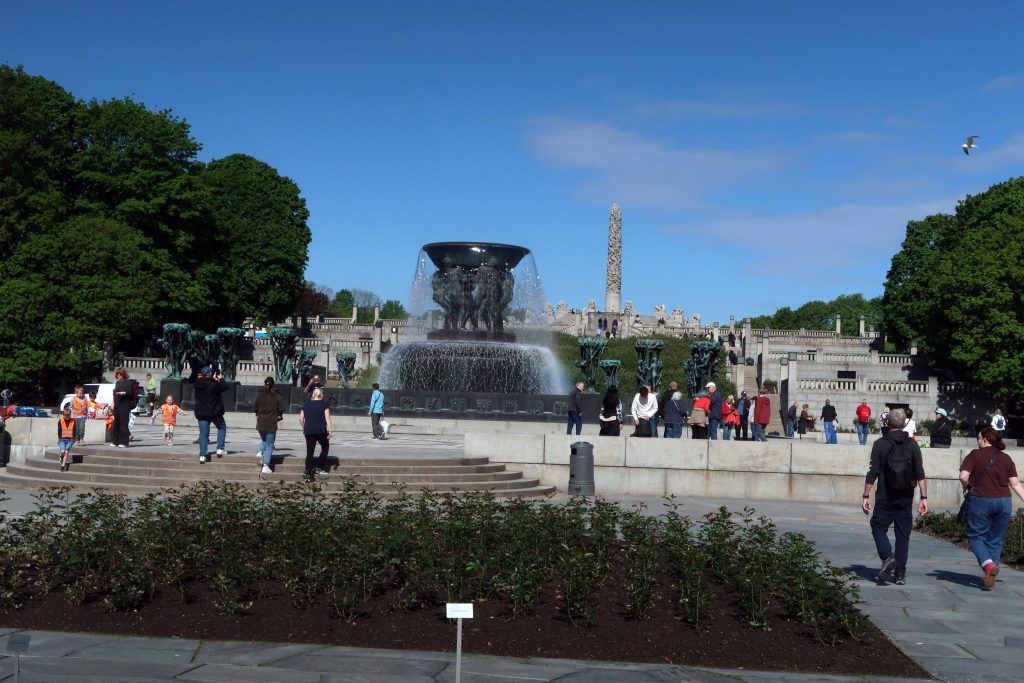
From Frogner-Vigeland Park, we would cycle past the smaller Oslo City Museum, along less busy interior streets on our way back to the wharf. Here, we would dodge pedestrians, especially along the busier boardwalk, lined with shops and cafes.
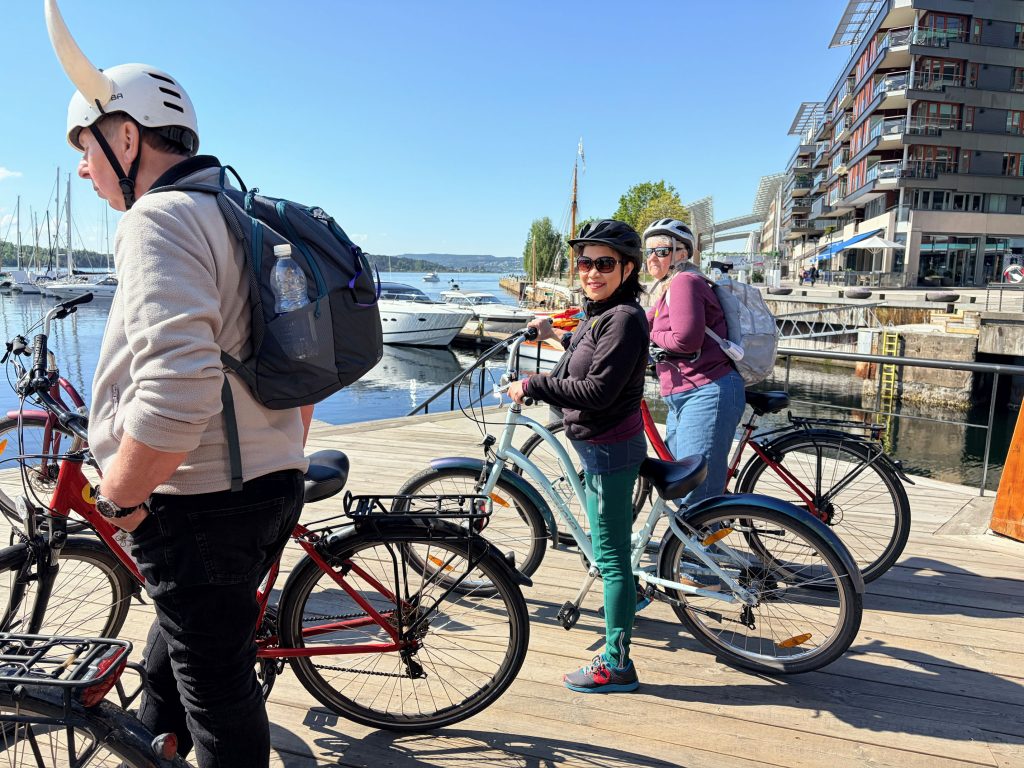
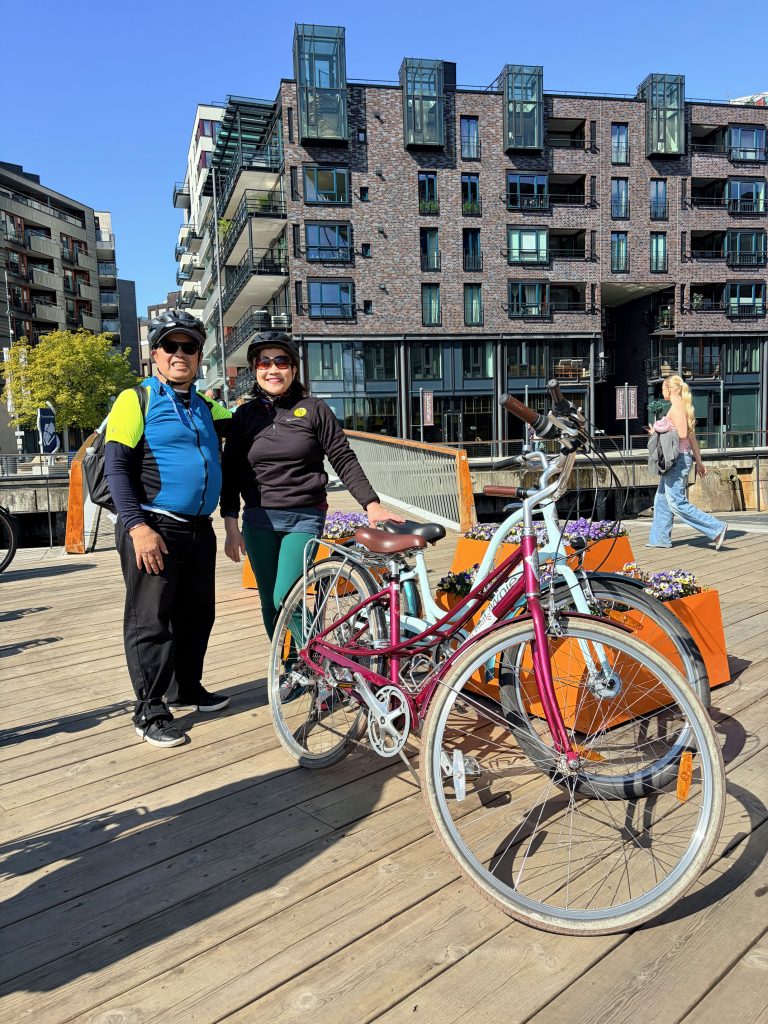
The final leg of our 3-hour bike tour of Oslo would be along the southern fringes of the wharf, where there was virtually no traffic, pedestrians, or tourists in sight, as there were neither shops nor cafes.
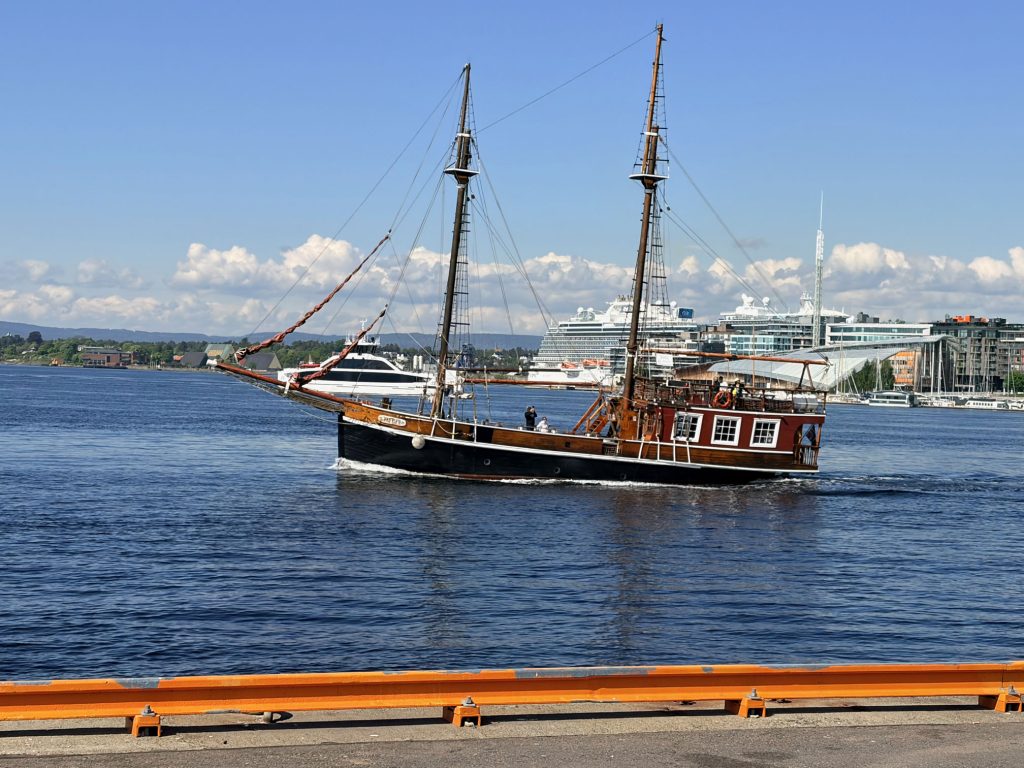
The road would sweep into a huge parking space. It was a hidden gem of a spot where one could see all the action from the other side of this part of the Oslofjord – a large, glacier-formed inlet that stretches from the city southwards to the Skagerrak Strait, which ultimately connects to the North Sea.