
The Grapes of Highway 29

The Vigan ‘longanizas‘ (sausages from Vigan, which is a town about 250 miles north of Manila and noted for its rich Spanish heritage) smelled even more garlicky that morning as I placed the remaining links on a clear bowl.

The sausages casings’ red-brown color together with the fat that dripped from the fillings, blended oh-so deliciously, with the generous oil that had accumulated under them. Eaten at breakfast and served over hot, white rice with a good cup of coffee, these ‘longanizas‘ will definitely see you through a long day of travel…which we had planned that Thursday of Dec 16.

By 9:30 in the morning we had already traversed the busy cities that had dotted Highway 880 -and a bit of I-80 – and had coasted cleanly into the towns of Vallejo as soon as we had exited the first off-ramp after we paid the $3 toll in the recently-remodeled Carquinez Bridge. It is one of the major spans that link the upper portion of Northern California with the Bay Area.

Highway 29 cradled us the rest of the way as we headed towards the majestic plains of Alexander Valley, in a place called Geyserville. The destination may not rub well with the altruists, but the journey was, nevertheless, close to being ethereal.

As soon as we left behind the old city of Vallejo, the scenery immediately turned rustic and was perfectly complemented by endless vineyards that caressed the entire length of Highway 29. We passed by quaint towns along the winding roads of Napa and Calistoga.

Both these places offered a study in contrast to over-consumptive materialism and utterly simple living. In addition to their huge manses, there were the usual gas-guzzling SUVs and expensive sports cars casually parked inside the huge lots of the vineyard owners. On the other side of the coin, there were the humble, one or two-room abodes of farmers or retired folks who love to till their own lands.

Passing through these rustic towns also gave me a sense of wonder as to why, we, mere mortals had to endure the banalities of modern living –even when these seemingly plain (but spectacular) sceneries could fill our inherent craving for inner peace and joy, much stronger.

The plains of Alexander Valley unfolded right before our already mesmerized eyes after Highway 29 turned into Highway 128 and almost immediately after we passed-by the last town in Calistoga. Highway 128 meandered along the rollings hills of the Valley until you hit the small town of Geyserville. A short, stone and steel bridge -one of the many that spans the 50-mile long Russian River – should serve as a good marker that you’re on the right track to Geyserville.

Our destination wasn’t the town but the Indian casino now called River Rock. It used to be called ‘Dry Creek Rancheria’ but casino operators -with their esurient skills for making money – probably realized their folly in naming a money-maker that had already dried-out and renamed it to something that constantly flows instead.

The place was situated up a steep hill that was accessible via a narrow road along Highway 128. There were multi-storeyed parking garages and most probably, a hotel, undergoing construction. But, the squat, main casino building was already in full action –ready to take your money away.

The panoramic view of the valley from the 4th-level  garage parking offered a bit of spiritual relief from the voracious appetite of the slot machines and gaming tables below.

It’s probably the very first Indian casino that I had been to where I felt that I didn’t even have the chance to win, just a few minutes after inserting my money on the slot machine. The slot machines over there were really tight.  Even Larry Ellison would probably shudder at the thought of how those slot machines were programmed to give the house an unbeatable edge.

River Rock, the place, is definitely on my “to visit” list. Eat and enjoy the scenery. But avoid the casino as much as possible, please. You might want to play at neighboring Hopland instead (a 30-minute drive further north from Geyserville).

There, the less-sophisticated slot machines of the ‘Shokawah Hopland’ will welcome you their kinder and gentler arms.

All told, the fantastic sceneries and the grapes planted all throughout Highway 29 that led us to River Rock, only served as mute witnesses, to our follies, perhaps, in our ways for the never-ending quest for something meaningful in life.

Of Mist and Melting to Sonora

I beckoned my aunts (on a visit from Manila) to the waiting car as I prepped the engine for our trip to the Black Oak Indian reservation casino situated in Tuolumne, California — about 8 miles east of Sonora.

English: Dana Fork of the Tuolumne River, Yose...
English: Dana Fork of the Tuolumne River, Yosemite National Park, California, July 2008; photo by self, GFDL (Photo credit: Wikipedia)

The day started on a misty note as the sun never showed up in Fremont on that Tuesday morning – Dec 14. There was a mild fog as we traversed Altamont Pass along Highway 580 as our car hummed steadily towards the low-lying plains of Tracy.

After about an hour of driving, we encountered a little drizzle along Highway 108 as we approached the town of Oakdale. Time for gas and time to relieve my bladder when we were right in the heart of Oakdale. The place is noted for its fine furniture (naturally, made of oak) as well as for being the heart of the vast and fertile valley of Central California…an area that supplies almost the entire U.S. all the almonds it needed.

&nbspTita Yet and Ising at Black Oak in Toulumne, CA
From Oakdale, it was simply 45 minutes of stress-free driving, punctuated by undulating hills and vistas that seem to know no borders. It is one of those places where you will feel the vastness and, perhaps, greatness of good, old U.S of A. As a bonus, the sun suddenly showed up as we approached the area where 108 forked into 120 –the main artery that will lead you to the majestic Yosemite National Park.

From 108, there was a new exit ramp that led to a 9-mile feeder road (mostly uphill) where the Tuolumne Band of Me-Wuk Indians situated their new gambling mecca this side of California. The place was undergoing expansion, so that we had to park in an area where you will have a view of the hills that surround the place.

Even though it was high-noon when we arrived, the place was cold — like it used to be, all throughout the season. Even the nickel and quarter slot machines we played were also cold. We were still lucky to eke out a few dollars in winnings even though we just hang around the place in under three hours.

Nothing much had changed in the place when we first set foot on it during its opening day in 2001. Except, maybe, for the hot, roast-beef sandwich (with a marvelous side dish of mashed potatoes) which we washed down with soda and coffee that was excellent.

Even that alone, was worth the drive!


Enhanced by Zemanta

“Cash” Creek

Once more, this time with my visiting aunts in tow, we visited yet another Indian casino called Cache Creek — one of the several that had mushroomed (and continues to) around California. The drive was a leisurely one since we embarked immediately after the rush hour traffic on a Thursday morning.
In about two hours, we had already parked our car in one of the wider, blue-colored slots with the distinctive disabled logo.

It had been several years back when we first went to this relatively unknown place just about 30 miles west (if coming from the Bay Area) off Highway 80 in Vacaville. It’s in a place called Brooks and the casino itself got its gaming license by being situated in the Indian reservation long inhabited by the Rumsey Band of Wintuns or the ‘Patwins.’

I was surprised how huge the place had now gotten to be. Gone was the sleazy feeling one gets when entering the casino. It had become now a ritzy and glitzy place that will give any medium-sized upscale casino in Las Vegas a run for its money.
&nbspRuby with Tita Yeyit and Ising at Cache Creek in Brooks, CA &nbsp&nbspTita Ising and Yeyit inside Cache Creek
If you enter the place from the south side, there will be airy restaurants that will immediately entice you with the variety of food that they offer. It used to be the area where, before, a small and cramped fast food was tucked beside a circular room where the nickel machines were located. Now, there’s an oyster bar, a deli, a fast food booth, an Asian resto, a huge taqueria, a seafood/steak house plus two huge restaurants that both offered modest buffets. How money can change the world, huh?

But the games remained the same except for the notable addition of two craps table. The tables may look the same as regular craps but look closely. In the center of the table was a port where cards were shuffled. Cards in a craps game? Yes, Indian casinos use cards to comply with the regulation that all table games must all be done using game cards. This is probably one of the deals, Las Vegas biggies had struck with Indian-gaming lobbyists, so as not to take too much of their very lucrative businesses or ‘level the playing field’, so to speak. And check out the dice, too! Those are not your standard pair of craps dice but specially made ones.

As usual, we meandered all throughout the place, hunting for any of our favorite penny slot machines. But we found no penny machines whatsoever. Do Indian casinos forego penny machines to make sure that they ‘rake it in’ quicker?
We found solace in a 10/25 cent variety that offered a modest payout even if you play only 1 or 2 coins (yes, we opted for the 10 cent game). Then, having sated our appetite for these games, we hied off to the nearby taqueria and had their luscious ‘beef taquitos‘ with ‘pico de gallo‘ as our chosen dipping. My aunts washed these down with iced-tea while I went for my usual coffee.

We went home at the break of dusk and wondered where’s the creek in the place that gave the casino its name or so it seemed. The Indians had, indeed, found a cache in the place. But it was not gold this time and the actual creek, for that matter, was not nearby the casino itself.

It was cold, hard cash being emptied out of the pockets of visitors, day-in and day-out. No wonder they had grown so big in so little time. For Cache Creek (the casino), it’s ‘ka-ching’, ‘ka-ching’, indeed!

The Futile (?) Quest for the Meaning of Life

It had been a perennial mystery for me who dictates the duration of one’s life.

Why do some people die young (by natural or other causes), and some people almost live theirs to the fullest, to the point where their bodies can no longer endure the ravages of extreme old age?

English: Old man resting on a chair, near Sain...
English: Old man resting on a chair, near Saint-Nazaire-le-Désert, France. Français : Vieil homme se reposant, région de Saint-Nazaire-le-Désert, France, abt 1975 (Photo credit: Wikipedia)

Are these all by chance? Or, for religious-centric people, are these just part of a phase we all undergo in the ‘grand scheme’ of things that nobody will ever comprehend?

Some people will never even see the light of day – babies who will die while still in their mothers’ wombs. In contrast, some people will even beg to end their lives – to escape the misery life brought upon them.

Who controls our fate? Some say that we create our own destinies. But is the human mind too intelligent and too complex to be able to control the events that govern one’s fate?

Is life simply an illusion? Do we create all the events of daily living in our brains and interpret them to be the manifestations of our so-called ‘existence’?

Just thinking about all these things leaves me feeling very tired. I guess sleep is the closest answer…I can get out of these musings.


Red Hot + Rio

Released by Verve Records in 1996 as part of the AIDS awareness project
The LP features an all-star ensemble of Brazilian bossa nova & nova bossa artists plus some of the best world music artists like Sting, David Byrne, Ryuichi Sakamoto & more


Our feature for next week’s iRadio broadcast. This is just one in a series of albums that started in 1990 and showcased the world’s best Brasilian/jazz musicians, in support for the search of a cure for AIDS. Very noteable was the combo of Astrud Gilberto and George Michael – as well as Everything But the Girl’s rendition of Tom Jobim‘s classic, “Corcovado“.

In Search of Caldera

Once in a while, we are in the hunt for music we had loved listening to – maybe, all throughout the years of our existence. What compounds the problem is the ever-changing mode of recording music. It seemed that only a few years back, I was either listening to vinyl records or to 8-track tapes (and yes, even the “reeled” ones).

The latter was immediately replaced by cassette tapes while the former lingered on for a while even as the ‘digital media’ formats slowly trickled in –led by the CD.

Digital Audio Tape (DAT) tried to regain the glory days of tapes – in digital format – but the mechanism was simply too cumbersome to make DAT players a commercial success, such that almost all of the digital tape formats fizzled out.

Now that digital media is the norm, we have all sorts of storage devices for them. But the principle is the same: Music now resides as mere “ones” and “zeros” in whatever form of digital storage there is: hard drives, flash memory, MiniDiscs, CDs, DVDs, etc, etc.

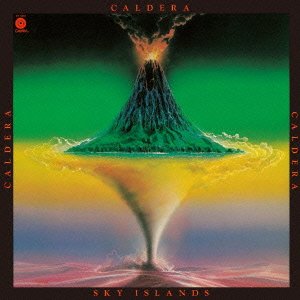
But this blog is not about the medium of storing music but about the jazz/fusion group called Caldera.

Inspite of its popularity and massive collection, iTunes -still- doesn’t have this LP available

I can still vividly recall that it was in the mid-70s when I was listening to their unique kind of music. Theirs was an eclectic blend of jazz/Brasilian/Flamenco and probably, New Age.

The core members of the group were Costa Rican guitarist Jorge Strunz (another guitarist, Ardeshir Farah, later teamed up with him and they are now popularly known as ‘Strunz and Farah’), a keyboardist from Argentina, Eduardo del Barrio, and drummer Carlos Vega.

The other members also came from countries in South America plus some musicians that performed with the group, Earth, Wind and Fire. Then young and unknown but now extremely popular, Diane Reeves also performed as vocalist for the group – most notably in the very melodious and mystical track, “Ancient Source.”

Yes, it was in the era when cassette tapes and vinyl records were king. Now, I want to listen to some of their songs again and put it in my iPod. But I seem to have a hard time searching for their recordings in the easiest-to-find (and legal) digital format on the Internet: original CD versions of their albums. Since they were just an obscure group which disbanded a long time ago (1979), there were very, very few releases (remastered) of their albums in CD –when this medium became the standard in the early 80s.

Of course, I can simply ‘digitize’ my cassette and vinyl collection of their recordings. But, the procedure is not only too tedious, but, also, the end-product is not ‘digitally perfect’ compared to the commercial CD versions. For me, the CD is still the cheapest and easiest medium to ‘juggle’ digital music around. I may have to do it the hard way if my search for their CDs on the web proved futile.

Until then, I will have to content myself listening to their unique brand of music –plus the ‘noises’ we usually associate with recordings done in analog format.

I am simply dying to hear the unadulterated, digital version of their recording, “Seraphim” (from the album, “Sky Islands” – 1977, Capitol Records).

Natural do Rio de Janeiro

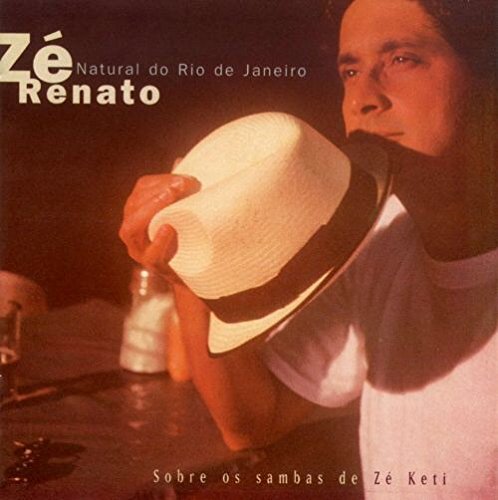
Ze Renato performs songs composed by Ze Keti. Most of the songs are in Portuguese, but the melodies are lovely.

This is the CD that we will be featuring this weekend (hopefully) in my iRadio webcast. I purchased this personally from the popular CD store in Ipanema, Rio de Janeiro, and it was near the pub/restaurant (formerly known as Valhala) where the late maestros, Tom Jobim and Vinicius de Moraes, composed the bossa nova standard, “Garota de Ipanema” (“Girl from Ipanema).

The store is called “Toca de Vinicius“. Not because Vinicius de Moraes started or opened the store, but because it was located in a street named after Vinicius — Rua de Vinicius de Moraes. Literally, it meant, “Place of Vinicius.”

Ze Renato is a prolific performer who first attracted my attention when I saw him perform in one of the numerous shows that paid homage to Tom Jobim.

His voice seemed to yearn for the better days that had passed — like a reminder of the times when people seemed to be simpler, more humble, and gentler.

It is interesting to note that former Pat Metheny Group percussionist Armando Marcal was also the lead percussionist on all tracks. Most of the songs were composed by Ze Keti, and the CD was dedicated to Nara Leao.


The ‘Gentle Side’ of Reno

We made an impromptu trip to Reno, Nevada, last Saturday – after heavy rains lashed the San Francisco Bay Area on Thursday and Friday – to pump up our sagging adrenaline levels and try our luck in the numerous casinos there.

The trip was smooth as silk, and the weather was simply spectacular. In three (3) hours and approximately 250 miles later, we were already playing our favorite slot machines at Boomtown Casino Resort in Verdi, Nevada (roughly about 12 miles away from downtown Reno).

We moved on to downtown Reno later in the afternoon.

Reno was noticeably not particularly busy on that gorgeous weekend. The Indian reservation casinos must have taken a massive bite out of their lucrative business.

Casino habitués were not flocking to this mini “Sin City” like they used to– especially on a lovely weekend like that one.

For us, it was a welcome relief. Traffic inside the main strip was very light, and going from one place to another was as easy as it could get. Parking was incredibly hassle-free, especially with the use of my ‘temporary’ disabled parking card (side note: in most Indian casinos, these privileged parking spaces always seem to be full), and entering and exiting the casinos was without the usual hustle and bustle.

It was an exceptionally relaxing weekend in an otherwise stressful place.

As an aside, we also stopped by our favorite Filipino eatery in Vallejo, California—Andrea’s, where we picked up all our food for the entire trip. These included “chicken adobo” (a stew of various chicken meats in vinegar, garlic, peppercorns, and soy sauce) and the saucy “beef kaldereta” (spicy beef ribs with vegetables stewed in tomato sauce, pork pâté, and grated Cheddar cheese), served with rice.

For dessert, we had the “taho” (a food-drink made primarily from curdled soybeans) with lots of “arnibal” (syrup made from brown sugar and vanilla) and miniature “sago” (tapioca pearls).

Of course, the package won’t be complete without their irresistible and delightfully crispy “lechon” (roasted pig) with the mildly spicy liver sauce.


Tita’s Arrival

Imus, Cavite
Imus, Cavite (Photo credit: ~MVI~ (warped))

Today, my Tita Yeyit and Tita Ising will arrive from Manila and they will stay with us for two months.

I hope that I can show them around to places where they have not been to yet!