
Day 1 – Jan. 24, 2016 – (Sunday): The Call of Cabuyao, Laguna
Old habits are hard to eliminate; two of mine are bicycling and swimming. These activities, thankfully, had tempered the late effects of polio on my left leg- an affliction that I got when I was about three years old.
Laguna, particularly Barrio Pansol, had been my swimming locale of choice after I graduated from college and dropped out of medical school. My life was at a crossroads, and I spent a great deal of time contemplating the whys and what-ifs of life in the healing waters of Laguna Hot Springs.
Our van left Imus, Cavite, at about 10:30 AM on a relaxed yet sunny day. We traversed the newly-built connector roads between Cavite and Laguna. We arrived in Cabuyao in about an hour and a half, having picked up orders of “rellenong bangus” (grilled, stuffed milkfish) and “lechon manok” (roasted chicken) from food stalls located along the route.
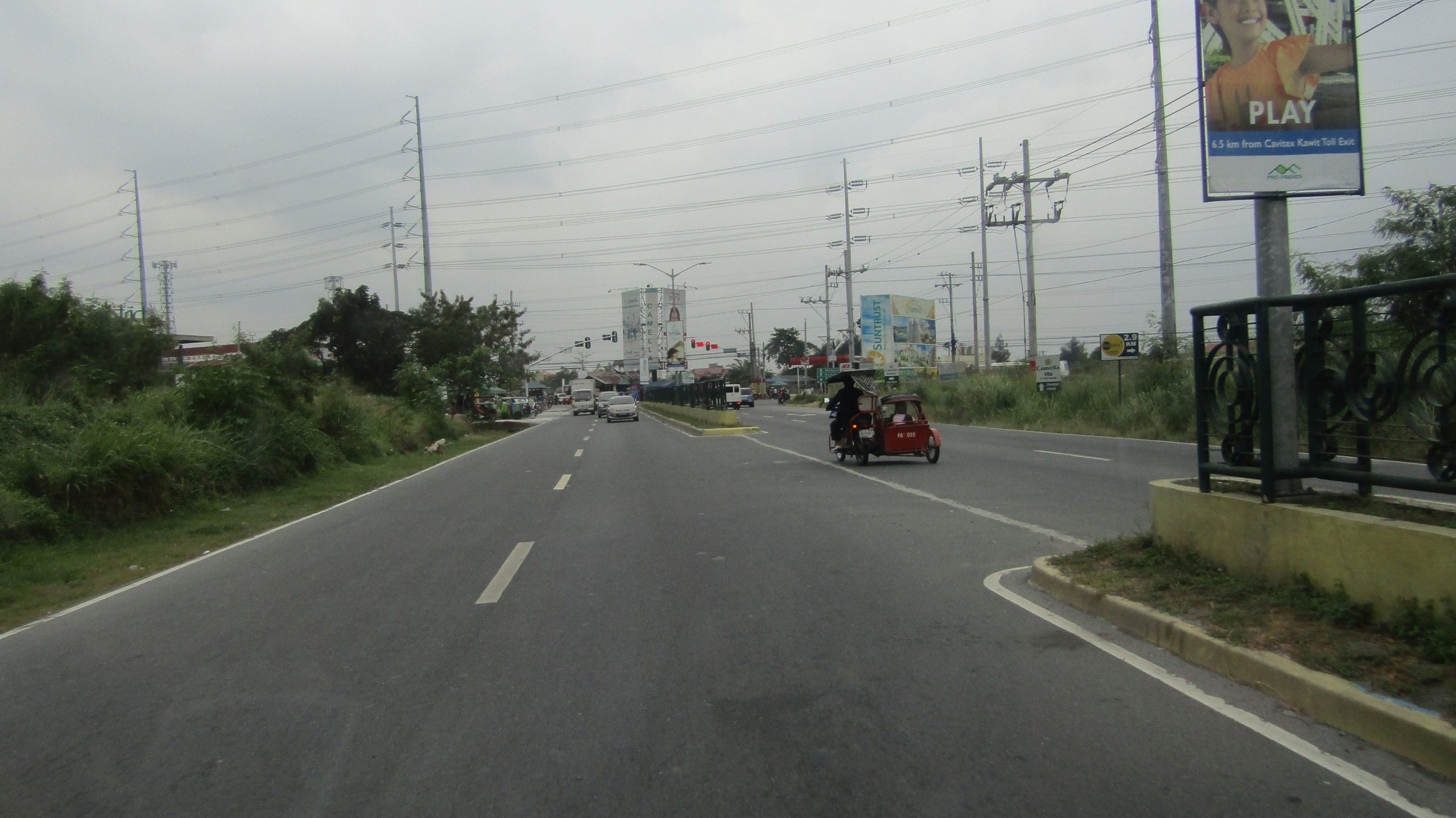
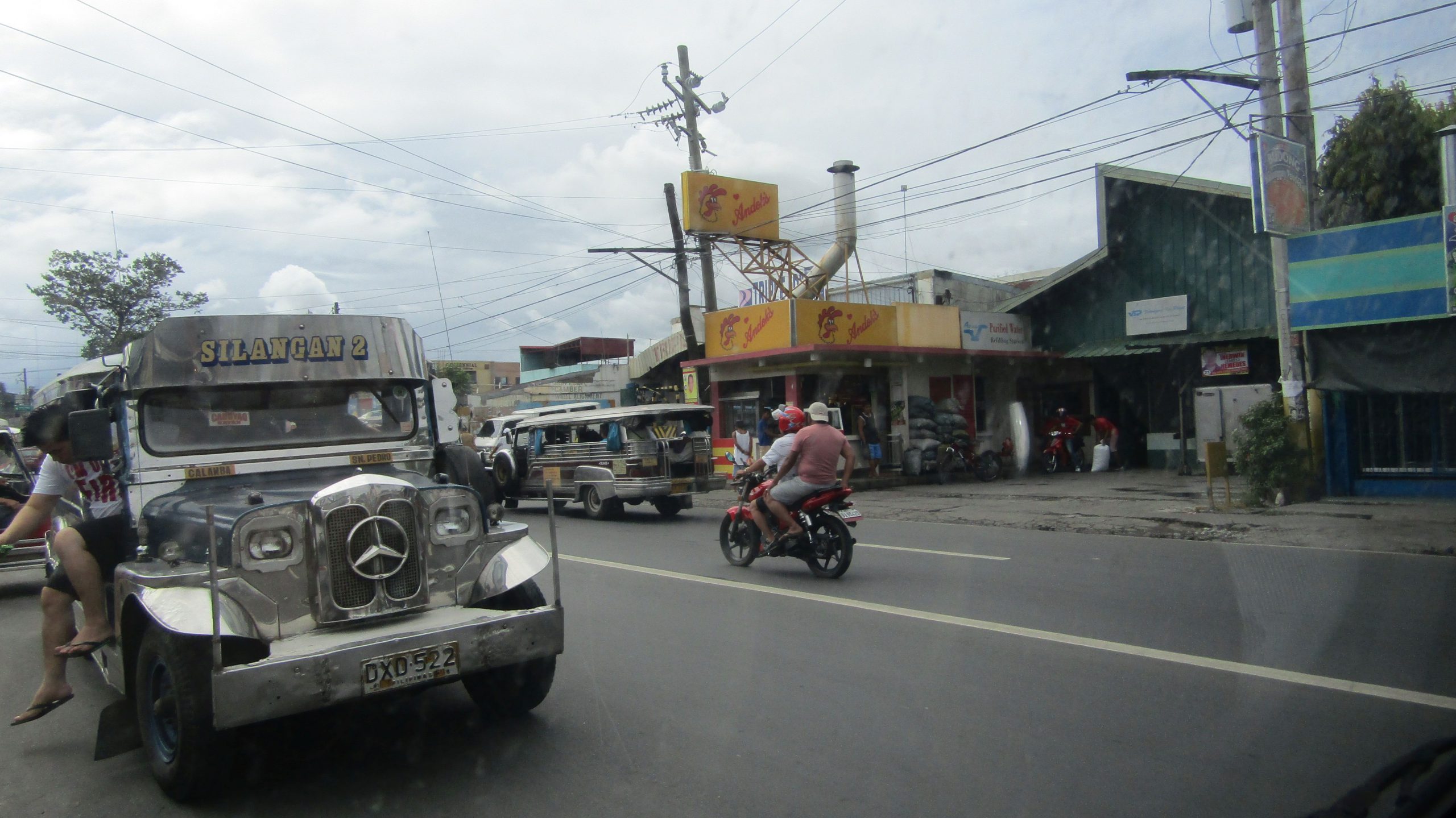
Cabuyao was once a sleepy town (now a city) of Laguna, about 27 miles southeast of Manila. We rode past the town on our many cycling jaunts to Los Baños in the days when the South Luzon Expressway, from Manila, went only as far as the municipality of Alabang. We had to use the interiorly-located national highway to go further south.
Barrio Banay-Banay, Cabuyao, is where my first cousin Carol and her husband, Arthur, found a second home after spending most of their careers in Cavite. The couple met at a company that dealt with industrial plastic products located along the national highway in Bacoor, Cavite.
After they got married, they lived near Imus but decided to move here after Arthur’s father passed away, leaving a self-made bamboo hut on a piece of property about half a mile east of the national highway.
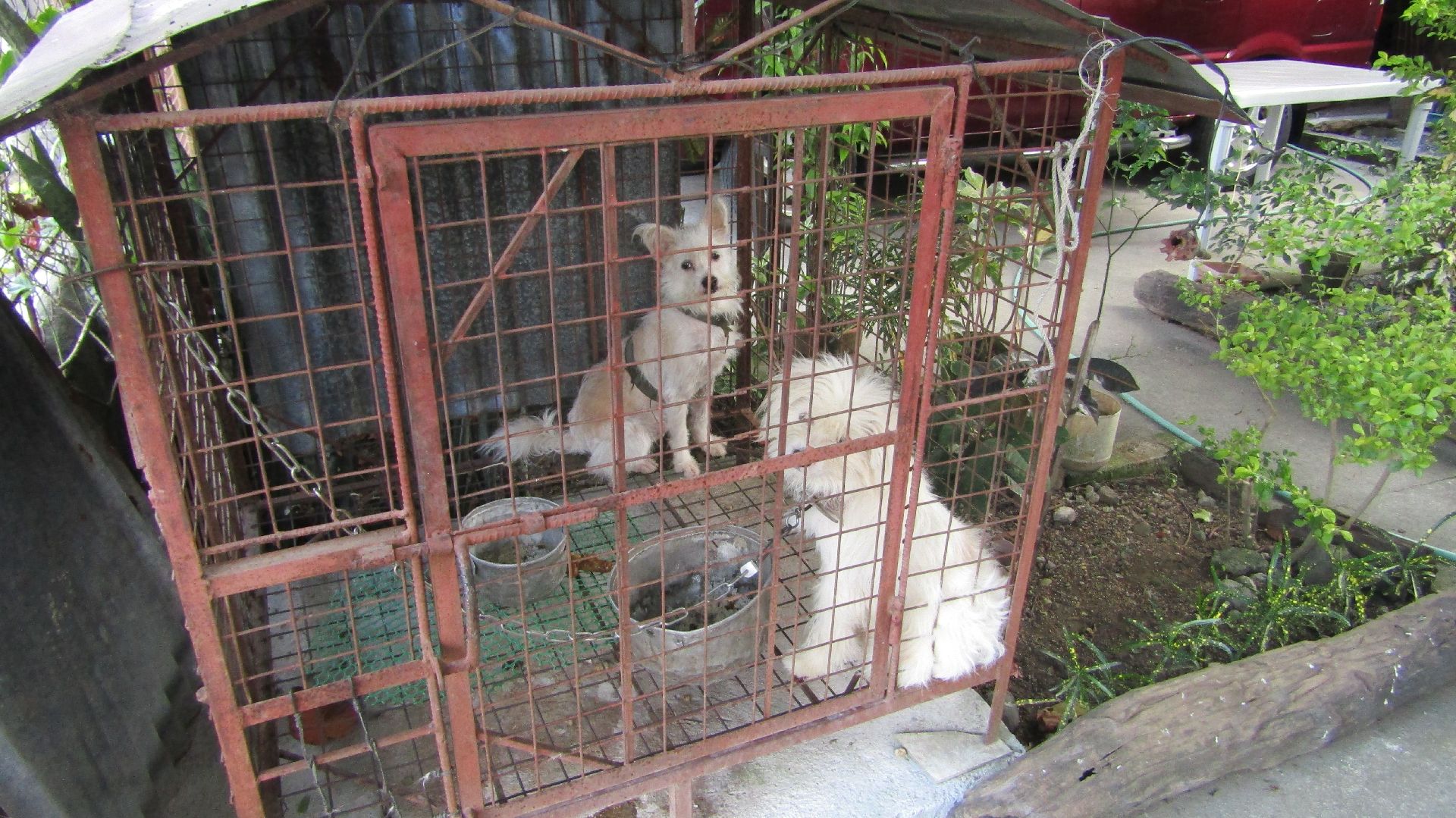
We found Arthur roasting “pork liempo” (grilled pork belly) and “inihaw na bangus” (grilled milkfish) on his improvised grill and also got accustomed to the incessant barking of their four (4) dogs — who are these people?
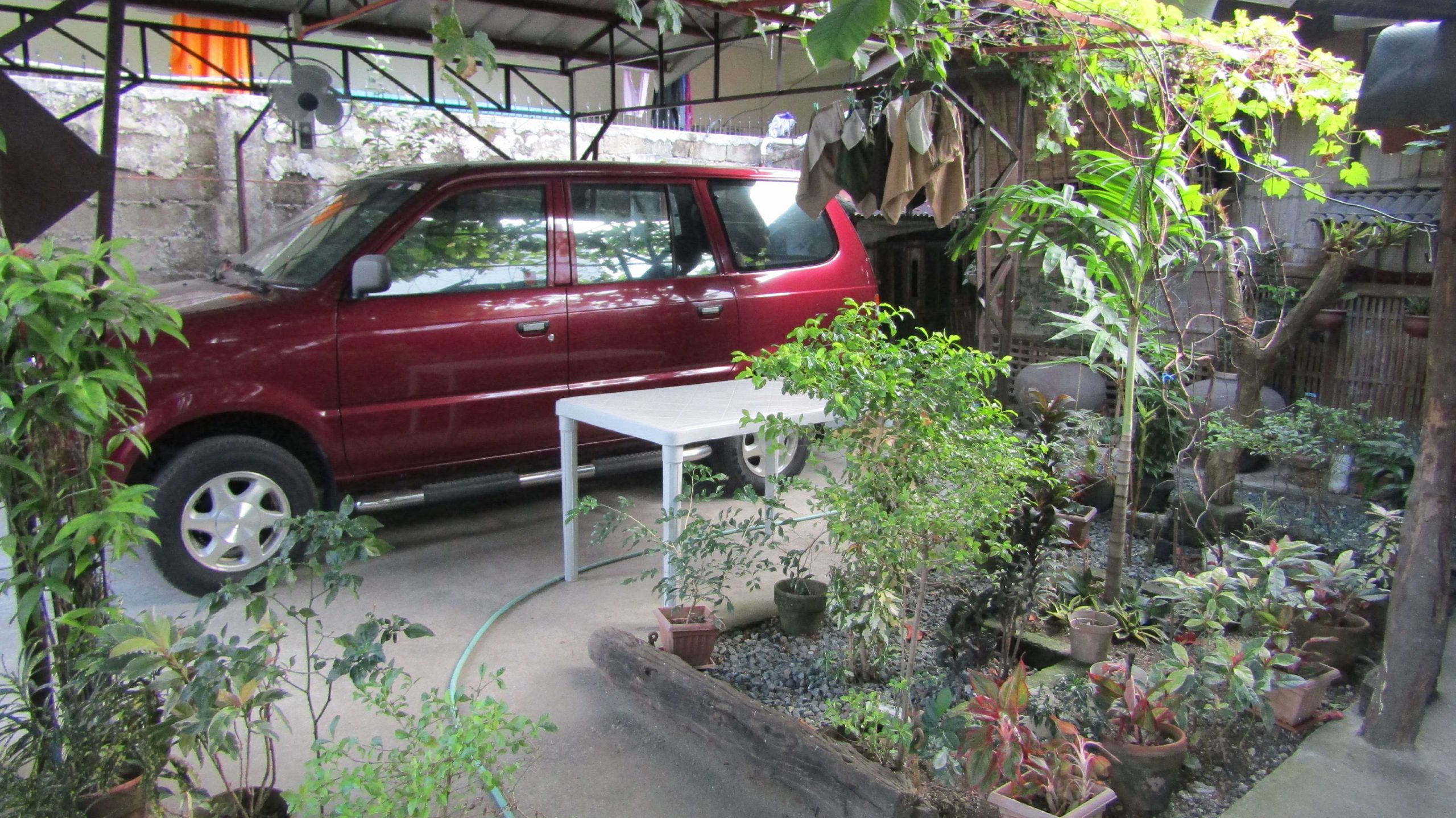
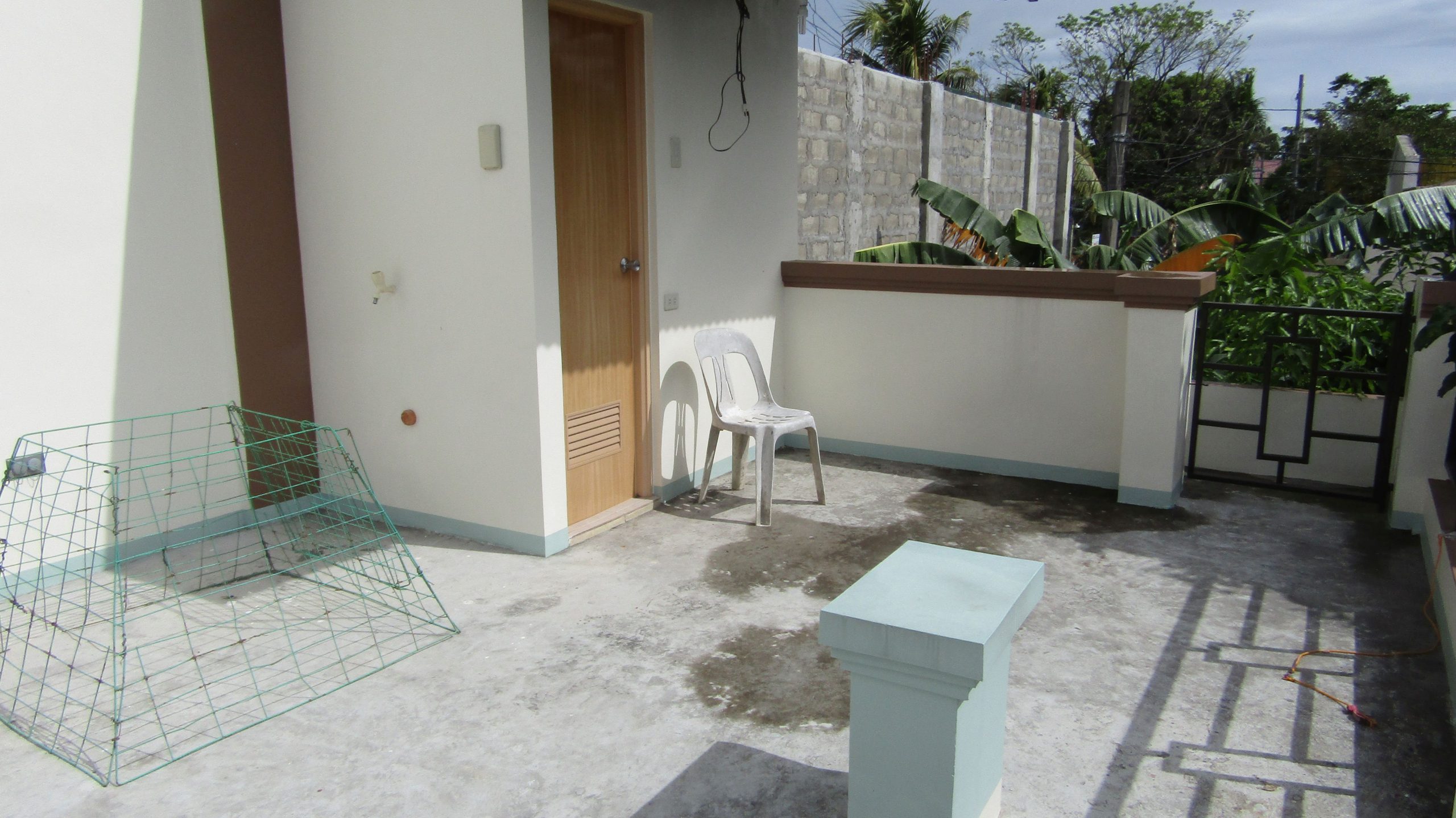
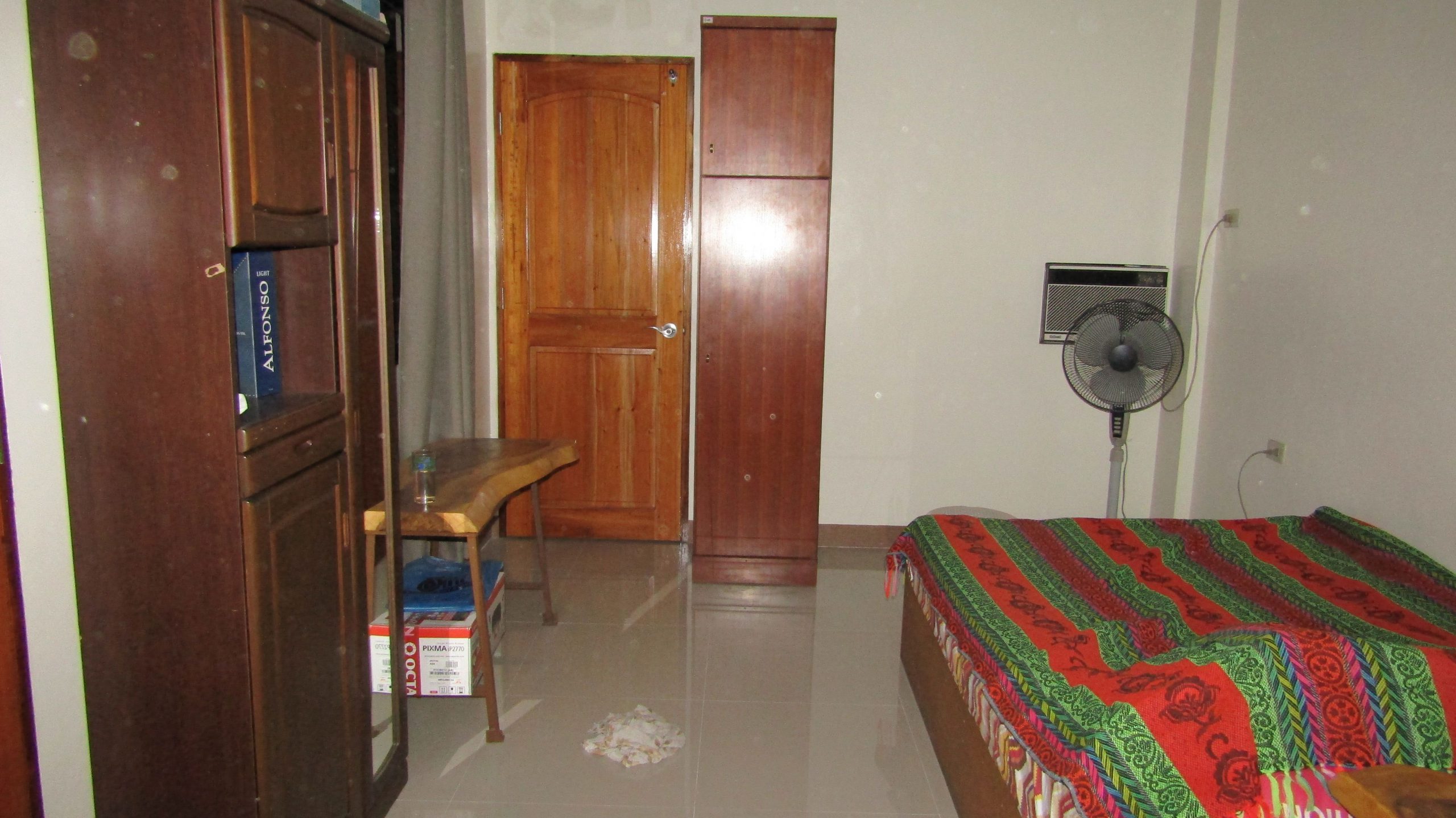
I had been to their place in late 2011, so I immediately noticed the changes. There was a new shed for the carport that Arthur had fabricated himself in his spare time using his rudimentary welding skills. They had also constructed an all-concrete, two-story structure with an open deck in the vacant land at the back of their old house– the bamboo hut.
When Carol arrived from their store, we began the impromptu luncheon party. The menu consisted of “pinakbet” (vegetables sauteed in fermented shrimp), “tinolang manok” (organic chicken soup with lots of ginger and young papayas), the ‘lechon manok‘ (grilled chicken), plus Arthur’s ‘pork liempo’ (grilled pork belly) and ‘inihaw na bangus‘ (grilled milkfish).
My uncle, Ricardo (‘Kuya Ading‘, who will turn 95 in a few days), his care provider, Emma, and my three ‘titas‘ (aunts) — Tita Yeyit, Ising, and Nita — accompanied us on this trip. Rey, our driver, also served as our unofficial tour guide, having been on this trip several times.
After lunch, Kuya Ading became bored and requested the group to head back to Imus. I had informed Tita Yeyit several days before the trip that I would be staying in Cabuyao for a few days, so I could revisit my favorite resort in Barrio Pansol, which was just a few kilometers south.
A few hours after the group departed, at about 3 PM, the trio of Carol, Arthur, and me went to the hot springs via the South Luzon Expressway, as traffic would be heavy along the national highway at that time of day, as Arthur suggested.
We passed the new and impressive city hall building complex along the way and emerged at a less busy section of the national highway just a few kilometers from our destination.
Similar to Cavite, several towns in Laguna, near Manila, have undergone rapid urbanization. I felt nostalgic yet saddened by the reality that some familiar spots, which had given the place its rural charm when I visited weekly to swim in its healing waters, had disappeared, replaced by concrete structures with commercial signs.
We parked the van on an empty lot that had once been a restaurant. I was excited to rediscover the place after we had paid the PHP 80 (approximately US$1.70) entrance fee and an additional PHP 100 (approximately US$2) for a dressing room. I immediately felt I was in the same spot as I had been more than two decades ago. Not much had changed around the entire resort.
In the early 1990s, I had long conversations with the late owner, Jesus Candelaria (or “Mang Jess” as I used to call him). He had intimated to me that he had paid very little for the place, which used to be a favorite spot for carabaos (Philippine water buffaloes) to cool off. He had also informed me that most of his sons and daughters were living abroad and that his nieces were the ones who ran the place.
The marvelous waters flow from the north side of a slightly smaller-than-an-Olympic-sized pool, where several boulders – hidden by a wall – further filter them. The water source is the legendary but now dormant Mount Makiling.
We soaked in the spot where the healing waters come out for five (5) hours. In the same area, people with disabilities could sit on a stainless-steel bench hidden from view by the chest-deep water.
The trip back to the house via the national highway was brief, as we had left the resort just after 10 PM. After we hung our wet clothes and towels, showered, and took a quick dinner of the leftovers from lunch, Arthur led me to the bamboo table and held up two-liter bottles of San Miguel beer.
The beers, the greasy meat leftovers, and good stories that reference the past are always the perfect ingredients for a good night’s sleep. I was in bed at 12:30 AM.
Day 2 – Jan. 25, 2016 – (Monday): A Surprise Visit to Barrio Mamatid
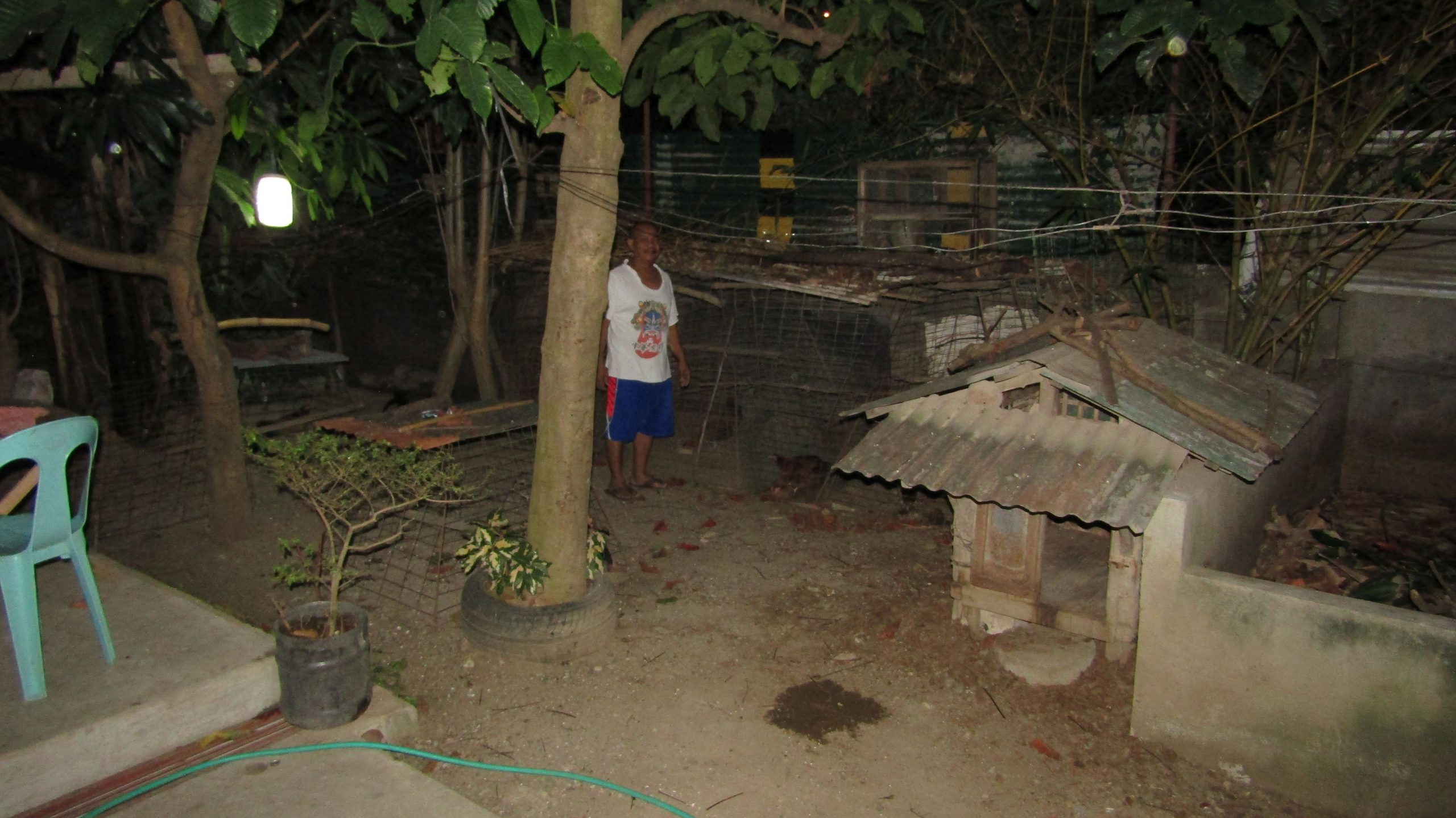
Still jet-lagged, I woke up at 4:30 AM and found Arthur already feeding his brood of animals – chickens, hens, roosters, fighting cocks, quails, ducks, geese, dogs, love birds, and two pigs – and so I chatted with him for a while.
Like the Filipino male living in the province, Arthur is a ‘sabong‘ (cock fighting) aficionado. He and his wife, Carol, also operate a small store that primarily sells livestock feed and other necessities for cockfight enthusiasts, located along the main highway about half a mile from their house.
The open spaces adjacent to the newly built house are where Arthur found his joys in life — his inner peace. There, twice a day, he feeds all his farm animals with the same care and devotion a good father gives his children.
At about 6:15, we had breakfast of ‘pan de sal‘ (bread buns), fried eggs, the leftovers of fried ‘bangus‘ (milkfish), pork ‘liempo‘, and the ‘lechon manok‘ from yesterday’s lunch party.
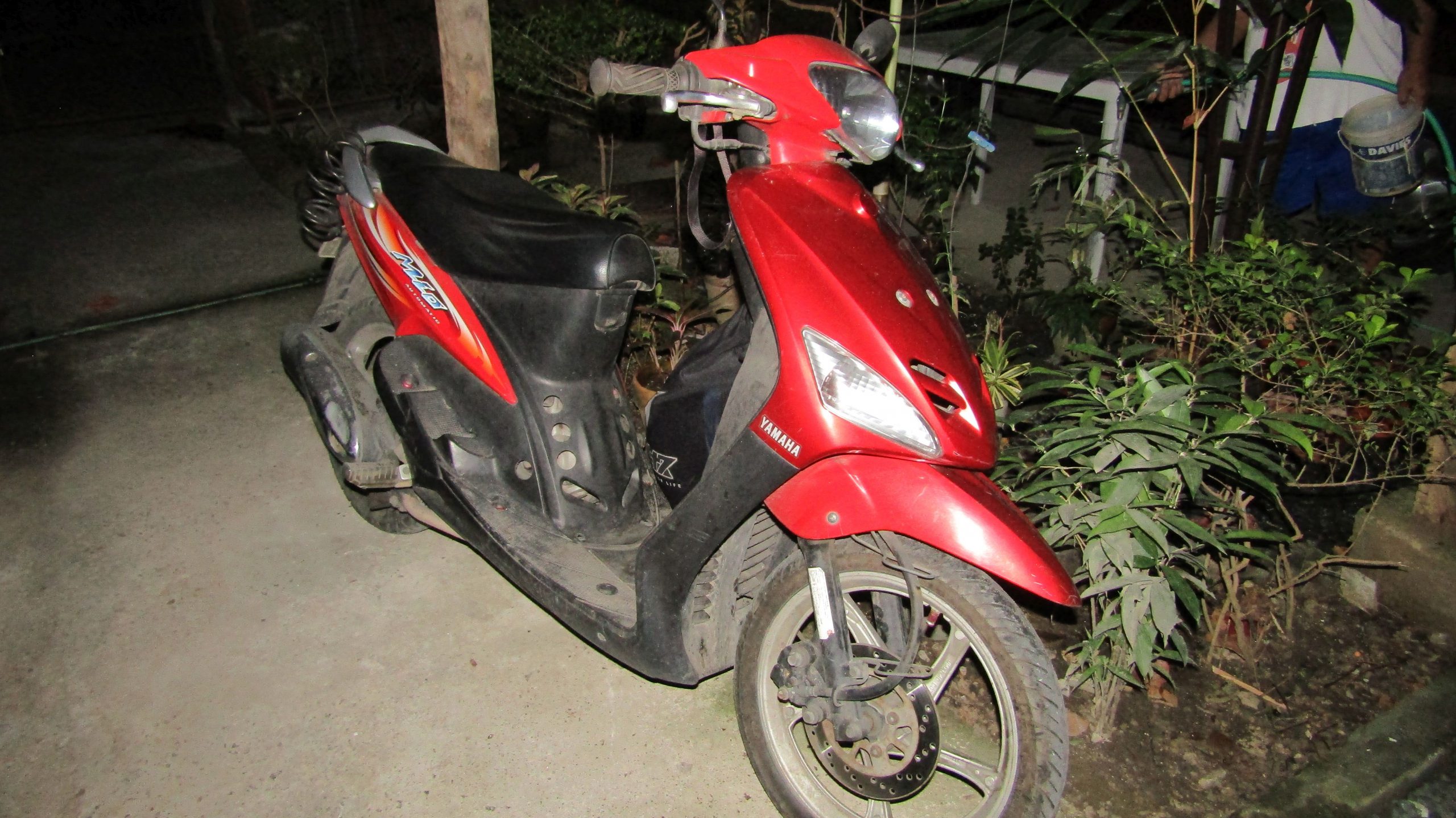
Two hours after Arthur left the house at around 6:45 aboard his Yamaha scooter, I decided to stroll around the surrounding areas and look for a store where I could ‘load’ my cell phone.
In the Philippines, you refill your mobile phone’s airtime with a wide array of ‘loads‘ that span from one day to a year, depending on your budget and need. ‘Loading kiosks‘ had become a cottage industry across the entire island as vendors received a small commission. I found a store right across the city-funded university and opted for the 3-day “GOUNLI50.” However, I found out that most of the gimmicks pandered by some telecom providers in the country almost border on fraud.
Carol and I went to the store at about 11:30 aboard a ubiquitous ‘tricycle.’ It is the most common form of motorized transportation in the country. We ate lunch inside the store after I briefly chatted with Arthur’s elder brother, who lives in a low-slung house located at the backmost part of the property owned by their family.
By 1:30 PM, after we had attended to the needs of store customers, Arthur and I boarded the trusty Yamaha scooter for the trip to Barrio Mamatid, about 6 kilometers southwest of Cabuyao. We would pay a visit to a co-contract worker/friend back in the early 1980s when I worked in Saudi Arabia.
As fate would have it, I met Ernesto’s son, Ervin, in the healing waters of Laguna Hot Springs in Barrio Pansol last night. We exchanged calls and text messages afterward and decided that today would be the most suitable time for his father and me to see each other again after more than 30 years!
We spotted ‘Erning‘ (Ernesto’s pet name) sitting in his “pakwan” (watermelon) stall and yelled out his name. He immediately recognized me, and we hugged each other like long-lost brothers. However, I felt the tug of that mixed feeling of joy and sadness after I saw him up close and realized that he had aged significantly.
We were both in our 20s when we first met on that farm near an oasis in Al’Hair, about 20 miles south of Saudi Arabia’s capital city, Riyadh. Back then, the kingdom was a magnet for foreign contract workers as the country embarked on a massive modernization program funded by the world’s insatiable demand for oil.
Their house sits on a corner lot of about 500 square meters. His youngest son had converted part of the property into a computer rental business. About 25 personal computers with LCD screens operated on the same concept as jukeboxes of yesteryears and were called ‘PisoNet‘ (One Peso Internet). Drop a peso into the slot, and you can surf the net/use the PC for five (5) glorious minutes.
Ernesto handed me a few peso coins, and I showed him some of our old Saudi Arabia pictures on my website. While at the computer shop, I asked him if Laguna de Bay was nearby. In no time, we found ourselves at the lake.
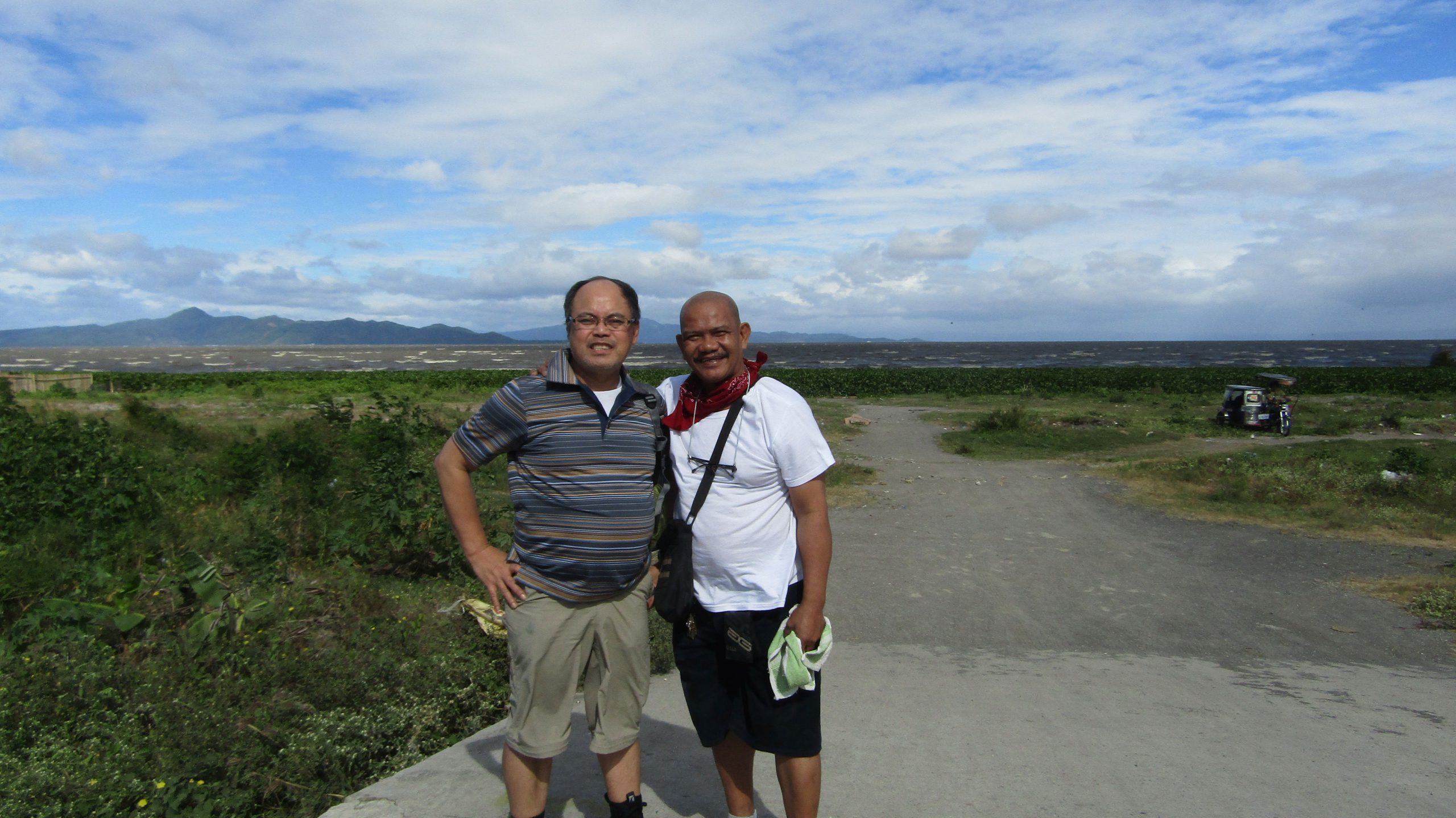
Ernesto informed us that locals can still catch fish in the lake. Siltation has compromised the taste of the fish, though. You will need to clean them very well due to the rapid urbanization on the lake’s fringes, that had rendered the once-clear waters an almost light chocolate color.
All over the Philippines, smaller towns surrounding big cities had slowly lost their rural appeal; most farmlands had almost disappeared due to urban sprawl.
Back inside the house, Ernesto served us “balut” (boiled 18-day fertilized duck eggs), slices of ‘pakwan’, and iced water. At the same time, we reminisced about our days in Saudi Arabia, our families, and, of course, local politics.
We bade our farewells to Erning and his wife at about 3 PM. We headed back to the house using the same roads we took earlier. We passed rice fields transformed into vegetable patches during the off-season, subdivisions, factories, and small mounds of haphazardly strewn garbage along the way.
Back at the house, I rested and showered away the heat. At the same time, Arthur headed back to the store after feeding his flock and preparing a vegetable dish that featured “puso ng saging” (banana hearts or budding banana blossoms). They arrived back from the store at about 6:30 PM, and we had dinner of the same leftovers except for the vegetable dish with copious servings of white rice.
After dinner, Arthur hopped aboard his scooter to buy San Miguel beer in liter bottles. Tonight, he informed me earlier, is one of those two days in a week when any one of his friends would drop by their house and “drink the night away.”
He returned with three (3) bottles of the local brew, and in the area adjacent to the carport, where there is a set of low-slung tables and two long benches made of bamboo, we opened up the first bottle while we waited for his friend. Arthur cracked open all the ‘balut’ that Erning had graciously allowed us to take home (together with a ‘pakwan’) to serve as our “pulutan” (appetizer).
We were halfway through the first bottle when his friend arrived in a nice-looking SUV. He brought a plastic bag containing an orange-colored fried dish called “okoy” (small shrimp with slivers of vegetables deep-fried in batter). Arthur had told me yesterday that he is also the ‘ninong‘ (godfather) of his architect-friend’s older son, and that on some occasions, both father and son would be present during their drinking sprees.
Having finished all three liters of beer by almost 11 PM, I had to go to the bathroom thrice to relieve my bladder before I slept soundly past the wee hours of the morning.
Day 3- Jan. 26, 2016 – (Tuesday): The Commute Back to Imus, Cavite
I woke up at 5:30 AM to prepare for the trip back to Imus, Cavite. We had hot dogs, fried eggs, and big ‘pan de sals‘ for breakfast that Carol had prepared earlier. Afterward, I took a few more pictures of their place before we left at about 8:00 that morning.
From their house, Carol and I took a tricycle (PHP 10 or USD 0.21 per person) to their store, where I bid farewell to Arthur. We hailed a ‘jeepney‘ to the transport terminal in Santa Rosa, where we waited for an air-conditioned van to fill up with passengers. For PHP 55 (approximately US$1.17), we were taken to Pala-Pala, Cavite, where we caught our final jeepney ride to Imus.
It was a roughly one-hour trip, but the travel time from Pala-Pala to Imus Toll Bridge (the jeepney fare was PHP 10.50 or US$0.22) was about the same, despite the shorter distance, due to traffic. Like Laguna, many “sleepy” towns in Cavite, notably Imus, had fallen victim to rapid urbanization in the early 1980s.
I finally took another tricycle ride (solo for PHP 25 or US$0.53), which I found to be excessive since the distance was just about 400 meters; I should have just walked (if not for my disability) back home. I was in Bayan Luma 3, Imus, by 10:30 AM.
I ate lunch of “chicken afritada” (stewed chicken with tomato sauce) and “Menudo” (a variation of the Mexican comfort food, but not as soupy) at about 11:30 AM. I took a one-hour nap afterward on my Therm-a-Rest.
Ate Nene (wife of my aunt’s late first cousin, Rodolfo ‘Rody’ del Rosario) dropped by around 4 PM, accompanied by a husband-and-wife friend. She was trying to sell a parcel of land owned by her late husband and had brought a sign for the purpose. The property is located at the back of my aunts’ house, three houses away.
Tita Yeyit arrived from shopping with Carol and Nelia (Carol’s sister-in-law) at SM City Bacoor (a huge shopping mall) by 7:00. For dinner, I ate two slices of Shakey’s Pizza that they had brought, and I went to sleep around 9 PM.