
As Dirty As A Charcoaled Rug

Everyone in the compound seemed awakened by the loud voice from the entrance. Even a nocturnal guy like me, who spends the wee hours of the morning watching tacky movies like Bruno and Borat, was moved out of bed by a man’s jovial yet familiar voice.

I was not mistaken.  It was ‘Kuyang Rey” (elder brother Rey), the buddy of my father-in-law, whose loquacious nature had made the people in the “barangay” think that he was good for nothing except for gossiping.

At first, what he was saying was confusing, but everything became clear when I heard the whole conversation between him and two of my uncles.

“We already have a ‘poso (manual water pump), and it was courtesy of ‘Kumpareng Andong’ (“kumpare” is loosely translated as “peer”).”

“Also, just to inform you, since my ‘kumpare‘ is running for the seat of barangay captain, everything that we request from him will be granted.”

“Mind you, people, this is our opportunity.”

Once called  ‘barrio’, a barangay is the smallest administrative unit in the Philippines, headed by a ‘kapitan‘ (captain or chairman) and several ‘kagawads‘ (assistants).

All this news elicited excitement from the faces of my aunts and uncles. Some of them inquired if the candidate would be willing to donate a truckload of gravel and sand, hollow blocks, or even an entire roof for the house!

One even asked if, on the day before the election, Andong would seal his victory by giving every voter of Barangay Burgos five hundred pesos (about US$10).

Amidst the bewilderment, my cousin boasted that the other candidate could provide what this aspiring ‘barangay captain‘ could give.

Manong Tolome’ (the elder Tolome) can double what you’ve been receiving from your Andong,Untoy (my cousin’s nickname) said with pride and a look that seemed to challenge Kuyang Rey.

“I heard that Manong Tolome shouldered the electric bill of the Tolentinos, provided all the bottles of beer during the birthday of Sidro, and this is the real kicker–he’s been giving a thousand pesos (US$20) to every single voter of Purok 2 (district #2) in our barangay.

The statement caused quite a stir as well as excitement among my relatives. As for me, I was half happy to hear that Kuyang Rey’s family does not have to go to the neighbor to fetch pails of water to flush out their shit since they already have their ‘poso‘.

Although it was a big deal for them, I was sadder than happy.  Ah, I almost forgot that barangay elections would again take place in a couple of weeks.
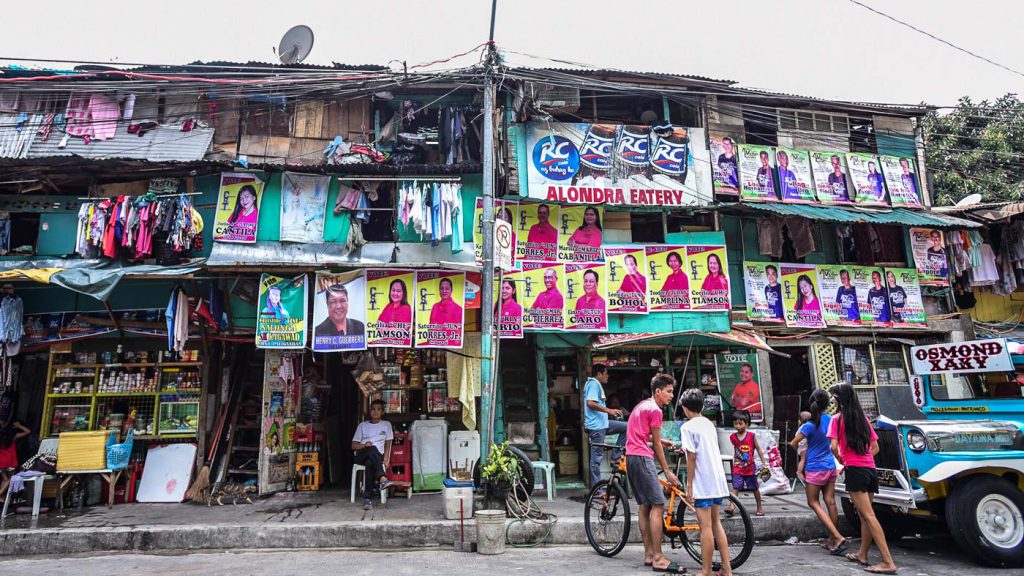
The pomp and all too sudden generosity we only witnessed from the mayoral and congressional wannabes had already seeped into the barangay level.  It is just amazing, fucking amazing to witness how some kagawad and barangay chairman candidates could provide a poso or visit a birthday celebrant’s party and shower them with a variety of gifts.  They attend the funeral rites of a friend of a friend, meet and greet the elders, have pictures of them taken carrying a child or kissing a filthy old man, and whatever.

They visit you, shake your hands, and beg for your vote. Together with their so-called supporters, they roam the streets riding an ‘owner jeepney equipped with loudspeakers playing a song by Inigo Pascual with modified lyrics to promote their advocacies—same old stupid scene.

What are their advocacies? It varies from very personal to general, but regardless of their advocacies, what they would do remains blurry and puzzling.

And let us not forget the one-liners of these “prominent” candidates. Their print ads read “Maaasahan mo” (Someone you can lean on), “Ipaglalaban ka” (I would fight for you), “Ang Tatay ng Barangay” (The patriarch of the barangay), “Kay Dodong, Panalo Tayo” (With Dodong, we are the winners), “Una Ka Kay Manang Tasya” (You are the priority of Elder Tasya), and other fascinating promises.

No matter how sweet and promising their one-liners are, they do not seem to meet or even exceed the standards of good governance.
A perfect example would be the one who campaigned on the slogan that he is “someone you can lean on”.  Leaning on, in the context of public service, is neither the ‘kagawad‘ who would provide the cases of beer during the birthday party of a barangay member nor the barangay chairman himself who would shoulder the sacks of cement for house construction.

Someone to lean on” is a leader who organizes scholarship funds and livelihood programs. To ensure that the jobless are encouraged to join a business cooperative.  Every barangay member is taught garbage segregation and proper disposal.  That no one is seen consuming alcohol or smoking in public places, or even simply to espouse cleanliness and discipline, is to say that the barangay chairman is genuinely someone you can lean on.

Ipaglalaban ka” does not mean that when a person is the cause of a brawl, all he has to do is to ask for the help of kagawad, and his wrongdoings would be tolerated and that he would be defended no matter how wrong he is.

When a candidate pledges that “he would fight for you,” he will defend what is morally right even if the deed is deemed unpopular.  Fighting for someone is fighting for the rights of the oppressed, whether he is your associate or not.

When someone claims that “he is the patriarch of the barangay,” he should see that his words and actions are acceptable.  He should take concrete steps to maintain the health and well-being of every barangay member by integrating medical missions –just like a father who wants all his children to be healthy.

He should not take sides during barangay hearings; instead, he should punish the wrongdoer.  The punishment should be like this: it comes from a concerned father who does not want his son to become the bane of the barangay.  The world has too many assholes already.

While the candidates enjoy the perception that the people appreciate them for their advocacies and promises, they appear to be ignorant of the long-term needs of their constituents.  They usually offer short-term and patchwork solutions to the same old problems that have been haunting and destroying Filipino values for centuries.

This is where I pity Kuyang Rey and most Filipino people. While the concept of self-reliance and the value of hard work.

A lack of money is no excuse for working-class Filipinos to rely on others, especially politicians. By giving Kuyang Rey’s family the poso, the candidate did not help him. It only made Kuyang Rey even worse.
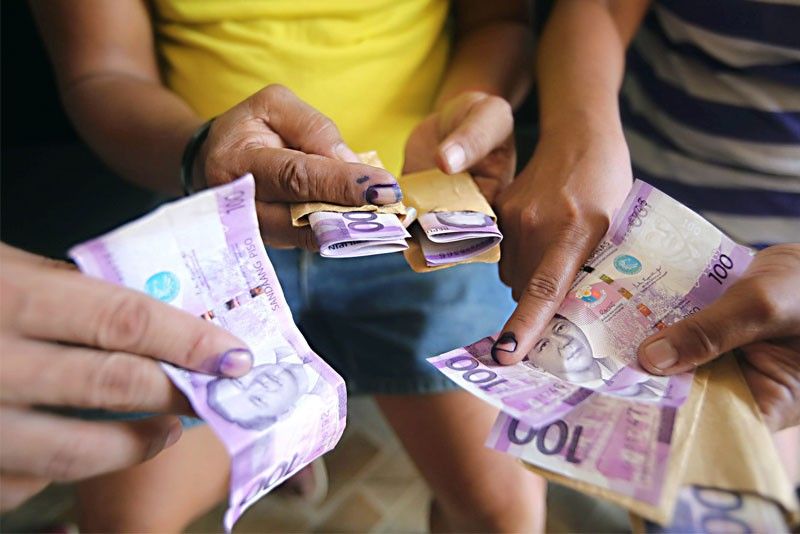
Money for your vote.

After all, it is not the barangay chairman’s task to provide a family with a deep-well pumping machine; it is the job of the “padre de familia” (head of the family) to invest in all the essential things his family needs. It’s not the church, DSWD (Department of Social Welfare and Development), PCSO (Philippine Charity Sweepstakes Office), or other charitable organization responsible for one’s needs, but the person himself.

Instead of the poso, a well-meaning politician would rather coordinate with the water company so that everyone in the barangay would benefit, not only a few families.

Instead of construction materials, why not gradually help the person find a decent job to build his house from sweat?

Instead of movie passes to get the teen votes, a resource speaker can be invited to the barangay hall to give English proficiency classes.

Poso’ is suitable for only one family, but an efficient water distribution system benefits the entire community.

A hundred-fifty hollow block is good only for Aling Bebang’s comfort room, but a job opportunity would enable every father in the barangay to build a house of his dreams.

A movie pass or two would be a temporary escape from the harsh realities of life, but an English proficiency class could equip them with confidence in finding a job.

Ah, to hell with the shallow minds of these politicians. Politics is as dirty as a charcoaled rug.

As I wrote this, my drinking buddy texted me that Andong would come to our compound tomorrow to shower us with paper bills.  Lots of one depicts the face of a brilliant senator assassinated at Manila’s main airport in the early ’80s — the five-hundred peso bill.

Maybe the money is enough to buy me a pair of jeans, a cellphone ‘load‘ good for a month, or even wax and tire black for my dying jeep. After all, the entire barangay won’t even know if I sold my soul.

Nah, I’ll sleep all day tomorrow, and Kuyang Rey will never be able to wake me up, even with a megaphone.
Between the Giant and Rationality

In Manila, it is not uncommon to see mothers spending countless hours playing bingo, ‘tong-its(local version of poker), or “mahjong” (an addictive Chinese tile game) while neglecting household chores.

Mothers are often oblivious to their children’s crying and unaware that they are burning the hard-earned money their husbands had brought home from scavenging or construction work.  Look around; there will always be dirty kids running and playing and not giving a damn if they have taken a bath.  There would also be children who, instead of attending school, must work daily to help their parents make ends meet.

Their jobs vary, ranging from digging the muddy and heavily-polluted seabed of Manila Bay to collecting pieces of metal, known as “kalakal” (merchandise), to sell at opportunistic junk shops, and carrying heavy loads of fruits and vegetables in the early hours of the day.

In the streets, it wouldn’t be a surprise to see jobless but non-disabled men on drinking sprees in front of “sari-sari” stores (a small family-operated convenience store typically attached to the house).  They laugh heartily at their senseless conversations, oblivious to the fact that they might not have enough to feed their family the next day.  They flaunt their big bellies, their tattooed arms, and worst of all, they brazenly display unproductiveness.

On the next block, it is also hard not to notice a group of teenagers, most thin as bamboo and nutritionally deficient like dying carnations.  A few of them are playing “cara y cruz“(heads or tails), some would be smoking weed, others are snorting ‘shabu‘ (crystal meth), and some would be sniffing ‘rugby‘-filled (contact cement) plastic bags to get their highs to mask out their miseries temporarily.  These youngsters are not few.  Like a vicious cycle, they spawn like rabbits and would join similar ill-fated, innocent souls in sordid existence.  But is it all about fate?

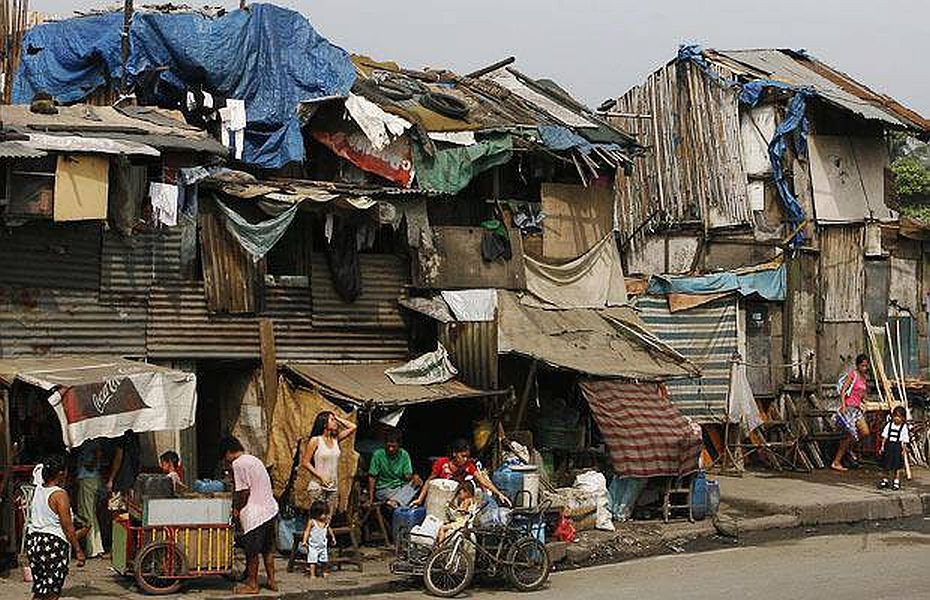
Take a casual walk on the streets, and you will notice how informal settlers – “squatters” – have mushroomed throughout the country, whether in urban or rural areas.  The streets are where we would realize that we have not seen and experienced the worst. 

Scrap materials were made into shanties occupied by as many as fifteen (15) people.  They try to fit themselves in a ramshackle abode as small as a bathroom of a typical middle-class family.  Here, “houses” are contraptions of recycled wood, flattened biscuit containers, plastic rice sacks, damaged tires, tarpaulins of stupid politicians or B-movie ads, and an assortment of junk.

No architectural plans, no concrete, no hollow blocks, no metal trusses, no hope.

There will be mixed emotions on seeing the appalling living conditions of the increasing number of Filipinos.  Some people would feel sorry for the plight of the children.  Their parents could barely provide them with toys.  There’s just one meal a day. Education is good only until the 8th grade. The house is comparable to those made for pigeons, and the breadwinner earns a whopping PHP 150 (about US$3) a day.  What a fucking way to live a short life.

To observant eyes, how some parents managed to have too many children, without any means of providing them a good foundation in childhood, like regular meals, decent shelter, education, clothing, toys, playtime, etc., clearly borders on ignorance.  But, regardless of how we come up with why these people are wallowing in poverty, there is only one thing clear to everyone: the Philippines has swiftly become an overpopulated hell.

The problems that stem from overpopulation are beyond count.  A constant frustration is that locally produced agricultural products are consistently insufficient to feed the entire population, primarily due to a mismatch between producers and consumers.  The people, as well as consumption, overpower production.  Surely and steadily, more and more Filipinos are filling their pie holes with imported products, which is a bane to the economy.

Another challenge posed by population sprawl is the availability of job opportunities.  Millions would compete against each other for a few job openings, creating a “dog-eat-dog” situation.  Small companies tend to hire only seasoned workers and don’t prioritize new graduates. 

College degrees would be useless; diplomas would be senseless.  Only a handful with the skills (and the right connections and recommendations) would be lucky enough to secure employment, and the rest would be jobless, unable to support their families.

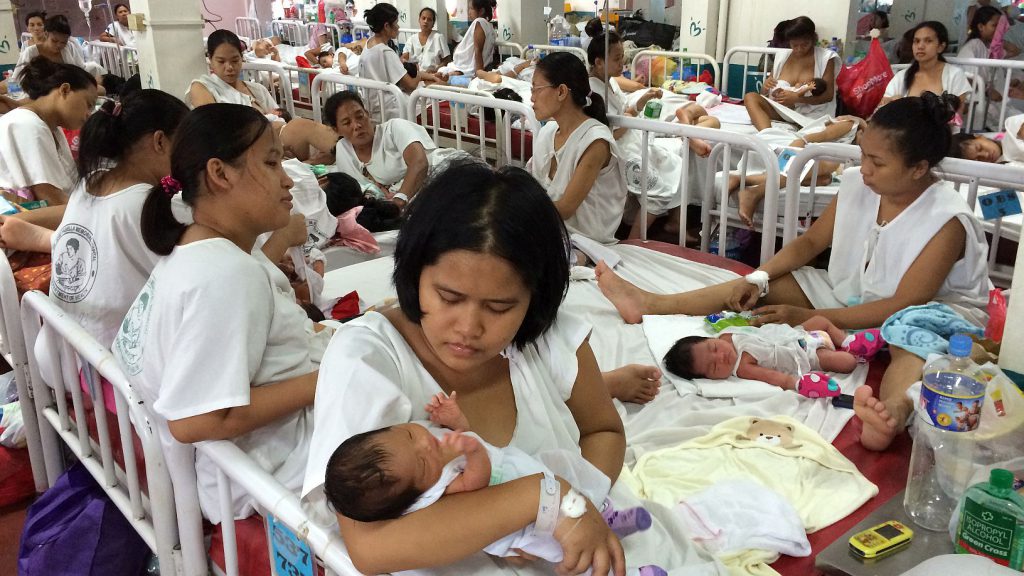
Overpopulation is a bane for any government.  Three or more patients would share a filthy bed, one with tuberculosis and others with dengue fever.  In the ER, individuals requiring urgent attention will have to wait.  Victims of vehicular accidents would have a very slim chance of survival because only three (3) exhausted doctors are attending to twenty (20) emergency cases.

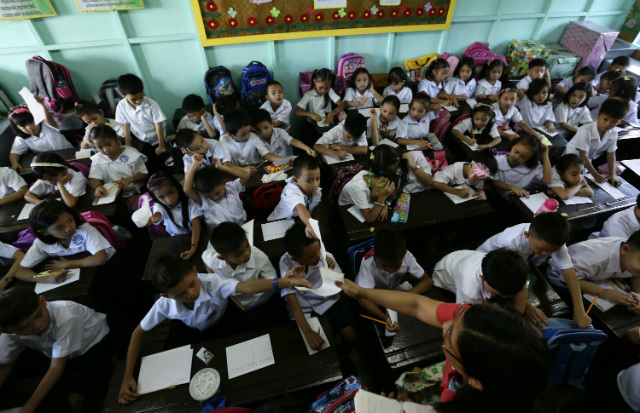
The educational system is another government service that would suffer greatly due to overpopulation.  How can we have quality education if one classroom holds one hundred-plus pupils?  How can students focus on learning when classrooms feel like a can of sardines?

Can senior high school students comprehend solid measurement or even the basics of Algebra if their classroom is as hot as an oven toaster?  How can grade ten students appreciate the epics of Homer and Ovid or the novels of Tolstoy and DostoevskyThey do not even have a decent chair to sit in or a hygienic restroom to relieve themselves.  Or perhaps a cozy library where they could immerse themselves in books and write poems?

What about the teachersCan we expect them to be effective?  By holding a class in a jam-packed room, the precious time allotted to teaching would be wasted calling attention and reprimanding the foolish ones.  With a ballooning population, schools would turn into a chaotic mecca.

As stated earlier, overpopulation will bring infinite aggravation.  Currently, this issue troubles us, as most Filipinos are unaware of the inconvenience it brings to our economy and our future.

It is also worth noting that overextended families come from the poorest sector of the population.  A friend of mine shared with me the story of a friend who has nine (9) children, with the eldest being twenty-two and unable to finish high school.  The youngest is in first grade, barely bringing a meal to school because of abject poverty. 

The bold, or should I say, the stupid father has no other source of income but through driving a tricycle, which he does not even own.  The head of the family brings home PHP 150 (US$3) a day, and it is up to the readers to imagine how the family manages its daily expenses.

How can a financially-strapped couple summon the courage (or have the common sense) to have such a big family?  Could this be attributed to the Filipinos’ penchant for the “bahala-na-ang-Diyos (God will provide) mentality?

What could be the culprit in this vicious cycle of boundless reproduction?  Is it the administration?  I’m sure the government is doing all it can to educate people about family planning.  For today’s youth, is it the ease of access to pornographic and lustful websites?  Perhaps it could be a factor, but it is controllable.  Working or not, some countries censor the Internet to filter the materials their people can see.  Is it the people themselves?  The root causes of overpopulation depend on many factors. 

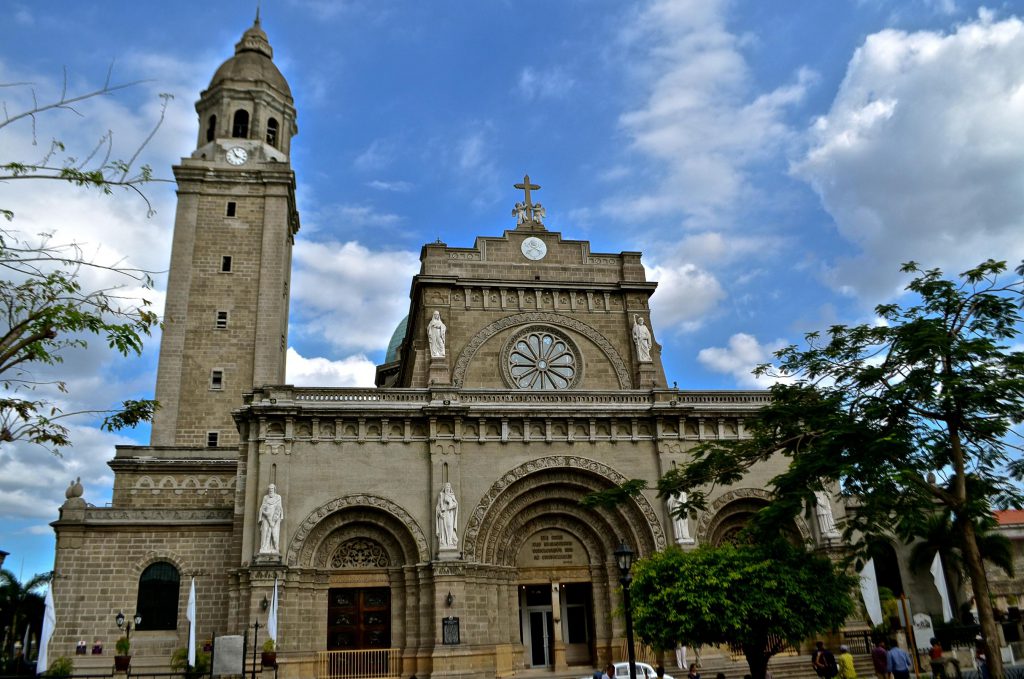
But, in the Philippines, the Catholic Church is both a powerful and unstoppable force regarding the pyramiding population.

The church is opposed to artificial contraception, and this belief dates back to the first centuries of Christianity.  Such acts are intrinsically disordered because of the view that all sexual acts must be open to procreation.  There was even a point when the church allowed birth control – but only through abstinence.  The Vatican even released a document entitled “Vademecum for Confessors,” which stated, “the Church has always taught the intrinsic evil of contraception.”

Furthermore, the church had always pointed to the Holy Bible as it lies in Genesis 1:28, which states, “God blessed them and said, ‘Be fruitful and multiply.  Fill the earth and govern it.  Reign over the fish in the sea, the birds in the sky, and the animals that scurry along the ground.” 

The fanatics and the “Bible warriors” do have a point, though.  Who else is to govern all the blessings this world has to give but the people?  Who else is to harvest the products of the fruit-bearing trees and cut the wood afterward, not minding landslides and pollution, but the people?  Who else is responsible for overfishing the sea with dynamite and toxic chemicals, but the people?  Who else would carve the beautiful and natural shapes of mountains and hills to get precious stones but the people?  Who else hunts rare and exotic animals for money but the people?

We, the people, are commissioned by the Creator to be the stewards of nature.  And, as the logic goes, we should multiply even if reproducing is limitless.  Even if multiplying equates to self-destruction, isn’t it more sinful to bear when future generations have to suffer?

Who can contest the church’s uptake and exposition of inscriptions when, for a thousand years, they have been used to punish those who dare to question, to subject them to inquisitions, to tell everyone that the Creator’s grace and mercy are exclusive to those who kneel before man-made images purchased in the streets of Tayuman (a district in Manila ), and to baptize an innocent infant before he even gets a chance to choose the faith he prefers.

It has become our habit to follow and believe whatever the man in the white suit, whose car displays the “VERITAS” sticker, tells us.  “We follow without question.” “We follow with the highest reverence.” “We follow with the fear of hell if we do not follow.”   

It is amusing that after the priest chants a Latin phrase, whose significance or meaning is unknown to many of us, we instinctively respond with “amen.”  And it’s ludicrous that the Filipinos, the majority of whom are Catholics, abstain from eating pork during Lent to shun extravagance, only to fill their dining tables with more expensive seafood fares like lobsters, grilled blue marlin, and giant prawns.  These hypocricies make me want to fry hot dogs using floor wax.

Church crusaders should adopt a more realistic approach to addressing the growing population and the role of traditional faith.  While priests are busy preaching ‘multiplication’ and procreation, overpopulation is markedly taking its toll on the Filipinos – hospitals becoming smaller, schools becoming canned sardines, job opportunities becoming elusive, and farmlands turning into subdivisions virtually overnight.  While the gross domestic product (GDP) grows, our per capita income becomes smaller.  And, as always, the rich become richer and the poor become poorer.  Whatever!

Is this what the Creator planned our country to be?  I doubt He wants most of us to live in dire poverty and disorder.  I also suspect that the church accurately amplifies the Creator’s orders based on how He wants things to be.  A little coherence and correction would not destroy the credibility of the church.  The church should also review its stand on “procreation” in light of the changing world.

The price of enlightenment is prohibitively expensive for the country and its people, who have long been under the grip of a compelling and untouchable force.

In The Streets of Manila – 2005 Reprise

I knew it would be hot and humid, but I went with my wife to visit Manila by the end of March. After all, it had been almost three years since I last sauntered upon its streets — to see again the places that had been mute witnesses to my frivolities in the early years of my adult life.

A few days after our arrival, we began exploring the districts of Santa Ana, Paco, Ermita, and Malate, as well as portions of Intramuros (the “Walled City” during the Spanish colonial period) and San Andres (formerly part of the Santa Ana district).

The main stretch of Pedro Gil Street (formerly Herran), from Roxas Boulevard to its dead end at the historic Santa Ana Church, where it continues as New Panaderos Street heading towards Mandaluyong City, offered me a snapshot of what the entire city had gone through over the years.

As always, the area offered a mix of déjà vu, fascination, sadness, and desperation — I had known almost the entire vicinity since I was still an elementary student at nearby Malate Catholic School in the late 1960s.

Not much had changed in the heart of Paco and Santa Ana. Jeepneys, cars, and tricycles, compounded by the narrow streets, continue to choke the area, while numerous patches of urban blight seem to haunt these places perpetually.

The current mayor of Manila has made an effort to give the entire city a fresh look by opening up most of the city parks—the “Paraiso ng Batang Maynila” (Paradise of the Child of Manila)—and installing old, Spanish-style lampposts (ala-Intramuros) throughout the main streets. However, they, too, had become victims of what afflicts the entire archipelago – very poor (if any) maintenance of these improvements and the short-sightedness in planning and design of its overall infrastructure.

Malate and Ermita have seen the most changes due to the construction of new high-rise buildings along Roxas Boulevard, A. Mabini Street, M.H. del Pilar Street, and Taft Avenue, as well as the redevelopment of the bayfront from Vito Cruz Street (near the Cultural Center of the Philippines to Rizal Park (Luneta Park), which Manilans fondly refer to as “Baywalk.”

At the back of the Manila City Hall, along Arroceros Street, I saw the rise of a big mall. However, its overall design – resembling a large piece of hollow block – made the entire vicinity appear less appealing than it once did. Who knows what happened to the small business establishments that once abounded in the area before the mall was built? Gone were the genteel shops and the post-war YMCA that once thrived when the GSIS (Government Service Insurance System) and the DECS (Department of Education, Culture, and Sports) were still located in the same area. Even the improvement of the park (part of Mehan Garden) along Concepcion Street did little to counter the bland look the mall gave to the area.

The sad state of the entire place says a lot about how city managers (present and former) interacted with businessmen and prospective investors to make the place not only commercially vibrant but also to ensure that these establishments blend beautifully, without neglecting its history, with the entire area.

A few days later, I was sweating it out in the districts of Quiapo, Santa Cruz, and Binondo, as well as passing through the San Miguel, Sampaloc, and Santa Mesa districts via jeepneys and the newly built LRT 2 (Light Rail Transit 2 – the “MegaTren”). I had already seen the changes made by the incumbent Manila mayor in the Quiapo-Plaza Miranda areas back in 2002, which, at least, sanitized the Lacson Underpass of vendors, pickpockets, and petty crimes.

While the traffic situation in the vicinities of Manila may have improved because of the LRT 2 -which runs all the way from Recto Avenue to Santolan Road in Quezon City-, the entire city still need a lot of changes in its overall infrastructure (majority of its sidewalks are dilapidated), for it to become at par with its already-modern Southeast Asian counterparts.

Starting from Quinta Market underneath the Quezon Bridge (also known as Quiapo Bridge), we meandered our way to Escolta via Carlos Palanca Street (Echague), passing by the statue of the late Manila mayor, Arsenio Lacson, as well as the nearby Santa Cruz Church, located within the renovated portion of the plaza.

We ambled towards Binondo via Tambacan Street, stopping briefly at Ongpin Street to buy some “machang” (steamed sticky rice with cooked pork or chicken at the center, wrapped in banana leaves) and “siopao” (steamed buns with braised pork/chicken inside) as “pasalubong” (household presents).

Then, it was time to acquire some affordable hardware/home furnishings along Tomas Mapua Street (Misericordia), for which the street is known. We ended our ‘mini-Chinatown tour’ on one of the tables at the ‘Pinsec Noodle House’ (wow, it’s still there!!) along Claro M. Recto Avenue (formerly, Azcarraga), where we enjoyed my old favorites: “beef asado” noodles (braised beef w/ noodles) and “siopao asado”(steamed BBQ pork buns). After washing these down with our favorite soda, a few steps away on Rizal Avenue (Avenida Rizal), we were surprised by one of the most notable changes in the vicinity.

The stretch of Rizal Avenue from Plaza Lacson (near Carriedo) to Claro M. Recto Avenue was ‘pedestrianized.’ The old cement road and the sidewalk were replaced with bricks, and assorted, colorful plant boxes were placed along the sides. Benches made of wood and stainless steel were placed in the center for promenaders to sit on. Lampposts were added to complement the dim lights underneath the LRT 1 (Baclaran to Caloocan City) tracks.

The pedestrianization project, indeed, brightened up the area, and with the ongoing construction of a mall (hopefully, with a design that could recreate the grandeur or ambiance of the place after WW II) where the former Odeon Theater was located -as well as the timely opening of the modern, 4-story, LRT 2-Recto Station nearby-, ‘Avenida‘ as it was more popularly called, may well have found the recipe for its rebirth.

We almost walked the entire length of the ‘new’ Avenida, from where we veered left towards Gil Puyat Street (formerly Raon Street), the ‘electronics capital‘ of the country. Here, scores of vendors offered us an assortment of goods, ranging from the cheapest electronic parts and equipment to counterfeit audio CDs, VCDs, DVDs, and almost anything related to the fake mobile phone parts industry (very few were legitimate).

I also got a new pair of eyeglasses for only US$25 in this area. Time was well spent, as we also ambled to nearby Quiapo Church (we had come full circle), where we saw the popular sculpture of the “Black Nazarene” (“Jesus Nazareno” –and devotees hold a procession for it yearly). I wished that it would grant us more time on our next visit.

We also got a few bags of freshly-made “hopia” (round, flaky pastry with different fillings inside – very popular of which is the ‘mongo‘ (mung) beans made into a paste), “chorizo Macau” (Macau pork sausages), as well as a cheap CD case (less than a dollar) as we headed back to pick up the eyeglasses at the optical shop located along Pedro Paterno Street.

We were exhausted now, so we ambled back to the LRT 2-Recto Station via Evangelista Street and took one of the lovely, roomy, and air-conditioned trains to V. Mapa Street in the Santa Mesa district, which also passed through the Sampaloc district.

In Santa Mesa, we took a quick -and very cheap at about $2 for the two of us- lunch of pork BBQ-on-a-stick, “menudo (diced pork and potatoes in tomato sauce), a dry version of the “papaitan (sauteed goat innards with lots of onions and chili), free “sabaw” (soup), lots of rice and a bottle of cold Coke to cool-off the noonday heat that had built-up on our bodies. In this area, we took one of the two jeepney rides that brought us back to Barangay Hulo, Mandaluyong City, where I spent most of my month-long odyssey.

I might miss Manila occasionally as I continue to toil in another country for my livelihood. But the place, much less the entire country, had slowly progressed to miss it longingly.

Corruption, apathy, and the perverted sense of nationalism among the majority of the people have been the bane of the country, and reaching the next important step to becoming a truly progressive nation remains elusive for Filipinos.

It’s still challenging to enjoy living in luxury in a country where most people struggle to make a living. Part of it may be their fault, but the greater blame lies squarely on a government that perennially fails to deliver on its fundamental purpose — to uplift the socio-economic status of its constituents to the next level.

Tata Fidel

He used to come often to our store/house in Baclaran (a ‘barangay‘ -smallest administrative unit of the government- in the then, town -now, city- of Paranaque, which is a mere 2.5 miles south of Manila) to visit his younger brother (my father) as well as to acquaint us with his latest interest — which was quite diverse.

Those years were in the 1970s and 1980s, when I was old enough to understand the things he discussed with my parents. It was also in those days that I was able to glean that he, not only was my uncle but also was my grandfather by co-sanguinity — his wife (whom we fondly called “Lola Paring“) being the aunt of my mother.

Most of the time that he was with us in Baclaran (and if I also happen to be at home), there was always a discussion -over cups of instant coffee- that centered on his vast array of interests: honey bees, silk culture, alfalfa, grapes, pigeon-breeding, vitamins, mushrooms, asparagus sprouts, oranges, and many other agri-related topics.

His interests and how he explained them to all of us were presented with such enthusiasm and persuasiveness that he was also able to convince my mother to sell the pure honey contained in ‘patis‘ (fish sauce) bottles in our store.

Every New Year’s Day, when he was still residing in Grace Park, Manila (part of what was then known as ‘Manuguit‘ or presently Jose Abad Santos Avenue in Manila’s Tondo district), our family made an annual trek to his house, as it was his birthday.

I used to recall those visits with great anticipation because they were one of those infrequent occasions when our store would be closed. Not only will we be free from store work for the entire day, but we will also always look forward to what Tata Fidel and his family will serve us that day with delight.

I especially loved the fried chicken, the “house special”, and the very delicious cakes and pastries they made.

I knew he was not a good cook, but it happened that one of their tenants in the mixed-apartment building they owned was a restaurant, and for a time, they also operated a small bakery in the same building. Hence, while there were plenty of good foods, “good talks” were also awash every New Year’s Day.

Growing up, he would badger me -as well as the rest of my siblings and cousins – to take up courses like orthodontics, X-ray technology, and baking, and constantly reminded me of the benefits of taking up short courses at trade schools like PCAT (the Philippine College of Arts and Trades, presently known as TUP, Technological University of the Philippines).

But what I remembered best about my Tata Fidel was his passion for exploring natural methods to stay fit, trim, and healthy.  It was a natural diversion for him, having been a successful businessman who operated a battery repair/re-manufacturing shop and then an auto parts supply store in Pasay City immediately after World War II ended.

He also ventured into other businesses, including a small bakery and a garment factory, after semi-retiring in the early 1970s. These were not long after he ensured that his family was financially secure by making some brilliant real estate investments during the years they still operated the auto parts shop.

He was so passionate about health and organic foods that he bought a parcel of land in Plaridel in Bulacan province (adjacent to the Tabang Toll Booth on the North Expressway), so that he could put his interests into practice.

There, he planted (or tried his best) grapes, mushrooms, and asparagus (these were not known to grow very well in the country’s tropical climate — much more, in very humid Metro-Manila at that) as well as a variety of crops common in the region.

The place was a proverbial gardener’s paradise, with a modest house—made of wood, bamboo, and concrete—surrounded by all the greenery. He even had a ‘mini-lab’ in the basement of that house, where he kept his collection of seeds and various plants, whose names I didn’t even know existed in the Philippines.

Those were the days I remembered my Tata Fidel best.  Except for a mild hearing loss that he remedied with the use of a hearing aid, he remained energetic, full of life, and still healthy, even in his early 80s. Still strong for his advanced age, he can still crush those bottle crowns with the force of his fingers, using only one hand, while I watched with awe. A feat I wasn’t able to accomplish at my relatively young age of around 30 back then.

The last time I had the chance to see him was in the late 1990s, a time when I was preparing to migrate to the U.S. I had the opportunity to accompany him to a drugstore to pick up some of his medications before he returned to Bulacan.

I did not bother to ask him what those medicines were for.  And, didn’t I notice any changes in his health? He was, for me, the same strong and health-conscious man, continually lecturing me on the benefits of natural foods and organic medicine.

This year, about the middle of February, he was gone. This led me to wonder, once more, about life’s real meaning—the whys and hows of creation and death, and why we, mere mortals, have to endure all these events that seem to have happened before—in a never-ending circle.

What are we living for?

I may not be able to come up with an intelligent answer over the course of my own personal odyssey…in my very own lifetime. But I’m sure of one thing: life’s memories, for as long as one lives, linger on.

And, I’m also sure that my Tata Fidel had truly accomplished what he was here on Earth for.

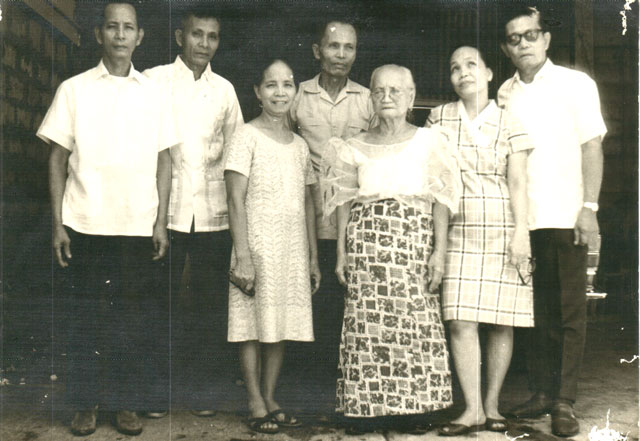
NOTES: The picture above is their family portrait with Tata Fidel on the extreme right (with dark glasses). From left to right: Tata Kiko (+ -this author’s father), Tata Amado, Nanang Terya (+), Tata Ambo (+), Lola Belang, the family matriarch (+), Nana Oliva (+), and Tata Fidel (+). Not pictured is Tata Mundo (+).

2016 Update: In late August 2012, the author’s father, Tata Kiko, also passed away at the age of almost 94.  He was born Oct. 12, 1918, in Hagonoy, Bulacan. 

2020 Update: Tata Amado passed away in Talavera, Nueva Ecija, Philippines, in 2017, while Nana Oliva died peacefully in her sleep — late July 2020 in Cerritos, California.

The Witching Hour at the PSE

While the Philippine peso is falling down like a stack of cards (similar to the ones used in PAGCOR casinos), the PSE Composite Index (Phisix), amazingly – perhaps to show its resiliency – had held its ground and even rebounded on days when the currency was free-falling.

This only demonstrated the fact that money men who were almost exclusively playing the peso-dollar game when stock prices were in the doldrums, were beginning to show their interest to speculate in the stock market once again.

Market makers and foreign investors – prime movers of the PSE – that had long been gone even before the series of parodies that happened in Manila’s top corridors of power unraveled in the 2002, seem to be stepping in once more in the Philippine stock market, after the Gloria administration showed its desire to clean up its act.

Recently, blue chips – which currently are at their dirt-cheap levels almost similar to the turbulent days (post-coup) of the Cory Aquino era – were seen being plucked up by enthusiastic foreign fund managers who are betting that the Philippine economy will fare much better under Gloria Macapagal-Arroyo’s new mandate.

Had the early departure of foreign money (players and investors alike) during the fading months of Erap’s ill-fated administration been a boon and the index had indeed bottomed-out?

Or, these were just the omen of even dire things to come? While the Thailand baht – the currency that triggered the economic crash in Southeast Asia in 1997 – had considerably recovered much of its value, the Philippine peso, on the contrary, is now at levels even much lower when the financial crisis started. Can we learn our lesson from the Thais? Or, is our sociocultural heritage and brand of politics such a volatile mixture that only a cultural revolution can, perhaps, cure? Can the Phisix -like the bamboo – continue to show its resiliency?

Too bad. For a country that contends its population to be the most educated in Asia, how can these things happen quickly and oh, so frequently? Do we love chaos and confusion that much that these are all by

Stock Exchange Stitch
Stock Exchange Stitch (Photo credit: Monica’s Dad)

sociopolitical design? Are we emulating the carnival in Rio — but with Manila’s nauseating political overtones?

Questions and still more questions will continue to be poised upon the minds of forward-looking Filipinos who still dream of the good life in their homeland and…not just to be relegated as yet another 7,000 plus island backwater in this part of the globe.

A Piece of Paper

He never complains and talks even lesser. He’s industrious to a T and is quite well off in life by ordinary people’s standards. Yet, he’s not the type to wallow in the extemporaneous showmanship of one’s material accomplishments. Forever humble, he goes on through the motions in life as if he is on a divine mission — to an end, only very few people could see.

It is very rare you will encounter such person but I had, again, and I plan to hang around and learn more from him. In this world full of braggadocios and trying-hard hangers-on, it is a like finding a gem that will last you a lifetime.

I had my fair share of friends in the almost five decades of existence. They had come and gone. Some had died along the way and some had simply disappeared in the course of time – the consequences of aging, the sign of the times or, simply, the call of destiny.

True friendships are rare because they are matches made in heaven –a total ‘synching’ of two people’s mindsets and spirits. But to discover them requires a bit of patience. They are not mere acquaintances that we had come to like in a short period of time. They are good starts, though, and could lead to one of those people that we had tried so hard to look for in this complex jungle called life.

Over the course of one’s lifetime, I’m quite sure that one’s list of friends will have gone down from a volume to a single sheet of paper. Keep it and fold it close to your heart.

The memories you had shared with these people are more than enough to keep you aglow and lift your spirits as you amble along in the twilight times of your life.

I Remember June (And the Glorious Years of the PNB)

Philippine National Bank logoAfter the May festivities, it’s time to put things into their proper perspectives once more. The summer parties are over for the students, and time to troop into the classrooms again.  For the fresh grads, it’s time to push those resumes into the fax machines or attach them to e-mails and hope for the best.  The Philippine economy may not be rosy, but it can only get better from here (we hope so). The only difference between Manila and the rest of the third-world countries is the former’s penchant for being in this situation more often.

June will also be remembered as the month in which 1989 the Philippine National Bank’s (PNB) shares were first listed at the then-dual exchanges of Makati and Manila.  It was made possible because of the leadership of Edgardo Espiritu — whose moral integrity and high ethical standard should be the example of our current crop of government officials.  He quit as the Finance Minister during the Estrada administration and pursued his interest in running private corporations. The reason was obvious.

Over at the PSE, investors are digging their trenches and are preparing to be in for the long haul.  The trend had been established, and the administration was offering no clear signs of relief.  Short-term rallies will offer a “quick fix” for those who jumped the latest in this pain-bringing, if not perplexing, stock market.  But many ‘long-termers’ who were blindsided by the sudden reversal of fortune in the early going of the forgettable Estrada administration – and which had remained in the doldrums during the equally anemic Arroyo transition period/administration – could either bottom-fish or average down at their comfort levels.

The month of June will see a lot of these prominent and honorable businessmen-politicians-stock investors in churches and other religious edifices attending weddings and shelling out huge amounts either out of necessity, the love for social gatherings, conceit, or to perpetuate the Filipinos bent for the padrino system.’

We can only guess what litanies will be heard during the ceremonies.  We could also wish that in their prayers, they would be fervently asking for the country’s economic salvation and not simply to recover – and then some – their political investments or, the country may ultimately be the most rotten one among the banana republics.

May the June wedding bells toll on the country’s economic recovery. Hang tough, Philippines!

—link:

www.pnb.com.ph

The Lusty Month of May (Sad It Is to Fiesta)

English: Street map of Manila, Philippines wit...
English: Street map of Manila, Philippines with points of interest indicated. This is an SVG version of Media:Ph map manila large.png. Updated for 2006. (Photo credit: Wikipedia)

May is fiesta month in Manila. Streets will be crowded with people attending town fiestas. Will the merry month of May also herald the coming months – or, even years – of festivities in the country? Something to cheer and to be merry about? While jaded business traders may don’t care, the true investors really hope so. The country – already badly battered from the spate of tragedies during the post-Ramos administration – hopes that the hot but breezy month of May will prove to be the spark to propel the country in the right direction.

Fiestas had been part and parcel of Filipino culture. It had its roots back to the times when Spain ruled the world and, its brand of religion…the panacea for all ills. Lots of food, free-flowing beers and hot gossips abound in these yearly gatherings of families and friends. Streets are festooned with streamers and bands are playing constantly, as if reminding the residents of the good times that lie ahead. But sadly, fiestas also bring a false sense of prosperity, especially in these hard economic times. People, in the spirit of celebration, are sometimes forced to shell-out meager savings just to get by these ostensibly marked cultural events.

Much the same way investors may be lulled into a false sense of fiesta in the prevailing economic condition. The naive investor must rid himself of this false sense of bullishness (or bearishness) in the economy but should rather assess each and every day either as an opportunity or a day to scale down.

Manila’s current politico-economic climate is just too testy for now. Better not to fiesta at all but rather be holding that bag of goodies for the rainy days ahead! But, if you already made your stash in Manila, regardless of the economic direction it had moved, then…fiesta on! And don’t forget the lechon!

Enhanced by Zemanta

Manila’s favorite novelist, Nick Joaquin died

Manila mourns the death of one of its favorite sons, Nick Joaquin, who died April 29, 2004, in his San Juan, Metro-Manila

Gravesite of Filipino writer and National Arti...
Gravesite of Filipino writer and National Artist Nick Joaquin at the Libingan ng mga Bayani (Photo credit: Wikipedia)

home. It was via the Philippine Daily Inquirer’s web site, that I learned of the news.

I had read quite a few of his novels – way back in my high school and college days, and one of my sisters – Lolet – actually knew him personally. She, being a staff member at the Cultural Center of the Philippines (CCP) for quite some time before migrating to the US in 1997.

A known beer lover, Nick Joaquin will be surely be missed by Manila’s intelligentsia and sensible beer house habitués– especially in the Malate and Ermita areas.

—links:

www.inq7.net
Kupitero’s 1999 review of Nick Joaquin’s, Manila, My Manila