

Last week, Don, my brother-in-law, picked up his metallic deep-blue Tesla Model 3 from one of the company’s showrooms – they sell their cars directly and not through a dealership – in Fremont, California.
A year ago, he had put up a US$1,000 deposit for the promised US$35,000 Model 3 unit that had just been taken off Tesla’s designers’ drawing boards and put into production mode.
The Tesla Model 3 was supposed to catapult the fledgling company into the mainstream car market.
All their previous models, including the Roadster, Model S, and Model X (an SUV), are relatively expensive, and only a few middle-income American consumers can afford them.
Tesla had been at the forefront in the rebirth of the all-electric vehicle boom that had seen the release of competing models from the big Japanese and European carmakers -notably Nissan (the ‘Leaf‘) and BMW (the i3 – with the latest release, a 2-cylinder ‘range extender’ engine is now just optional )- as well as from the top 2 American car firms — General Motors (the Chevy ‘Bolt‘) and Ford (coming up with its ‘CUV‘).
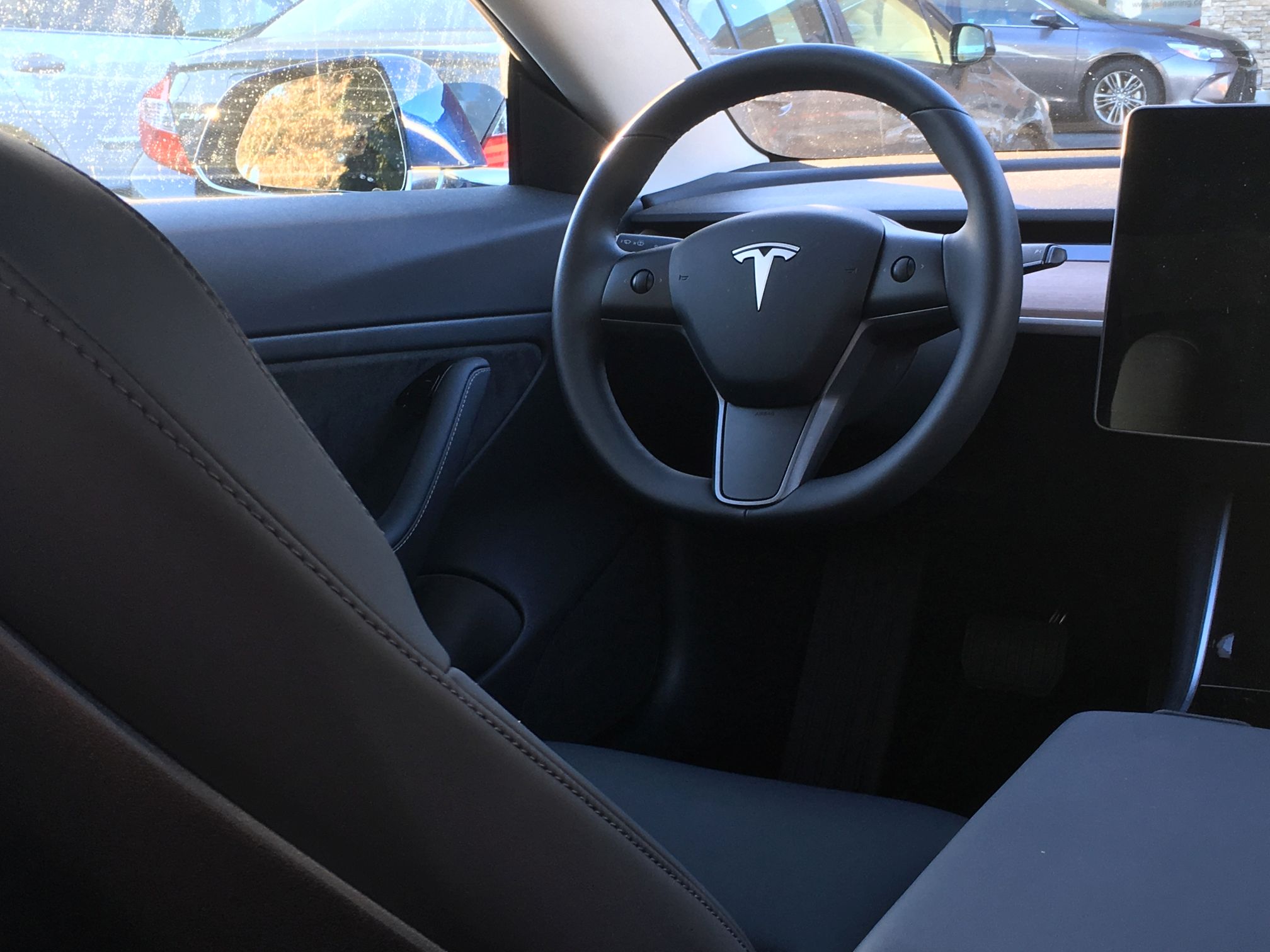
As it turned out, Tesla’s promised consumer-friendly price tag of US$35,000 for the Model 3 ‘base model’ ballooned to almost US$57,000 after the company failed in its promise to offer one with the ‘standard batteries‘ during the consumer rollout.
Eager to drive home with his Model 3, Don was compelled to buy a more expensive unit with long-range (up to 310 miles) batteries and a premium exterior, featuring rear-wheel drive. His choice of color, a deep blue metallic (an additional $1,500), and alloy sports wheels (an additional $1,500) added $3,000 to the cost, plus all taxes and fees.
The price would have gone even higher had he opted for one with an all-wheel drive (an extra $6,000 for the ‘basic‘ all-wheel drive and an additional $15,000 for the ‘performance‘ all-wheel drive) & enhanced Autopilot (an extra $5,000).
After all the extras, a fully loaded, top-of-the-line Model 3 goes for about $75,500 before all the taxes and fees– and that’s not a price for the average consumer. For all that money, you could buy three (3) brand-new (latest model) Toyota Corollas and still have a few thousand left in your pocket.
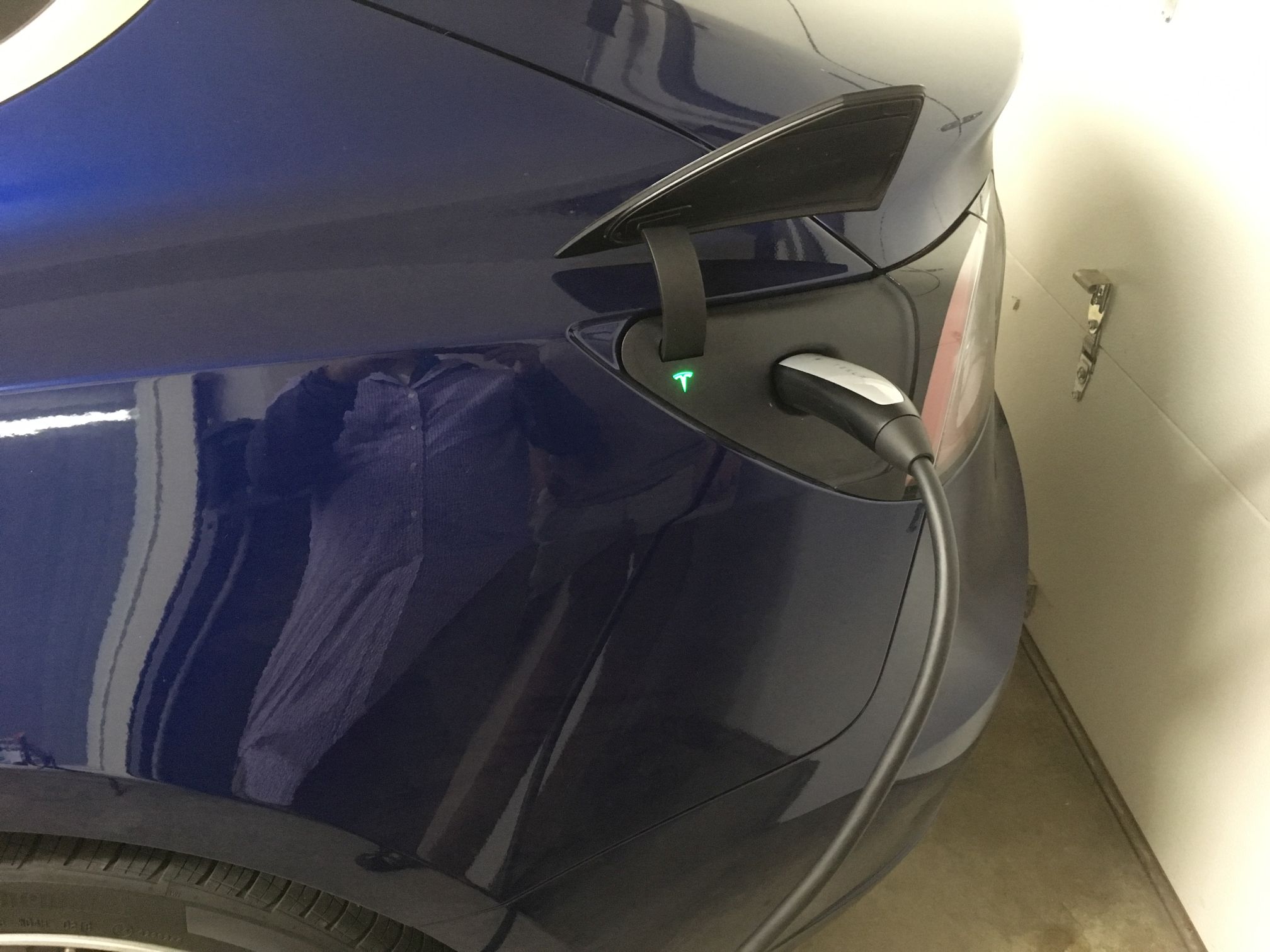
So, for the US$57K price he shelled out – before federal and state tax incentives – Don’s Model 3 car should, at least, be impressive. It is, but not without some drawbacks.
Most electric cars have impressive torque, and the rear-wheel-drive Model 3 can accelerate from 0 to 60 mph in about 5.1 seconds. The car’s handling was exceptional as the 19″ wheels were big enough to mitigate some road imperfections.
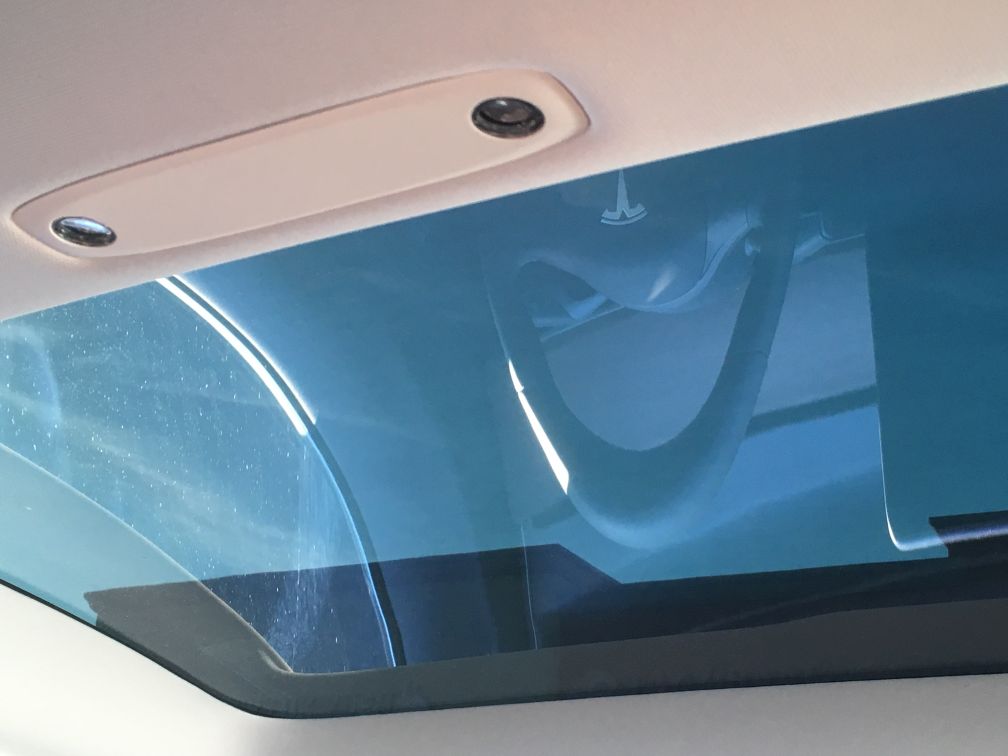
You can’t say enough praise for all the tech goodies inside and outside the car, including its array of radars, sensors, cameras, and software updates for the touchscreen control panel, as well as the imposing all-glass roof. All of the Model 3’s glass parts, including the windows, were manufactured by Saint-Gobain Sekurit, which traces its roots back to 1665 in France as the Royal Glass Works.
And, as this is an all-electric vehicle, you tend to rely less on the brakes to slow down the car —release your foot on the accelerator, and you accomplish two things: 1). Slow the vehicle down to a halt, and 2). You charge the batteries (regenerative braking).
Let’s get to the things that I didn’t like about the Tesla Model 3:
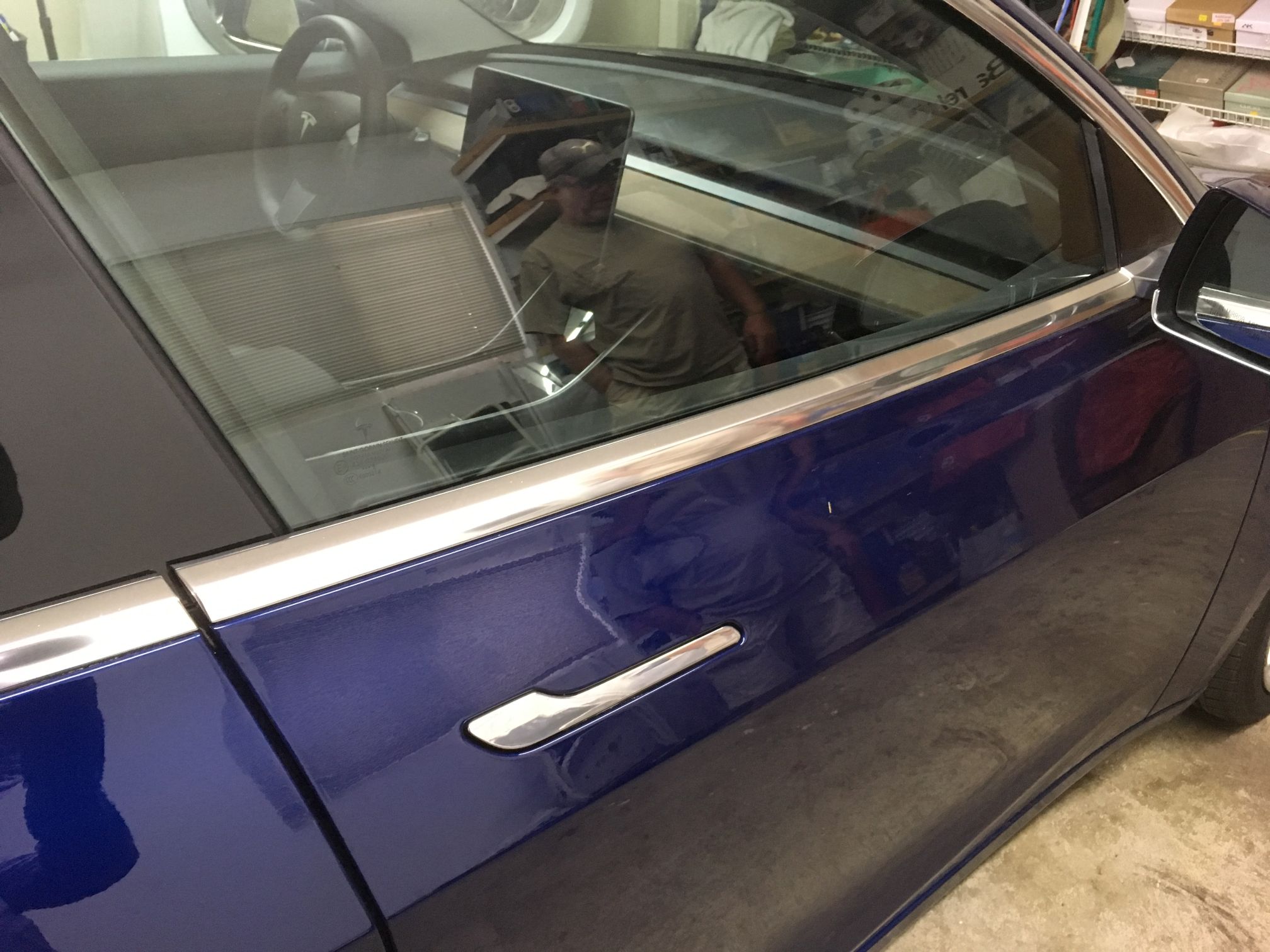
Firstly, the door handles. Opening a door is a two-handed affair. What??? You have to push the recessed handle with one hand and grab the handle’s end once it pops out with your other hand — yes, to open a door.
Second, there is no manual override to open the glove box compartment. To open it, you must turn on the touchscreen tablet (which acts as the sole instrument panel and controls everything inside the car) and push the ‘open glove box‘ button. Too cool but also too dumb. Any determined thief can use a screwdriver and force it open.
Third, and as mentioned above, the car relied too much on the 15″ touchscreen tablet in the dashboard’s center. I honestly believe that Tesla did it to cut costs in the guise of the ‘cool’ factor.
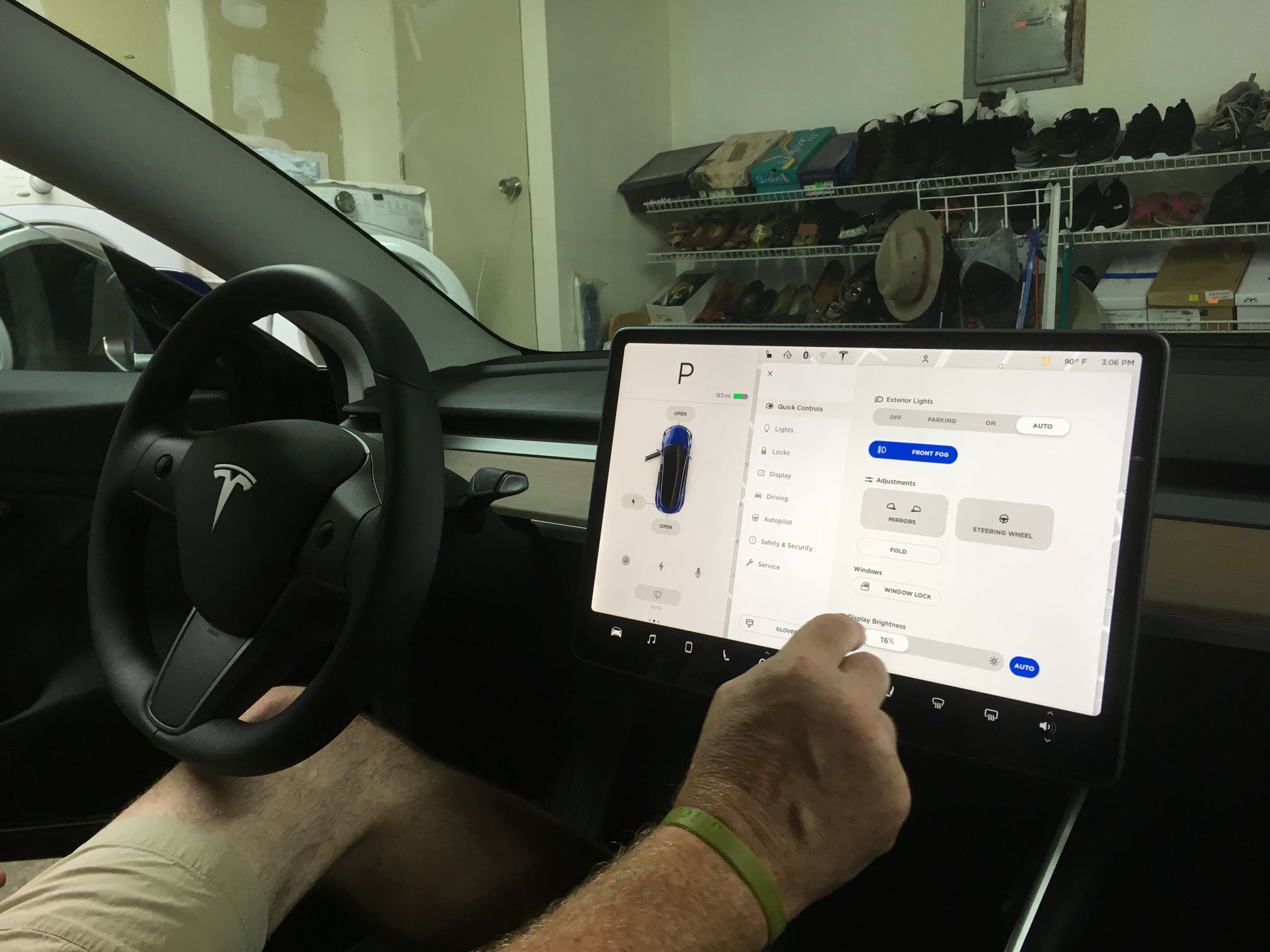
This is especially distracting when driving around the city, as you have to deal with all the car’s functionalities on a touchscreen panel. As if texting while driving is just not bad enough.
Fourth, for the steep price tag on any premium variants of the Tesla Model 3, real leather seats should be standard. As it is, the ‘premium interior’ model could only boast of faux leather in black.
Lastly, except for topping off the windshield washer fluid, there’s nothing a Tesla Model 3 owner who’s keen on maintaining the car himself can do.
Most of the other end-user replaceable parts & fluids are either hidden underneath the car’s chassis, where the engine sits in your typical internal combustion vehicle, or are now in the front luggage compartment, or are not easily accessible.
This means that if ever the car needs even the simplest maintenance, you may have to take it back to a Tesla dealership—bottom line: costlier upkeep.
Other minor flaws need no mention and can be ignored, but the ones above are too obvious to overlook.
After all, Tesla’s mass-production model cars—starting with the 2012 Model S—had only been around for a few years. Improvements are expected to be introduced in the subsequent iterations of those models.
That is, if they – with their massive debt and government subsidies in the form of tax incentives ending soon- remain viable and, most importantly, become profitable as a company in the coming years.
EPILOGUE:
In 2022, my brother-in-law traded in his 2018 Tesla Model 3 for a Rivian R1T all-electric pickup truck. The dealership valued the Tesla for just US$16,000 despite having less than 60K miles.
The car’s value had depreciated rapidly after just four (4) years of moderate use – a theoretical loss of US$32,000 (cost of $57,000 in 2018 less $9K federal/state tax rebate less $16K trade-in value).
That’s a yearly loss of $8,000 (after the $9K federal/state rebate) or almost a 17% loss in actual value each year he drove the car.
He confided to me that buying the Tesla Model 3 in 2018 was one of his worst car-buying/financial mistakes he ever made.
And, the much-vaunted Autopilot (purportedly fully self-driving) feature of Teslas is still a pipe dream.